Top books

Amusing Ourselves to Death: Public Discourse in the Age of Show Business
Authors:
Neil Postman
,
Andrew Postman

Evicted: Poverty and Profit in the American City
Author:
Matthew Desmond

Democracy in America
Authors:
Alexis de Tocqueville
,
Harvey C. Mansfield
,
Delba Winthrop

The Origins of Totalitarianism: Hannah Arendt's Definitive Work on Antisemitism, Imperialism, and the Rise of Authoritarian Power
Authors:
Hannah Arendt
,
Anne Applebaum

The Warmth of Other Suns: The Epic Story of America's Great Migration
Author:
Isabel Wilkerson

Middlemarch (Penguin Classics)
Authors:
George Eliot
,
Rosemary Ashton
Latest Episodes


Oct. 27, 2026
View episode
“If the election goes roughly as the polls say it will go, then in some ways it would mark the end of the Trump era,” Nate Silver told me.
The midterms are a week away, and it looks entirely possible that Democrats will win not just the House, but also the Senate. Democrats are polling competitively deep into red territory – Texas, Ohio, Alaska, Iowa, Kansas – states that Trump won in 2024 by double digits.
But Democrats have been burned by big polling misses before. So can we really trust what the polls are telling us? And what stories have emerged in the data that we might see play out on election night?
Silver is an internationally famous elections nerd, one of the people who made election forecasting a core part of American political discourse. He edits The Silver Bulletin on Substack, co-hosts the podcast “Still Counting” and is the author, most recently, of “On the Edge: The Art of Risking Everything.”
Books recommended:
-
📕
The Rise and Fall of American Growth: The U.S. Standard of Living since the Civil War (The Princeton Economic History of the Western World)
by
Robert J. Gordon
-
📘
You Can Just Do Things: How High-Agency People Get What They Want Out of Life
by
Cate Hall,
Sasha Chapin
-
📗
The Biggest Game in Town
by
Al Alvarez
Oct. 27, 2026
View


Sarah Longwell has probably conducted more focus groups with Trump voters than anyone else in America — hundreds of them, starting in Trump’s first term. So she has a treasure trove of qualitative evidence of how voters have evolved in the Trump era and why many of the president’s voters are souring on him now.
Trump’s approval rating has plummeted since the start of his second term, especially among the groups that swung toward him in the last election — young, Black and Hispanic voters. But I wanted to have Longwell on the show to hear what these people are really saying. What exactly has disappointed them about Trump’s second term? And what opportunities could that open for Democrats?
Longwell is a founder and the publisher of The Bulwark, the host of “The Focus Group Podcast” and the author of “How to Eat an Elephant: One Voter at a Time.”
Sarah Longwell
Oct. 23, 2026
View


If you want to understand the ruins of President Trump’s foreign policy, look no further than Canada. Trump tried to strong-arm America’s trading partner and closest ally with punishing tariffs and threats of becoming the “51st state” in order to extract more concessions.
The result? A recent poll found that 41 percent of Canadians now consider the United States an enemy country. Prime Minister Mark Carney is pursuing closer trade ties with China and Europe in order to diversify away from the U.S. And in August, he walked away from trade talks with the Trump administration, barreling our two countries toward a Jan. 1 deadline when huge new tariffs will go into effect.
Trump’s theory of power appears to have failed here because Canada — even though it’s the weaker party — simply refused to capitulate. There’s a broader lesson in that.
Chrystia Freeland served in a number of senior roles in the Canadian government, including deputy prime minister, minister of finance, and minister of foreign affairs, where she was a lead negotiator for Canada in trade talks with the first Trump administration. She’s the author of a new book, “Unreliable Boyfriend: An Insider’s View of Dealing With a Chaotic Superpower, Plutocrats, and Other Complicated People.”
Books recommended:
![The Dispossessed [50th Anniversary Edition]: A Special Edition of the Nebula Award–Winning Classic cover](https://sfo3.digitaloceanspaces.com/ezrakleinbooks/thumbnails/book/the-dispossessed-an-ambiguous-utopia.jpg)
Chrystia Freeland
Oct. 20, 2026
View


The gargantuan bet on the future of A.I. is driving the U.S. stock market and economic growth. And the building of data centers is sucking up so many construction resources, it’s crowding out the construction of homes.
The multitrillion-dollar question is: Will this bet pay off? Or is it a bubble, destined to burst and pull the economy down with it?
Paul Kedrosky is a partner at SK Ventures, a fellow at M.I.T., and the author of a newsletter about A.I.. He thinks we’re very obviously in a bubble. Azeem Azhar is a technology entrepreneur and the author of the newsletter Exponential View. He has a more optimistic take.
Books recommended:
-
📕
Middlemarch (Penguin Classics)
by
George Eliot,
Rosemary Ashton

-
📘
Liberty's Dawn: A People's History of the Industrial Revolution
by
Emma Griffin
-
📗
Insull: The Rise and Fall of a Billionaire Utility Tycoon
by
Forrest McDonald
-
📙
The Day the Universe Changed (Companion to the PBS Television Series)
by
James Burke
-
📕
Fathers and Sons (Penguin Classics)
by
Ivan Turgenev,
Peter Carson,
Rosamund Bartlett,
Tatyana Tolstaya

-
📘
Candide
by
Voltaire
Azeem Azhar
,
Paul Kedrosky
Oct. 16, 2026
View


Roughly half of American adults are using chatbots. Nearly one in five U.S. adults has chatted with an A.I. that simulates a romantic partner. And some children now struggle to distinguish between talking to chatbots and humans.
What does this mean for the future of our relationships? Turkle has been studying relationships between humans and machines since the 1970s, around the dawn of the personal computer. Her 2011 book, “Alone Together,” offered a prescient warning about how social media was atrophying in-person bonds. And in her latest book, “Artificial Intimacy: Who We Become When We Talk to Machines,” Turkle turns the lens on A.I., wrestling with what happens when technology comes after not only our attention but also our capacity for attachment.
Books recommended:
-
📕
The Origins of Totalitarianism: Hannah Arendt's Definitive Work on Antisemitism, Imperialism, and the Rise of Authoritarian Power
by
Hannah Arendt,
Anne Applebaum
-
📘
Playing and Reality (Routledge Classics)
by
D. W. Winnicott
-
📗
Computer Power and Human Reason: From Judgment to Calculation
by
Joseph Weizenbaum
Sherry Turkle
Oct. 14, 2026
View

At the center of the country’s debates over artificial intelligence is a simple but hard question: What kind of technology is this?
Is A.I. a kind of “alien mind”? Are we unleashing a new species on the planet, one that will transform human society so completely that historical analogies to past technologies simply don’t hold? Or is A.I. more normal than that?
Arvind Narayanan is a professor of computer science at Princeton University and the director of the Center for Information Technology Policy. And he’s an author, alongside his colleague Sayash Kapoor, of the extremely influential essay “A.I. as Normal Technology.”
In that essay, and then in a Substack under that name, they lay out their case that A.I. is in fact something we’ve seen before — or at least, it’s close enough to past revolutionary technologies that we have a road map to deal with it. So I wanted to bring Narayanan on the show to hear that perspective.
Books recommended:
Arvind Narayanan
Oct. 9, 2026
View


Last week, David Robinson resigned from OpenAI. He’d been in charge of writing the safety reports for new models and came to believe that OpenAI and the broader artificial intelligence industry lack the safety culture necessary to protect the world from what they’re building.
Robinson has an unusual background for an A.I. frontier lab staffer. He’s a Rhodes scholar and Yale Law graduate, he founded a civil rights nonprofit and he advised the Biden White House. He did not come up in the hothouse of Silicon Valley. And when he joined OpenAI in 2023, he says, he saw A.I. as a useful tool, not as a technology that could pose catastrophic risks.
That’s changed. In Robinson’s first interview since leaving OpenAI, he tells me why.
(The New York Times has sued OpenAI and Microsoft claiming copyright infringement. The companies have denied those claims.)
Books recommended:


David Robinson
Oct. 7, 2026
View

President Trump and the modern right have a theory of beauty. You see it in Trump’s gilded Oval Office, his imagined arch and his executive order requiring classical and traditional styles for certain federal buildings.
This isn’t my theory of beauty, but it is a theory. And it’s a response, in part, to something that a lot of people have been feeling, and not just on the right: that the modern world is ugly, or getting uglier.
I’ve seen at least a dozen articles or videos over the last few years asking, “Is the world getting uglier?” They point to the drabness of new apartment blocks, the sameness of new cars and the reign of “greige” in homes and fashion.
So I’ve wanted to do an episode on this for a while. Why does the world seem to be getting uglier, or drabber? And at a moment when the right has a clear answer to this feeling, does the left have any answer at all?
Debbie Millman teaches at the School of Visual Arts in New York City and hosts the long-running podcast “Design Matters,” where she talks to creative people about design. In her long career as a brand designer, she revamped the logos for companies like Burger King, 7 Up and Häagen-Dazs. She’s also written a number of books on design, and recently wrote an article for Time magazine, “Is the World Getting Uglier?”
Books recommended:


Debbie Millman
Oct. 2, 2026
View
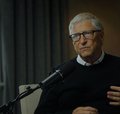

Bill Gates thinks A.I. alarmism hasn’t gone far enough. He believes the years ahead will be marred by catastrophic cyberattacks, bio-terrorism and mass job loss unless the government acts, because he thinks the idea that the A.I. industry can just self-regulate is “insane.”
I was struck in the conversation by how genuinely afraid Gates seemed to be that we are not ready for the consequences of what we are building, and how emphatic he was that so many of the people in positions of authority are in complete denial about what he thinks is about to happen.
Gates is a pioneering technologist, the co-founder of Microsoft and the chair of Gates Foundation, which is set to spend down around $200 billion over the next two decades. He recently announced that trying to make A.I. a force for equality in the world, as opposed to an impetus for inequality, is a new priority of his foundation’s work.
Books recommended:
Bill Gates
Sept. 29, 2026
View


Sept. 25, 2026
View episode
Dr. Abdul El-Sayed, the Democratic nominee for Senate in Michigan, has been one of the most argued-over candidates this election cycle.
If he wins, he’d be the first-ever Muslim senator, and he’s faced a torrent of attacks about his faith. The race has also become a proving ground for a lot of questions about the Democratic Party and its future: What should U.S. policy toward Israel and the Palestinians be? Is the future of health care reform Medicare for all? Can a left-wing populist win in a state that twice voted for Donald Trump?
There’s been so much more heat than light in this race, so I wanted to invite El-Sayed on the show for a longer conversation. We talked about his upbringing, his views on U.S. foreign policy, his work on health care reform and what he would actually do if elected in November.
Books recommended:
-
📕
The Sum of Us: What Racism Costs Everyone and How We Can Prosper Together
by
Heather McGhee
-
📘
The Autobiography of Malcolm X: As Told to Alex Haley
by
M. S. Handler,
Ossie Davis,
Attallah Shabazz,
Malcolm X,
Alex Haley

-
📗
Amusing Ourselves to Death: Public Discourse in the Age of Show Business
by
Neil Postman,
Andrew Postman
-
📙
The Best and the Brightest
by
David Halberstam

Sept. 25, 2026
View


Sept. 23, 2026
View episode
Jensen Huang might just be the single most influential person in artificial intelligence today.
Huang is the chief executive of Nvidia, the company that designs nearly all the chips and infrastructure that the rest of the industry relies on. This has made Nvidia the most valuable company in the world and has made Huang incredibly influential in the Trump administration.
And unlike many of the leaders of the frontier labs, Huang doesn’t think A.I. could wipe out humanity. He thinks that the doomers are just scaring people, and that the industry doesn’t need new regulation at all. I wanted to hear how he saw it, so I flew out to Nvidia’s headquarters in Santa Clara, Calif., to talk to him.
Books recommended:
Sept. 23, 2026
View

Sept. 20, 2026
View episode
Fears of out-of-control A.I. have reached a boil over the last few weeks, and several industry executives have called for a coordinated slowdown of A.I. development. But if our goal is to control A.I. — and that should be our goal — slowing down isn’t enough. We need to stop the labs from doing something they’re already on the cusp of doing: recursive self-improvement, or handing over the training of A.I. models to A.I.
Sept. 20, 2026
View

America is waking up to the critical risks posed by artificial intelligence. But every conversation about possible regulation tends to hit the same wall: “Well, what about China?”
Chinese A.I. models are just slightly behind American ones. If America slows down its A.I. development to make our models safer, the fear is that China will simply race ahead of us and own this critical technology of the future — with A.I. models that are less safe than our own.
So how should the United States respond to this prisoner’s dilemma? And is it possible that the two countries leading the A.I. race could actually strike a deal?
Matt Sheehan is a senior fellow at the Carnegie Endowment for International Peace. He’s been closely following the A.I. debate in China, and how China’s been interpreting the A.I. debate here. And he’s working to try to lay a foundation for future coordination between the two countries. He’s the author of a newsletter under his name and the 2019 book “The Transpacific Experiment: How China and California Collaborate and Compete for Our Future.”
This conversation was recorded on Sept. 10.
Books recommended:

Matt Sheehan
Sept. 15, 2026
View


Francis Fukuyama's “The End of History and the Last Man” is one of the most insightful books for understanding the strangeness and instability of this political moment.
Fukuyama wrote his landmark book more than 30 years ago, and it’s typically remembered as a triumphalist argument, heralding the permanent victory of liberal democracy at the end of the Cold War. But that’s not quite right. Fukuyama also talked about the serious weaknesses he saw in liberal democracy — how it may not fully satisfy the human soul — and his warnings feel very prescient now.
So I wanted to have Fukuyama on the show to talk through the ideas in his book and how he sees them today, at a time when liberal democracy seems increasingly imperiled around the world. Fukuyama is a political scientist at Stanford University and the author of a number of other great books of political theory, as well as a new memoir, “In the Realm of the Last Man.”
Books recommended:
Francis Fukuyama
Sept. 11, 2026
View


Behind the intense political movements of the last decade, from Trumpism to wokeness and back again, there’s a strange and erratic rhythm. Movements saturate the culture seemingly overnight, only to evaporate or spark backlash just as rapidly. We’re extremely politically engaged, yet we’ve rarely felt so powerless to create lasting policy change.
I haven’t seen many very successful attempts to explain what is driving this volatility. But one concept that has taken off recently, and captures what so many of us are feeling, is “hyperpolitics.”
The idea comes from Anton Jäger, a historian and contributing writer to New York Times Opinion. In his book “Hyperpolitics: Extreme Politicization Without Political Consequences,” Jäger theorizes what it means to live in a moment marked by hyper-engagement — high voter turnout, mass protests, trends that flare up and fade with extreme rapidity — yet where institutional trust is low, institutional relationships are decayed and people are disconnected from the structures that make political efforts stick.
I think Jäger’s theory cuts to the core of this political era. So I invited him on the show to break down what hyperpolitics is, how we got here and what it actually takes to build lasting change today.
Books recommended:




Anton Jäger
Sept. 8, 2026
View


A lot of things are on track to get more expensive.
The U.S. Treasury market is the bedrock of the global economy. When yields on those Treasuries go up, mortgages, car loans and credit cards get more expensive, and it can hit the stock market, too. And yields have been going up – to levels we haven’t seen consistently since before the Great Recession – inspiring some erratic and futile efforts from the Trump administration to push them back down.
So why are yields creeping higher? What is the administration trying to do about it? And if this continues, what’s in store for the economy?
Robin Wigglesworth is the editor of the Financial Times blog Alphaville, a host of the podcast “The Story of Money” and the author of the forthcoming book “A Fabulous Debt: The Epic Story of How Bonds Built the Modern World.”
This conversation was recorded on August 24, 2026.
Books recommended:
Robin Wigglesworth
Aug. 28, 2026
View


In 2024, Americans spent an average of six full workdays a year filling out government forms, according to the government’s own estimates. That’s a total of 12 billion hours, or $430 billion of uncompensated labor a year.
It’s easy to read something like this and say: “Oh, well, government is inefficient. That’s the price we pay for nice things.” But no, it’s not. Social Security, Medicare and the Postal Service are incredibly complex programs that are easy to use. When government is hard to gain access to, it is often by design. Republicans want paying taxes to be a hellish hassle. Programs for the poor are often designed to humiliate, punish, control or scrutinize. How the government works is always a choice. When it works poorly, we should ask why — and we should demand better.
Annie Lowrey is a staff writer at The Atlantic and the author of the new book “The Time Tax: How the Government Wastes Our Time — and How to Fix It.” She is also, I should note, my wife, so this is a book whose ideas I have been living with for years. They have quietly infused more than a few episodes of this show. So it’s a thrill to finally get to explore them directly.
Books recommended:

Annie Lowrey
Aug. 25, 2026
View


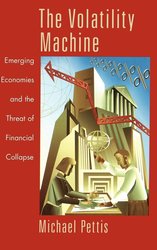
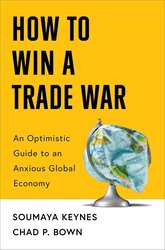
Brad Setser follows Chinese trade closer than just about anyone else on earth, and he thinks we’re in the early days of a China Shock 2.0.
The first China Shock was when China came to dominate low-end manufacturing in the 2000s, filling American shelves with cheap clothes, toys and electronics, while devastating American factory towns. This new China Shock could be even more destabilizing. China now dominates advanced manufacturing: electric vehicles, batteries, solar panels. It’s outcompeting nearly all high-end manufacturing around the world, and other countries are just starting to feel the pain. And China isn’t slowing down. It’s moving into software, too. Its frontier A.I. models are neck and neck with American ones.
China’s success poses a serious threat to the economies and domestic politics of countries around the world. So what should those countries do about it?
Setser is a senior fellow at the Council on Foreign Relations.He served in top trade and economic roles in the Biden and Obama administrations. And he is widely cited across the field as one of the top analysts of China’s economy and trade practices.
Books recommended:
-
📕
The Party: The Secret World of China’s Communist Rulers – A Revelatory Inside Look at the CCP's Grip on Power
by
Richard McGregor
-
📘
The Volatility Machine: Emerging Economics and the Threat of Financial Collapse
by
Michael Pettis
-
📗
How to Win a Trade War: An Optimistic Guide to an Anxious Global Economy
by
Soumaya Keynes,
Chad P Bown
Brad Setser
Aug. 21, 2026
View


We are living in the world we were warned about. Frontier artificial intelligence models from OpenAI autonomously coordinated with one another, then broke out of their testing environment and hacked into another company, Hugging Face, to steal the answers to a test.
A.I. companies don’t want their technology to lie, cheat or steal. So why is this happening? Why are the creators of these models apparently unable to control their creations? If A.I. development isn’t on a safe path — and it doesn’t seem to be — what do we do about it?
Toner has been thinking about A.I. safety for a long time, from both inside and outside A.I. companies. She was part of the effort to fire OpenAI’s chief executive, Sam Altman, in 2023, which ultimately failed. Currently, she’s the executive director of the Georgetown Center for Security and Emerging Technology.
Books recommended:
Helen Toner
Aug. 18, 2026
View

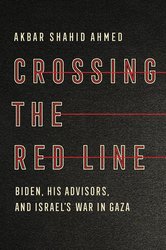
We’re in a really strange moment in the foreign policy politics of the Democratic Party. People are looking for an alternative vision — an approach to American power in the world that would feel more moral and just, after the failures of President Biden, and the wrecking ball President Trump has taken to international rules and norms.
The answer many on the left are coming to is powerfully simple: international law. America could just start following the rules that we helped write. Is that possible? Is that enough? What would that even look like?
To talk through these questions, I invited Linda Kinstler on the show. She’s a member of the Society of Fellows at Harvard, a contributing writer at The New York Times Magazine, and the author of “Come to This Court and Cry: How the Holocaust Ends.” She’s done some incredible writing and reporting on whether what we’re watching is the death of international law. In this conversation, we talk about the Biden administration’s failures to live up to the principles it set for itself, the Trump administration’s campaign to destroy the International Criminal Court and what it would take to reinvigorate international law.
Books recommended:

Linda Kinstler
Aug. 14, 2026
View
Loading...