
From this episode
Recommended books
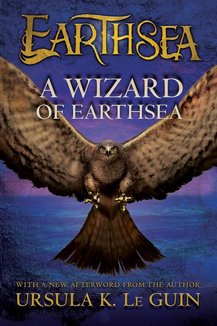
The first novel of Ursula K. Le Guin's must-read Books of Earthsea.
The first novel of Ursula K. Le Guin's must-read Books of Earthsea. Ged was the greatest sorcerer in Earthsea, but in his youth he was the reckless Sparrowhawk. In his hunger for power and knowledge, he tampered with long-held secrets and loosed a terrible shadow upon the world. This is the tumultuous tale of his testing, how he mastered the mighty words of power, tamed an ancient dragon, and crossed death's threshold to restore the balance. With stories as perennial and universally beloved as The Chronicles of Narnia and The Lord of the Rings—but also unlike anything but themselves—Ursula K. Le Guin’s Earthsea novels are some of the most acclaimed and awarded works in literature. They have received accolades such as the National Book Award, a Newbery Honor, the Nebula Award, and many more honors, commemorating their enduring place in the hearts and minds of readers and the literary world alike. Join the millions of fantasy readers who have explored these lands. As The Guardian put it: "Ursula Le Guin's world of Earthsea is a tangled skein of tiny islands cast on a vast sea. The islands' names pull at my heart like no others: Roke, Perilane, Osskil . . ." The Books of Earthsea include: A Wizard of Earthsea The Tombs of Atuan The Farthest Shore Tehanu Tales from Earthsea The Other Wind
Find this book on:


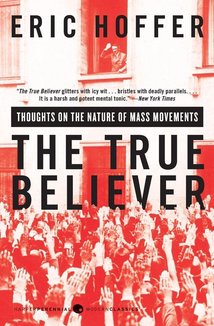
The True Believer: Thoughts on the Nature of Mass Movements (Perennial Classics)
Author:
Eric Hoffer
“Its theme is political fanaticism, with which it deals severely and brilliantly.” — New Yorker The famous bestseller with “concise insight into what drives the mind of the fanatic and the dynamics of a mass movement” ( Wall Street Journal ) by the legendary San Francisco longshoreman. A stevedore on the San Francisco docks in the 1940s, Eric Hoffer wrote philosophical treatises in his spare time while living in the railroad yards.
“Its theme is political fanaticism, with which it deals severely and brilliantly.” — New Yorker The famous bestseller with “concise insight into what drives the mind of the fanatic and the dynamics of a mass movement” ( Wall Street Journal ) by the legendary San Francisco longshoreman. A stevedore on the San Francisco docks in the 1940s, Eric Hoffer wrote philosophical treatises in his spare time while living in the railroad yards. The True Believer —the first and most famous of his books—was made into a bestseller when President Eisenhower cited it during one of the earliest television press conferences. Called a “brilliant and original inquiry” and “a genuine contribution to our social thought” by Arthur Schlesinger, Jr., this landmark in the field of social psychology is completely relevant and essential for understanding the world today as it delivers a visionary, highly provocative look into the mind of the fanatic and a penetrating study of how an individual becomes one.
Find this book on:
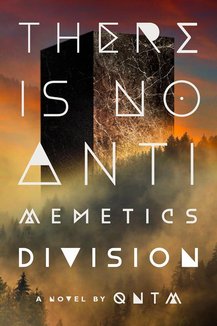
There Is No Antimemetics Division: A Novel
Author:
qntm
NATIONAL BESTSELLER • Humanity is under assault by malevolent “antimemes”—ideas that attack memory, identity, and the fabric of reality itself—in this whip-smart tale of science-fiction horror, an entirely reimagined and expanded version of the beloved online novel. “Utterly brilliant .
NATIONAL BESTSELLER • Humanity is under assault by malevolent “antimemes”—ideas that attack memory, identity, and the fabric of reality itself—in this whip-smart tale of science-fiction horror, an entirely reimagined and expanded version of the beloved online novel. “Utterly brilliant . . . a dazzling, confusing novel with a highly effective, creeping sense of dread . . . I can’t recommend it enough.”—Charlie Jane Anders, The Washington Post “[An] unforgettable, mind-bendingly brilliant novel.”— The Guardian They’re all around us, hiding in plain sight. One could be in the room with you now, just to your left. You could be seeing it right now—but from this second to the next, you’ll forget that you did. If you managed to jot down a note, the paper would look blank to you afterward. These entities can feed on your most cherished memories, the things that make you you—and you’ll never even know anything changed. They can turn you into a living ghost—make it so you’re standing next to your spouse, screaming in their ear, and they won’t know you’re there. They’re predators equipped with the ultimate camouflage, living black holes for information, able to consume our very memories of their existence. And they aren’t just feeding on us. They’re invading. But how do you fight an enemy when you can never even know that you’re at war? How do you contain something you can’t record or remember? Welcome to the Antimemetics Division. No, this is not your first day.
Find this book on:
Episode overview
A.I. agents are here. Have they changed your life yet? The release of agents like Claude Code marked a new pivot point in the history of A.I. We are leaving the chatbot era and entering the agentic era — where A.I. is capable of completing all kinds of tasks on its own, and even collaborating and communicating with other A.I.
It isn’t clear yet whether these models actually make their users meaningfully more productive. But the technology is continuing to improve; there are few signs that it is close to plateauing. So what might this new era mean for our economy, our labor market and our kids?
Clark is a co-founder of Anthropic, the company behind Claude and Claude Code. His newsletter, Import AI, has been one of my go-to reads to track the capabilities of different models over the years. In this conversation, I ask him to share how he sees this moment — how the technology is changing, whether it is leading to meaningful changes in how we work and think, and how policy needs to or can change in response to any job displacement on the horizon.