
From this episode
Recommended books
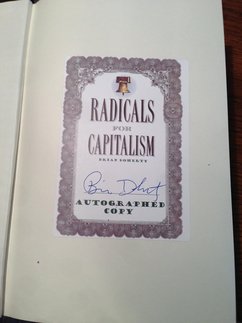
On Wall Street, in the culture of high tech, in American government: Libertarianismthe simple but radical idea that the only purpose of government is to protect its citizens and their property against direct violence and threat has become an extremely influential strain of thought. But while many books talk about libertarian ideas, none until now has explored the history of this uniquely American movementwhere and who it came from, how it evolved, and what impact it has had on our country.
On Wall Street, in the culture of high tech, in American government: Libertarianismthe simple but radical idea that the only purpose of government is to protect its citizens and their property against direct violence and threat has become an extremely influential strain of thought. But while many books talk about libertarian ideas, none until now has explored the history of this uniquely American movementwhere and who it came from, how it evolved, and what impact it has had on our country. In this revelatory book, based on original research and interviews with more than 100 key sources, Brian Doherty traces the evolution of the movement through the unconventional life stories of its most influential leaders Ludwig von Mises, F.A. Hayek, Ayn Rand, Murray Rothbard, and Milton Friedmanand through the personal battles, character flaws, love affairs, and historical events that altered its course. And by doing so, he provides a fascinating new perspective on American historyfrom the New Deal through the culture wars of the 1960s to today's most divisive political issues. Neither an exposé nor a political polemic, this entertaining historical narrative will enlighten anyone interested in American politics.
Find this book on:


The Ethics of Authenticity
Author:
Charles Taylor
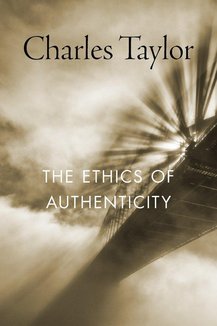
“Charles Taylor is a philosopher of broad reach and many talents, but his most striking talent is a gift for interpreting different traditions, cultures and philosophies to one another…[This book is] full of good things.” ― New York Times Book Review Everywhere we hear talk of decline, of a world that was better once, maybe fifty years ago, maybe centuries ago, but certainly before modernity drew us along its dubious path. While some lament the slide of Western culture into relativism and nihilism and others celebrate the trend as a liberating sort of progress, Charles Taylor calls on us to face the moral and political crises of our time, and to make the most of modernity’s challenges.
“Charles Taylor is a philosopher of broad reach and many talents, but his most striking talent is a gift for interpreting different traditions, cultures and philosophies to one another…[This book is] full of good things.” ― New York Times Book Review Everywhere we hear talk of decline, of a world that was better once, maybe fifty years ago, maybe centuries ago, but certainly before modernity drew us along its dubious path. While some lament the slide of Western culture into relativism and nihilism and others celebrate the trend as a liberating sort of progress, Charles Taylor calls on us to face the moral and political crises of our time, and to make the most of modernity’s challenges. “The great merit of Taylor’s brief, non-technical, powerful book…is the vigor with which he restates the point which Hegel (and later Dewey) urged against Rousseau and Kant: that we are only individuals in so far as we are social…Being authentic, being faithful to ourselves, is being faithful to something which was produced in collaboration with a lot of other people…The core of Taylor’s argument is a vigorous and entirely successful criticism of two intertwined bad ideas: that you are wonderful just because you are you, and that ‘respect for difference’ requires you to respect every human being, and every human culture―no matter how vicious or stupid.” ―Richard Rorty, London Review of Books
Find this book on:
War and Peace (Vintage Classics)
Authors:
Leo Tolstoy,
Richard Pevear,
Larissa Volokhonsky
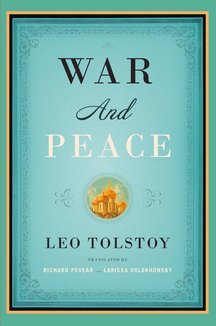
From Richard Pevear and Larissa Volokhonsky, the best-selling, award-winning translators of Anna Karenina and The Brothers Karamazov, comes a brilliant, engaging, and eminently readable translation of Leo Tolstoy’s master epic. • Nominated as one of America’s best-loved novels by PBS’s The Great American Read War and Peace centers broadly on Napoleon’s invasion of Russia in 1812 and follows three of the best-known characters in literature: Pierre Bezukhov, the illegitimate son of a count who is fighting for his inheritance and yearning for spiritual fulfillment; Prince Andrei Bolkonsky, who leaves behind his family to fight in the war against Napoleon; and Natasha Rostov, the beautiful young daughter of a nobleman, who intrigues both men.
From Richard Pevear and Larissa Volokhonsky, the best-selling, award-winning translators of Anna Karenina and The Brothers Karamazov, comes a brilliant, engaging, and eminently readable translation of Leo Tolstoy’s master epic. • Nominated as one of America’s best-loved novels by PBS’s The Great American Read War and Peace centers broadly on Napoleon’s invasion of Russia in 1812 and follows three of the best-known characters in literature: Pierre Bezukhov, the illegitimate son of a count who is fighting for his inheritance and yearning for spiritual fulfillment; Prince Andrei Bolkonsky, who leaves behind his family to fight in the war against Napoleon; and Natasha Rostov, the beautiful young daughter of a nobleman, who intrigues both men. As Napoleon’s army invades, Tolstoy vividly follows characters from diverse backgrounds—peasants and nobility, civilians and soldiers—as they struggle with the problems unique to their era, their history, and their culture. And as the novel progresses, these characters transcend their specificity, becoming some of the most moving—and human—figures in world literature. Pevear and Volokhonsky have brought us this classic novel in a translation remarkable for its fidelity to Tolstoy’s style and cadence and for its energetic, accessible prose.
Find this book on:
Episode overview
The New Right has been associated with everyone from Senator Josh Hawley of Missouri to right-wing influencers and Catholic integralists. The breadth of the term can make it hard to define: Is the New Right a budding ideological movement or a toxic online subculture? What does it mean if it’s both?
Stephanie Slade is a senior editor at the magazine Reason, and has covered the New Right extensively. She argues that the New Right subverts the conventional left/right political binary and is better understood as the illiberal backlash to classical liberalism.
This conversation is a tour of the New Right. The guest host, David French, talks to Slade about the politicians who have been attached to the ideological movement; why the New Right is critical of Reaganism; her problems with its self-branding as “common good conservatism”; how the Ron DeSantis “Stop Woke Act” signals a diversion from conservative free speech values; why the New Right is so angry; how online factions of the New Right are often in a delicate dance between flirting with bigotry and actually aligning with the provocative beliefs they post; why Catholic integralism matters, even if the average Catholic might have never heard of the ideology; and much more.
This episode was hosted by David French, an Opinion columnist at The New York Times. Previously, he was a senior editor and co-founder of The Dispatch and a contributing writer at The Atlantic.