
From this episode
Recommended books
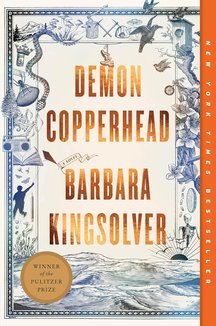
Demon Copperhead: A Pulitzer Prize Winner
Author:
Barbara Kingsolver
WINNER OF THE PULITZER PRIZE • WINNER OF THE WOMEN'S PRIZE FOR FICTION New York Times Readers’ Pick: Top 100 Books of the 21 st Century • An Oprah’s Book Club Selection • An Instant New York Times Bestseller • An Instant Wall Street Journal Bestseller • A #1 Washington Post Bestseller • A New York Times "Ten Best Books of the Year" "Demon is a voice for the ages—akin to Huck Finn or Holden Caulfield—only even more resilient.” —Beth Macy, author of Dopesick "May be the best novel of [the year]. .
WINNER OF THE PULITZER PRIZE • WINNER OF THE WOMEN'S PRIZE FOR FICTION New York Times Readers’ Pick: Top 100 Books of the 21 st Century • An Oprah’s Book Club Selection • An Instant New York Times Bestseller • An Instant Wall Street Journal Bestseller • A #1 Washington Post Bestseller • A New York Times "Ten Best Books of the Year" "Demon is a voice for the ages—akin to Huck Finn or Holden Caulfield—only even more resilient.” —Beth Macy, author of Dopesick "May be the best novel of [the year]. . . . Equal parts hilarious and heartbreaking, this is the story of an irrepressible boy nobody wants, but readers will love.” — Ron Charles, Washington Post From the acclaimed author of The Poisonwood Bible and The Bean Trees and the recipient of the National Book Foundation's Medal for Distinguished Contribution to American Letters , a brilliant novel that enthralls, compels, and captures the heart as it evokes a young hero’s unforgettable journey to maturity Set in the mountains of southern Appalachia, Demon Copperhead is the story of a boy born to a teenaged single mother in a single-wide trailer, with no assets beyond his dead father’s good looks and copper-colored hair, a caustic wit, and a fierce talent for survival. Relayed in his own unsparing voice, Demon braves the modern perils of foster care, child labor, derelict schools, athletic success, addiction, disastrous loves, and crushing losses. Through all of it, he reckons with his own invisibility in a popular culture where even the superheroes have abandoned rural people in favor of cities. Many generations ago, Charles Dickens wrote David Copperfield from his experience as a survivor of institutional poverty and its damages to children in his society. Those problems have yet to be solved in ours. Dickens is not a prerequisite for readers of this novel, but he provided its inspiration. In transposing a Victorian epic novel to the contemporary American South, Barbara Kingsolver enlists Dickens’ anger and compassion, and above all, his faith in the transformative powers of a good story. Demon Copperhead speaks for a new generation of lost boys, and all those born into beautiful, cursed places they can’t imagine leaving behind.
Find this book on:


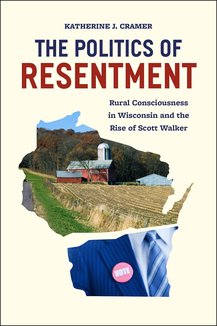
Since the election of Scott Walker, Wisconsin has been seen as ground zero for debates about the appropriate role of government in the wake of the Great Recession. In a time of rising inequality, Walker not only survived a bitterly contested recall that brought thousands of protesters to Capitol Square, he was subsequently reelected.
Since the election of Scott Walker, Wisconsin has been seen as ground zero for debates about the appropriate role of government in the wake of the Great Recession. In a time of rising inequality, Walker not only survived a bitterly contested recall that brought thousands of protesters to Capitol Square, he was subsequently reelected. How could this happen? How is it that the very people who stand to benefit from strong government services not only vote against the candidates who support those services but are vehemently against the very idea of big government? With The Politics of Resentment, Katherine J. Cramer uncovers an oft-overlooked piece of the puzzle: rural political consciousness and the resentment of the “liberal elite.” Rural voters are distrustful that politicians will respect the distinct values of their communities and allocate a fair share of resources. What can look like disagreements about basic political principles are therefore actually rooted in something even more fundamental: who we are as people and how closely a candidate’s social identity matches our own. Using Scott Walker and Wisconsin’s prominent and protracted debate about the appropriate role of government, Cramer illuminates the contours of rural consciousness, showing how place-based identities profoundly influence how people understand politics, regardless of whether urban politicians and their supporters really do shortchange or look down on those living in the country. The Politics of Resentment shows that rural resentment—no less than partisanship, race, or class—plays a major role in dividing America against itself.
Find this book on:
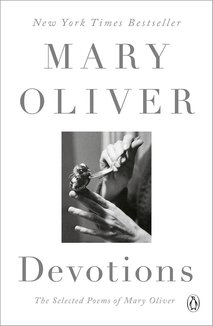
Devotions: A Read with Jenna Pick: The Selected Poems of Mary Oliver
Author:
Mary Oliver
Tell me, what is it you plan to do with your one wild and precious life? -Mary Oliver, from "The Summer Day" Pulitzer Prize-winning poet Mary Oliver presents a personal selection of her best work in this definitive collection spanning more than five decades of her esteemed literary career.
Tell me, what is it you plan to do with your one wild and precious life? -Mary Oliver, from "The Summer Day" Pulitzer Prize-winning poet Mary Oliver presents a personal selection of her best work in this definitive collection spanning more than five decades of her esteemed literary career. “No matter where one starts reading, Devotions offers much to love.” — The Washington Post Throughout her celebrated career, Mary Oliver has touched countless readers with her brilliantly crafted verse, expounding on her love for the physical world and the powerful bonds between all living things. Identified as "far and away, this country's best selling poet" by Dwight Garner, she now returns with a stunning and definitive collection of her writing from the last fifty years. Carefully curated, these 200 plus poems feature Oliver's work from her very first book of poetry, No Voyage and Other Poems , published in 1963 at the age of 28, through her most recent collection, Felicity , published in 2015. This timeless volume, arranged by Oliver herself, showcases the beloved poet at her edifying best. Within these pages, she provides us with an extraordinary and invaluable collection of her passionate, perceptive, and much-treasured observations of the natural world.
Find this book on:
Episode overview
President Trump’s deployment of the National Guard from red states into blue cities isn’t just a partisan attack; it’s also a geographic one. In the 2024 election, Donald Trump won rural areas by 40 percentage points. And you could see what’s been happening in Washington, D.C., and Chicago as a rural political coalition militarily occupying urban centers. The rural-urban divide in America has become so big it’s dangerous — for our politics, and for democracy. And yet, just a few decades ago, this divide didn’t exist. Urban and rural areas voted pretty much in lockstep. And for Democrats to gain power again, they’ll need to figure out how to win some of those voters back.
So how did the Democratic Party lose rural voters? And what could they do to win their votes back?
Suzanne Mettler is a political scientist at Cornell University and the co-author with Trevor E. Brown of the new book “Rural Versus Urban: The Growing Divide That Threatens Democracy.”