Books recommended
All guests





Episodes with Jason Bordoff


Iran has currently shut off more than 10 percent of the world’s oil supply. If that goes on for a lot longer — or if the war escalates to include more strikes on energy infrastructure in the region — the price of oil could go through the roof, and the damage to the global economy could be catastrophic.
So what would that look like? What tools does the United States have to avert it? And how is this crisis already reverberating in countries around the world?
Jason Bordoff is the founding director of the Center on Global Energy Policy at Columbia University and a founding dean of the Columbia Climate School. He served as a special assistant to President Barack Obama and senior director for energy and climate change on the National Security Council.
In this conversation, Bordoff answers all my questions about the crisis so far and how things could spin out from here, the strategic positioning of the United States, Europe, Iran, Russia and China, the developing countries likely to suffer the most and the lessons the world might take from this.
Books recommended:


Jason Bordoff
March 24, 2026
View


The global decarbonization effort is colliding headfirst with the realities of great power politics. China currently controls more than 75 percent of the world’s electric vehicle battery and solar photovoltaic manufacturing supply chains. It also processes the bulk of the so-called critical minerals, like lithium, cobalt and graphite, that are essential to building out clean energy technologies. There is no clean energy revolution without China.
What would happen if China decided to weaponize its clean energy resources in the same way Russia recently weaponized its oil and gas? Is it possible for the U.S. to end its energy dependency on China by investing in clean energy at home? What does this geopolitical reality mean for the prospect of meeting the world’s climate goals?
Over the past few years, Jason Bordoff and Meghan O’Sullivan have been at the forefront of mapping out the ways decarbonization will upend the world’s economic and geopolitical order. Bordoff is the founding director of the Center on Global Energy Policy at Columbia University and a former senior director for energy and climate change for the National Security Council under Barack Obama. O’Sullivan is the director of the Belfer Center for Science and International Affairs at the Harvard Kennedy School and a former deputy national security adviser in the George W. Bush administration.
In Bordoff and O’Sullivan’s view, decarbonization won’t just affect what kinds of cars we drive or how we power our homes. It will transform everything from the nature of international markets and trade relations to the global balance of military and diplomatic power. And it will create new economic superpowers, new alliances and new sources of geopolitical conflict in the process.
This conversation explores the contours of this transformation and what it will mean for the future of the climate and world politics.
Books recommended:
-
📙
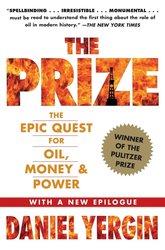
The Prize: The Epic Quest for Oil, Money & Power
by
Daniel Yergin
-
📕
Silent Spring Revolution: John F. Kennedy, Rachel Carson, Lyndon Johnson, Richard Nixon, and the Great Environmental Awakening
by
Douglas Brinkley

-
📘
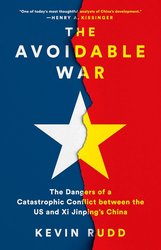
The Avoidable War: The Dangers of a Catastrophic Conflict between the US and Xi Jinping's China
by
Kevin Rudd
-
📗
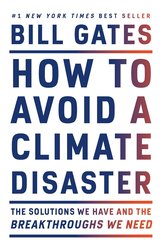
How to Avoid a Climate Disaster: The Solutions We Have and the Breakthroughs We Need
by
Bill Gates
Meghan O'Sullivan
,
Jason Bordoff
Aug. 22, 2023
View