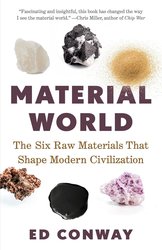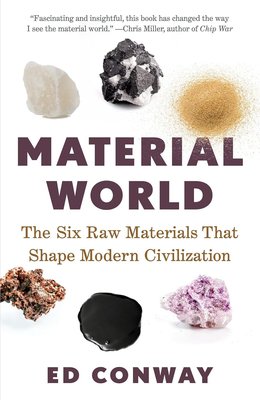


THE NEW YORK TIMES BOOK REVIEW EDITORS' CHOICE • AN ECONOMIST BEST BOOK OF THE YEAR • Finalist for the Financial Times and Schroders Business Book of the Year Award Sand, salt, iron, copper, oil, and lithium. These fundamental materials have created empires, razed civilizations and fed our ingenuity and our greed for thousands of years. Without them, our modern world would not exist, and the battle to control them will determine our future. The fiber-optic cables that weave the World Wide Web, the copper veins of our electric grid, the silicon chips and lithium batteries that power our phones and cars: though it can feel like we now live in a weightless world of information—what Ed Conway calls “the ethereal world”—our twenty-first-century lives are still very much rooted in the material. In fact, we dug more stuff out of the earth in 2017 than in all of human history before 1950. For every ton of fossil fuels, we extract six tons of other materials, from sand to stone to wood tometal. And in Material World , Conway embarks on an epic journey across continents, cultures and epochs to reveal the underpinnings of modern life on Earth—traveling from the sweltering depths ofthe deepest mine in Europe to spotless silicon chip factories in Taiwan to the eerie green pools where lithium originates. Material World is a celebration of the humans and the human networks, the miraculous processes and the little-known companies, that combine to turn raw materials into things of wonder. This is the story of human civilization from an entirely new perspective: the ground up.