From this episode
Recommended books
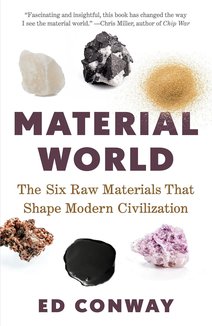
Material World: The Six Raw Materials That Shape Modern Civilization
Author:
Ed Conway
THE NEW YORK TIMES BOOK REVIEW EDITORS' CHOICE • AN ECONOMIST BEST BOOK OF THE YEAR • Finalist for the Financial Times and Schroders Business Book of the Year Award Sand, salt, iron, copper, oil, and lithium. These fundamental materials have created empires, razed civilizations and fed our ingenuity and our greed for thousands of years.
THE NEW YORK TIMES BOOK REVIEW EDITORS' CHOICE • AN ECONOMIST BEST BOOK OF THE YEAR • Finalist for the Financial Times and Schroders Business Book of the Year Award Sand, salt, iron, copper, oil, and lithium. These fundamental materials have created empires, razed civilizations and fed our ingenuity and our greed for thousands of years. Without them, our modern world would not exist, and the battle to control them will determine our future. The fiber-optic cables that weave the World Wide Web, the copper veins of our electric grid, the silicon chips and lithium batteries that power our phones and cars: though it can feel like we now live in a weightless world of information—what Ed Conway calls “the ethereal world”—our twenty-first-century lives are still very much rooted in the material. In fact, we dug more stuff out of the earth in 2017 than in all of human history before 1950. For every ton of fossil fuels, we extract six tons of other materials, from sand to stone to wood tometal. And in Material World , Conway embarks on an epic journey across continents, cultures and epochs to reveal the underpinnings of modern life on Earth—traveling from the sweltering depths ofthe deepest mine in Europe to spotless silicon chip factories in Taiwan to the eerie green pools where lithium originates. Material World is a celebration of the humans and the human networks, the miraculous processes and the little-known companies, that combine to turn raw materials into things of wonder. This is the story of human civilization from an entirely new perspective: the ground up.
Find this book on:


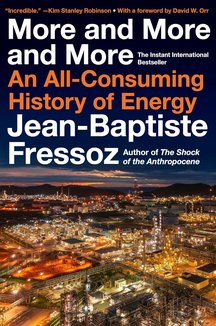
More and More and More: An All-Consuming History of Energy
Author:
Jean-Baptiste Fressoz
The radical, paradigm-shifting international bestseller that destroys our delusions about energy consumption and will change the way we talk about climate change. We have long been taught that humanity’s relationship with energy is one of progress, with wood superseded by coal, coal by oil, oil by nuclear—until at some future point everything will be replaced by “green” energy.
The radical, paradigm-shifting international bestseller that destroys our delusions about energy consumption and will change the way we talk about climate change. We have long been taught that humanity’s relationship with energy is one of progress, with wood superseded by coal, coal by oil, oil by nuclear—until at some future point everything will be replaced by “green” energy. But the long-held belief in transition and sustainability is completely untrue, Jean-Baptiste Fressoz argues. More and More and More demolishes this disastrous fallacy, showing how our industrial age and beyond has in fact been powered by an ever-greater accumulation of each major energy source feeding off the others. Using a fascinating array of examples from past and present, from the whaling and candle-making industries of the nineteenth century to our post-nuclear age today, Fressoz describes how humanity has gorged on all forms of energy—with whole forests used to prop up coal mines, and fossil fuels remaining central to the creation of innumerable new products we rely on every day. While nations have signed climate agreements aimed at reducing fossil fuels, the sad truth is that the world today burns more wood, coal, and carbon than ever before. More and More and More forces readers to confront hard truths, including how “transition” was originally promoted by energy companies, not as a genuine plan, but as a way to put off any meaningful change. It offers a clear-eyed understanding of the modern world in all its voracious reality and shines a hard light on the true nature of the enormous challenges eight billion of us face, as we stand at the precipice of planetary crisis.
Find this book on:
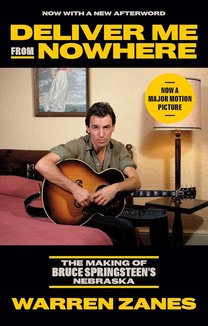
Deliver Me from Nowhere: The Making of Bruce Springsteen's Nebraska
Author:
Warren Zanes
The fascinating story behind the making of Bruce Springsteen’s most surprising album, Nebraska, revealing its pivotal role in Springsteen’s career—now with a new afterword Soon to be a major motion picture starring Jeremy Allen White ( The Bear ) “Brilliant . .
The fascinating story behind the making of Bruce Springsteen’s most surprising album, Nebraska, revealing its pivotal role in Springsteen’s career—now with a new afterword Soon to be a major motion picture starring Jeremy Allen White ( The Bear ) “Brilliant . . . For fans of American music, Deliver Me from Nowhere makes a great ghost story.”— The Boston Globe AN NPR BEST BOOK OF THE YEAR Without Nebraska, Bruce Springsteen might not be who he is today. The natural follow-up to Springsteen’s hugely successful album The River should have been the hit-packed Born in the U.S.A. But instead, in 1982, he came out with an album consisting of a series of dark songs he had recorded by himself, for himself. But more than forty years later, Nebraska is arguably Springsteen’s most important record—the lasting clue to understanding not just his career as an artist and the vision behind it, but also the man himself. Nebraska is rough and unfinished, recorded on cassette tape with a simple four-track recorder by Springsteen, alone in his bedroom, just as the digital future was announcing itself. And yet Springsteen now considers it his best album. Nebraska expressed a turmoil that was reflective of the mood of the country, but it was also a symptom of trouble in the artist’s life, the beginnings of a mental breakdown that Springsteen would only talk about openly decades after the album’s release. Warren Zanes spoke to many people involved with making Nebraska, including Bruce Springsteen himself. He also interviewed more than a dozen celebrated artists and musical insiders, from Rosanne Cash to Steven Van Zandt, about their reactions to the album. Zanes interweaves these conversations with inquiries into the myriad cultural touchpoints, including Terrence Malick’s Badlands and the short stories of Flannery O’Conner, that influenced Springsteen as he was writing the album’s haunting songs. The result is a textured and revelatory account of not only a crucial moment in the career of an icon but also a record that upended all expectations and predicted a home-recording revolution.
Find this book on:
Episode overview
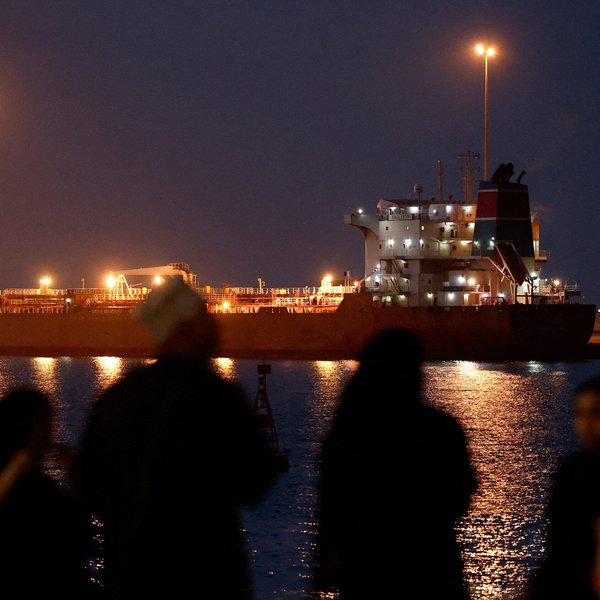
Iran has currently shut off more than 10 percent of the world’s oil supply. If that goes on for a lot longer — or if the war escalates to include more strikes on energy infrastructure in the region — the price of oil could go through the roof, and the damage to the global economy could be catastrophic.
So what would that look like? What tools does the United States have to avert it? And how is this crisis already reverberating in countries around the world?
Jason Bordoff is the founding director of the Center on Global Energy Policy at Columbia University and a founding dean of the Columbia Climate School. He served as a special assistant to President Barack Obama and senior director for energy and climate change on the National Security Council.
In this conversation, Bordoff answers all my questions about the crisis so far and how things could spin out from here, the strategic positioning of the United States, Europe, Iran, Russia and China, the developing countries likely to suffer the most and the lessons the world might take from this.