Books recommended
All guests
Reflections on the Revolution in France (Oxford World's Classics)
Edmund Burke, Jesse Norman, L. G. Mitchell



Making the Presidency: John Adams and the Precedents That Forged the Republic
Lindsay M. Chervinsky

On Empire, Liberty, and Reform: Speeches and Letters
Edmund Burke, Professor David Bromwich


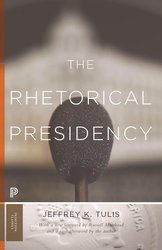
The Rhetorical Presidency: New Edition (Princeton Classics)
Jeffrey K. Tulis, Russell Muirhead
The Upswing: How America Came Together a Century Ago and How We Can Do It Again
Robert D. Putnam, Shaylyn Romney Garrett
Episodes with Yuval Levin


We are one year into Trump’s second term. And it feels like so much has happened – more than the human mind, or the country, can absorb. But how much has Trump really accomplished? What policies have changed the country in a way that will last?
My guest Yuval Levin is one of the smartest thinkers on the right, and his verdict is: not that much. “There’s an important story to tell about the absence of action in the past year, too,” he tells me.
Levin is the director of social, cultural and constitutional studies at the American Enterprise Institute, the founder and editor of National Affairs and the author of several books on policy and political theory, including “American Covenant: How the Constitution Unified Our Nation – and Could Again.”
Books recommended:
-
📕
Insecure Majorities: Congress and the Perpetual Campaign
by
Frances E. Lee
-
📘
Making the Presidency: John Adams and the Precedents That Forged the Republic
by
Lindsay M. Chervinsky
-
📗
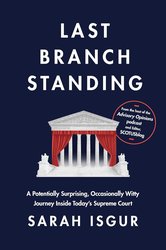
Last Branch Standing: A Potentially Surprising, Occasionally Witty Journey Inside Today's Supreme Court
by
Sarah Isgur
Yuval Levin
Jan. 16, 2026
View


There are two pieces to this episode. First, a tour of what Donald Trump has done — and what he has backed down from doing — over the last few days. There’s a lesson there. Perhaps Democrats are starting to learn it.
Then I wanted to hear the view of Trump’s first weeks back in office from someone on the right — someone who agrees with many of Trump’s policies, but also understands how the government works and who cares about our Constitution.
Yuval Levin is the director of social, cultural and constitutional studies at the American Enterprise Institute. His latest book is “American Covenant: How the Constitution Unified Our Nation — and Could Again.” What struck me about our conversation is that, on the one hand, Levin is less alarmed about much of what’s happening than I am. But on the other hand, he’s a lot less impressed by what Trump is actually getting done — and how these moves are likely to work out for him — than most Democrats I know. It’s a perspective very much worth hearing.
Books recommended:
Yuval Levin
Feb. 5, 2025
View


"I don’t think conservatism can do its job in a free society in opposition to the institutions of that society,” Yuval Levin told me. “I think it can only function in defense of them.”
Levin is the director of social, cultural and constitutional studies at the American Enterprise Institute, as well as the author of a number of great books, most recently, “A Time to Build.” I wanted to talk to him about a very specific question, though: What will the Republican Party become? Levin is one of its most thoughtful and sober analysts — a temperament that may, I realize, make him unsuited to interpreting its current incarnation, in which a majority of House Republicans voted to reject the results of the 2020 presidential election and one of them is, well, Marjorie Taylor Greene.
But Levin’s diagnosis is interesting. Histories of the modern Republican Party often place Ronald Reagan at their center. That is, in Levin’s view, a mistake. “I think Reagan is better understood as a detour from a history that is otherwise a story of a constant struggle between populism and conservatism,” he said. Donald Trump was an inheritor of a tradition that stretches long before him — Pat Buchanan’s tradition, and Strom Thurmond’s tradition. He didn’t form a new Republican Party; he allowed a long-existing part to express itself.
Behind that lie institutional changes both in the Republican Party and in the broader structure of American politics. That’s why I wanted to talk to Levin for this episode of “The Ezra Klein Show”: He, like me, thinks in terms of institutions. “The question for us in the coming years is whether we can move a little more in the direction of a politics of ‘what does government do,’ and less of a politics of ‘who rules,’” he says.
That’s exactly the right question, in my view. But we have very different views of what kinds of institutional changes would get us there. I’d like to see a more democratized, majoritarian system. Levin would, among other things, add a filibuster to the House.
So this is more than just a conversation about how to fix the Republican Party. It’s a conversation about how to fix American politics — how to recenter it on policy that changes people’s lives, rather than symbolic clashes that merely harden our hearts.
Mentioned in this episode:
“Big Tech, Big Government: The Challenges of Regulating Internet Platforms,” National Affairs, Winter 2021
The Working Class Republican: Ronald Reagan and the Return of Blue-Collar Conservatism by Henry Olsen
"Democrats, Here’s How to Lose in 2022. And Deserve It." by Ezra Klein
Books recommended:
-
📗
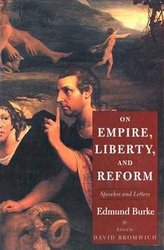
On Empire, Liberty, and Reform: Speeches and Letters
by
Edmund Burke,
Professor David Bromwich
-
📙
Reflections on the Revolution in France (Oxford World's Classics)
by
Edmund Burke,
Jesse Norman,
L. G. Mitchell

-
📕
The American Crisis: Classic Literature
by
Thomas Paine

-
📘
Conservatism: An Invitation to the Great Tradition
by
Roger Scruton
-
📗
Freedom From the Market: America’s Fight to Liberate Itself from the Grip of the Invisible Hand
by
Mike Konczal

-
📙
Social Democratic Capitalism
by
Lane Kenworthy
-
📕
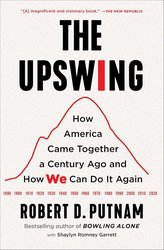
The Upswing: How America Came Together a Century Ago and How We Can Do It Again
by
Robert D. Putnam,
Shaylyn Romney Garrett
Yuval Levin
Feb. 5, 2021
View