
From this episode
Recommended books
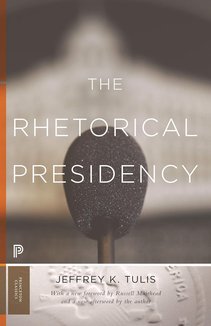
The Rhetorical Presidency: New Edition (Princeton Classics)
Authors:
Jeffrey K. Tulis,
Russell Muirhead
Modern presidents regularly appeal over the heads of Congress to the people at large to generate support for public policies. The Rhetorical Presidency makes the case that this development, born at the outset of the twentieth century, is the product of conscious political choices that fundamentally transformed the presidency and the meaning of American governance.
Modern presidents regularly appeal over the heads of Congress to the people at large to generate support for public policies. The Rhetorical Presidency makes the case that this development, born at the outset of the twentieth century, is the product of conscious political choices that fundamentally transformed the presidency and the meaning of American governance. Now with a new foreword by Russell Muirhead and a new afterword by the author, this landmark work probes political pathologies and analyzes the dilemmas of presidential statecraft. Extending a tradition of American political writing that begins with The Federalist and continues with Woodrow Wilson’s Congressional Government , The Rhetorical Presidency remains a pivotal work in its field.
Find this book on:


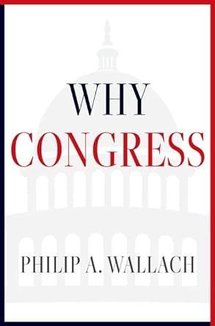
Why Congress (Studies in Postwar American Political Development)
Author:
Philip A. Wallach
A bold defense of our nation's legislature and its ability to work through the country's deepest divisions, and a stark warning of what our political future holds if we allow Congress to decay. Like it or not, our country's future depends on Congress.
A bold defense of our nation's legislature and its ability to work through the country's deepest divisions, and a stark warning of what our political future holds if we allow Congress to decay. Like it or not, our country's future depends on Congress. The Founding Fathers made a representative, deliberative legislature the indispensable pillar of the American constitutional system, giving it more power and responsibility than any other branch of government. Yet today, contempt for Congress is nearly universal. To a large extent, even members of Congress themselves are unable to explain and defend the value of their institution. Why Congress takes on this challenge squarely, explaining why our increasingly divided politics demand a legislature capable of pitting factions against each other and forcing them to work out accommodations. This book covers the past, present, and future of the institution to understand how it has become so dysfunctional, but also to suggest how it might be restored. The book vividly shows how a healthy Congress made it possible for the country to work through some of its most difficult challenges, including World War II and the struggle for civil rights. But transformations that began in the 1970s ultimately empowered congressional leaders to suppress dissent within their own parties and frame a maximally divisive agenda. In stark contrast to the earlier episodes, where legislators secured durable political resolutions, in facing contemporary challenges, such as immigration and COVID-19, Congress has exacerbated divisions rather than searching for compromises with broad appeal. But Congress' power to organize itself suggests a way out. Wallach deftly explains that while Congress could accept its descent into decrepitude or cede its power to the president, a Madisonian revival of deliberation can yet restore our system of government's ability to work through deep divides.
Find this book on:
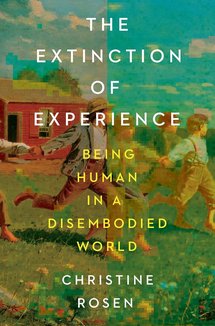
The Extinction of Experience: Being Human in a Disembodied World
Author:
Christine Rosen
An Esquire Best Book of 2024 A reflective, original invitation to recover and cultivate the human experiences that have atrophied in our virtual world. We embraced the mediated life―from Facetune and Venmo to meme culture and the Metaverse―because these technologies offer novelty and convenience.
An Esquire Best Book of 2024 A reflective, original invitation to recover and cultivate the human experiences that have atrophied in our virtual world. We embraced the mediated life―from Facetune and Venmo to meme culture and the Metaverse―because these technologies offer novelty and convenience. But they also transform our sense of self and warp the boundaries between virtual and real. What are the costs? Who are we in a disembodied world? In The Extinction of Experience , Christine Rosen investigates the cultural and emotional shifts that accompany our embrace of technology. In warm, philosophical prose, Rosen reveals key human experiences at risk of going extinct, including face-to-face communication, sense of place, authentic emotion, and even boredom. Considering cultural trends, like TikTok challenges and mukbang, and politically unsettling phenomena, like sociometric trackers and online conspiracy culture, Rosen exposes an unprecedented shift in the human condition, one that habituates us to alienation and control. To recover our humanity and come back to the real world, we must reclaim serendipity, community, patience, and risk.
Find this book on:
Episode overview
There are two pieces to this episode. First, a tour of what Donald Trump has done — and what he has backed down from doing — over the last few days. There’s a lesson there. Perhaps Democrats are starting to learn it.
Then I wanted to hear the view of Trump’s first weeks back in office from someone on the right — someone who agrees with many of Trump’s policies, but also understands how the government works and who cares about our Constitution.
Yuval Levin is the director of social, cultural and constitutional studies at the American Enterprise Institute. His latest book is “American Covenant: How the Constitution Unified Our Nation — and Could Again.” What struck me about our conversation is that, on the one hand, Levin is less alarmed about much of what’s happening than I am. But on the other hand, he’s a lot less impressed by what Trump is actually getting done — and how these moves are likely to work out for him — than most Democrats I know. It’s a perspective very much worth hearing.