Books recommended
All guests



Macbeth (Folger Shakespeare Library)
William Shakespeare, Dr. Barbara A. Mowat, Paul Werstine Ph.D.

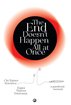
The End Doesn't Happen All at Once : A Pandemic Memoir
Chi Rainer Bornfree, Ragini Tharoor Srinivasan

Episodes with David Wallace-Wells
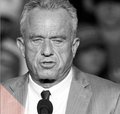

“Make America Healthy Again” is a great idea — somebody should try it.
A lot of the concerns animating the MAHA movement — chronic disease, the unhealthiness of the American diet, how profits warp our health care system — are serious issues. But Robert F. Kennedy Jr. hasn’t taken major actions to address them. Instead he’s gutted funding for scientific research, including nearly $500 million dedicated to mRNA vaccine development, throwing a huge amount of possibly lifesaving research in limbo.
How did we get here? What are the politics that allowed Donald Trump to preside over Operation Warp Speed, the single most successful pandemic mitigation policy, and then turn around a few years later to appoint Kennedy to undo it all?
My colleague David Wallace-Wells has done incredible reporting on how pandemic policies have shaped our politics, culture and society. Rachael Bedard is a physician and a writer who has been thinking deeply about what MAHA represents and where the movement could find common ground with its critics.
Books recommended:
-
📕
The Making of the Atomic Bomb: 25th Anniversary Edition
by
Richard Rhodes
-
📘
Doppelganger
by
Naomi Klein
-
📗
The End Doesn't Happen All at Once : A Pandemic Memoir
by
Chi Rainer Bornfree,
Ragini Tharoor Srinivasan
-
📙
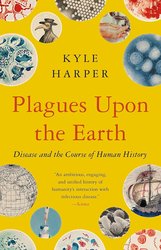
Plagues Upon the Earth: Disease and the Course of Human History (The Princeton Economic History of the Western World)
by
Kyle Harper
-
📕
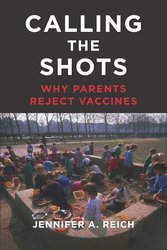
Calling the Shots: Why Parents Reject Vaccines
by
Jennifer A. Reich
-
📘
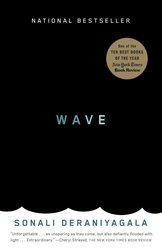
Wave: A Memoir
by
Sonali Deraniyagala
David Wallace-Wells
,
Rachael Bedard
Aug. 22, 2025
View


This summer has been a parade of broken climate records. June was the hottest June and July was not just the hottest July but the hottest month ever on record. At the same time, it looks like we are at the start of a green revolution: Decarbonization efforts have gone far better than what many had hoped for just a few years ago, and renewable energy is getting cheaper.
How should we make sense of these seemingly mixed signals? What does it mean to hold the pessimism of climate disaster and the optimism of climate action together?
There are few individuals better suited to navigate these questions than Kate Marvel, a senior climate scientist at Project Drawdown. In a conversation with guest host David Wallace-Wells, Marvel explores whether climate change is “accelerating,” why reducing air pollution will lead to more warming before it leads to less; how the human response to a changing climate can be more unpredictable than the climate itself; how witch burnings increased during the last major change in climate; what the relationship is between hotter weather and social unrest; how decarbonization sets us on track to avoiding the worst-case climate models; why, despite all the challenges ahead, there are still immeasurable benefits to fighting for a cleaner planet and much more.
This episode was hosted by David Wallace-Wells, a writer at The New York Times Magazine and the author of “The Uninhabitable Earth: Life After Warming.” He also writes a newsletter for New York Times Opinion that explores climate change, technology and the future of the planet and how we live on it.
Books recommended:


Kate Marvel
,
David Wallace-Wells
Sept. 5, 2023
View


Last week, freezing temperatures overwhelmed the Texas power grid, setting off rolling blackouts that left millions without power during an intense winter storm. But this story is a lot bigger than Texas: Our world is built around a model of the climate from the 19th and 20th centuries. Global warming is going to crack that model apart, and with it, much of the physical and political infrastructure civilization relies on.
At the same time, there’s good news on the climate front, too. The Biden administration has rejoined the Paris climate accords, pushed through a blitz of executive orders on the environment, and is planning a multitrillion-dollar climate bill. China has also set newly ambitious targets for decarbonization. Renewable energy is getting cheaper, faster, than almost anyone dared hope. And if you follow climate models, you know the most catastrophic outcomes have become less likely in recent years.
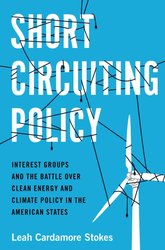
I wanted to have a conversation about both the emergency in Texas, and the broader picture on climate. Leah Stokes is a political scientist at University of California, Santa Barbara, and author of the excellent book “Short Circuiting Policy,” which, among other things, explores Texas’ surprising history with renewables. David Wallace-Wells is an editor at large at New York magazine and author of "The Uninhabitable Earth," one of the most sobering, disquieting portraits of our future — though he is, as you’ll hear in this discussion, getting a bit more optimistic.
We discuss whether the Texas crisis is going to be the new normal worldwide, the harrowing implications of how Texas Republicans have responded, why liberals should be cheering on Elon Musk, the difficulties liberal states are having on climate policy, the obstacles to decarbonization, the horrifying truth of what “adapting” to climate change will actually entail, why air pollution alone is a public health crisis worth solving, whether nuclear energy is the answer, and much more. I learned so much getting to sit in on this conversation. You will, too.
Mentioned in this episode:
“Migration towards Bangladesh coastlines projected to increase with sea level rise through 2100” by AR Bell, et al.
“Inequity in consumption of goods and services adds to racial–ethnic disparities in air pollution exposure” by Christopher W. Tessum, et al.
“Wildfire Exposure Increases Pro-Environment Voting within Democratic but Not Republican Areas” by Chad Hazlett and Matto Mildenberger
“Prisoners of the Wrong Dilemma: Why Distributive Conflict, Not Collective Action, Characterizes the Politics of Climate Change” by Michaël Aklin and Matto Mildenberger
Books recommended:
-
📘
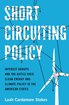
Short Circuiting Policy: Interest Groups and the Battle Over Clean Energy and Climate Policy in the American States (Studies in Postwar American Political Development)
by
Leah Cardamore Stokes
-
📗
The Lorax (Classic Seuss)
by
Dr. Seuss

-
📙
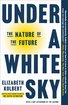
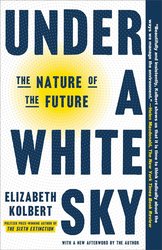
Under a White Sky: The Nature of the Future
by
Elizabeth Kolbert
-
📕
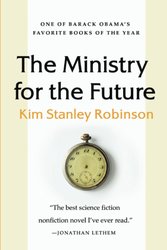
Ministry for the Future
by
Kim Stanley Robinson
Leah Stokes
,
David Wallace-Wells
Feb. 26, 2021
View