Books recommended
All guests

End of the End of History, The
Alex Hochuli, George Hoare, Philip Cunliffe, Hochuli Alex, Hoare George

Southern Tour, The: Deng Xiaoping and the Fight for China's Future (Asian Arguments)
Jonathan Chatwin, Paul French

Episodes with Adam Tooze
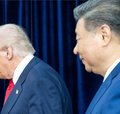

The old world order is dying. What new world order — if any — is struggling to be born?
I can’t think of a week when it felt clearer that an era was coming to an end. Whatever people thought America was, at least for a couple of decades, it’s something else now. The killing of Alex Pretti and the fact that it was recorded on video that plainly contradicted the Trump administration’s initial narrative made that clear. Mark Carney, the prime minister of Canada, also drove home that point when he declared at the World Economic Forum in Davos, Switzerland, that the world was in the midst of a “rupture.”
What do people think of America now in Europe? In China? And if American hegemony is coming to an end, what comes after that?
Adam Tooze is a historian at Columbia University and a chronicler of crises. The Guardian recently called him “the crisis whisperer.” He’s written a number of books about the times when systems fall apart and new orders emerge, including “Crashed: How a Decade of Financial Crises Changed the World.” And on his Substack, Chartbook, he tracks the unfolding crises and power shifts, in particular the rise of China. He also had a front-row seat to the chaos of Davos last week, moderating a panel that included Howard Lutnick, the commerce secretary.
I wanted to talk to Tooze about what he saw at the World Economic Forum, how the world’s understanding of the U.S. is changing and how he’s making sense of this moment.
Books recommended:
Adam Tooze
Jan. 30, 2026
View


“There are moments when history making creeps up on you,” writes the economic historian Adam Tooze. “This is one of those moments.”
Countries across the world are raising interest rates at unprecedented speeds. That global monetary tightening is colliding with spiking food and energy prices, financial market instability, high levels of emerging market debt and economies still struggling to recover from the Covid pandemic. Alone, each of these factors would warrant concern; combined, they could be catastrophic.
We’re already beginning to see what happens as these dynamics intersect: Britain just experienced a bond market meltdown that threatened one of the most advanced financial systems in the world. Developing countries like Sri Lanka, Argentina and Pakistan are experiencing political and economic crises. The World Bank believes we could be headed for a severe global recession.
Tooze is the director of the European Institute at Columbia University and the author of multiple histories of financial crises and near crises and of the excellent Chartbook newsletter. He believes this particular confluence of high inflation, rising interest rates and high levels of debt points to an economic “polycrisis” unlike any the world has seen. And he and others have argued that the U.S. Fed’s decision to raise interest rates is a core driver of that crisis.
So this is a conversation about the fragile, uncertain future of the global economy at this history-making moment and the Fed’s role in it. We discuss what the British financial market meltdown means for the rest of the world, how the interest rate hikes in rich countries export inflation to other countries, the looming possibility of a global recession, why Tooze believes something could break in the global financial system, why countries in South Asia are experiencing a particularly severe form of “polycrisis,” how the Fed should weigh its mandate to bring down inflation against the global consequences of its actions, why he believes analogies to the American inflationary period of the 1970s are misguided and more.
Books recommended:

Adam Tooze
Oct. 7, 2022
View


There’s the Russia-Ukraine war that’s easy to follow in the news right now. We can watch Russian bombs falling on Ukraine, see Russian tanks smoking on the side of the road, hear from Ukrainian resistance fighters livestreaming their desperate defense.
But there’s another theater to this war that’s harder to see, but may well decide the outcome: the economic war that West is waging on Russia. Europe and the United States initially responded with a limited set of sanctions but then expanded them into a counterattack capable of crushing the Russian economy. Vladimir Putin, for one, understands the danger: As the force of the West’s measures multiplied, he readied his nuclear forces in a bid to warn Europe and the United States off. This is terrifying territory.
So I asked Adam Tooze — a brilliant economic historian, the director of the European Institute at Columbia, and the author of the indispensable “Chartbook” newsletter — to explain how the war in the financial markets is shaping the war in streets of Ukraine. What he gave me was a whole new way to see how Putin had readied his country for conflict, the leverage that Russia’s energy exports gave it, how the dreams of the globalizers had cracked, and what the West both was and wasn’t doing in response.
But this is two conversations, not one. On Friday, Tooze and I recorded just as the war began. That was a conversation about the economics of the war as both Russia and the West understood it when the bombing began. But on Monday, we spoke again, because so much had changed. Rather than splice the two discussions into an artificial omniscience, I’ve linked them, because I think they reveal more in sequence: They show how fast this war is reshaping the politics around it, how quickly the escalation is coming, how rapidly the plans are crumbling.
So we discuss the sanctions that the West has deployed against Russia, how Europe’s dependence on Russian energy exports undermined the West’s response, what Putin understood about the dark side of economic interdependence, how Ukraine’s remarkable resistance — and the remarkable leadership of its president, Volodymyr Zelensky — reshaped the politics and policies in the West, how this war could alter the geopolitical calculus of China and Taiwan, the new economic order that is emerging, and more.
Books recommended:
-
📘
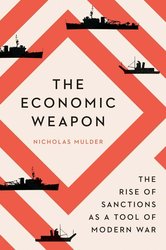
The Economic Weapon: The Rise of Sanctions as a Tool of Modern War
by
Nicholas Mulder
-
📗
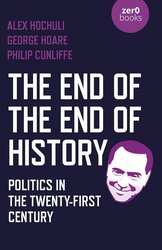
End of the End of History, The
by
Alex Hochuli,
George Hoare,
Philip Cunliffe,
Hochuli Alex,
Hoare George
-
📙
The Future of Money: How the Digital Revolution Is Transforming Currencies and Finance
by
Eswar S. Prasad
Adam Tooze
March 1, 2022
View


“The world discovered that John Maynard Keynes was right when he declared during World War II that ‘anything we can actually do, we can afford,’” writes Adam Tooze. “Budget constraints don’t seem to exist; money is a mere technicality. The hard limits of financial sustainability, policed, we used to think, by ferocious bond markets, were blurred by the 2008 financial crisis. In 2020, they were erased.”
Tooze is an economic historian at Columbia University, co-hosts the podcast “Ones and Tooze,” writes the brilliant Chartbook blog and is the author of “Crashed,” the single best history of the 2008 financial crisis. He’s now out with a new book, “Shutdown: How Covid Shook the World’s Economy,” which tells the story of the unprecedented global economic response to the pandemic.
The central thread of Tooze’s work is how the past decade of crises has upended many of the core assumptions that have guided economic policymaking for the past 50 years — including ones that many contemporary economists and policymakers continue to cling to. So that’s what we mainly talk about here. But we also discuss how the boundaries of acceptable thought in the economics profession are policed, the actual risk of runaway inflation, the limits of green monetary policy, the fight over Jerome Powell’s reappointment as Fed chair, what the Covid crisis reveals about our ability to respond to the climate crisis, the need for a supply-side progressivism and more.
Books recommended:

Adam Tooze
Sept. 17, 2021
View