From this episode
Recommended books

Love in the Time of Cholera (Oprah's Book Club)
Author:
Gabriel Garcia Marquez
INTERNATIONAL BESTSELLER • "A love story of astonishing power" ( Newsweek), the acclaimed modern literary classic by the beloved Nobel Prize-winning author. In their youth, Florentino Ariza and Fermina Daza fall passionately in love.
INTERNATIONAL BESTSELLER • "A love story of astonishing power" ( Newsweek), the acclaimed modern literary classic by the beloved Nobel Prize-winning author. In their youth, Florentino Ariza and Fermina Daza fall passionately in love. When Fermina eventually chooses to marry a wealthy, well-born doctor, Florentino is devastated, but he is a romantic. As he rises in his business career he whiles away the years in 622 affairs--yet he reserves his heart for Fermina. Her husband dies at last, and Florentino purposefully attends the funeral. Fifty years, nine months, and four days after he first declared his love for Fermina, he will do so again.
Find this book on:

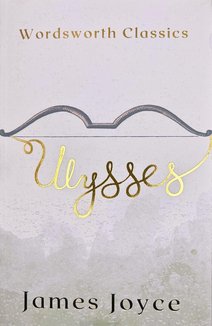
Ulysses (Wordsworth Classics)
Author:
James Joyce
Ulysses by James Joyce COMPLETE AND UNABRIDGED. With a new Introduction by Cedric Watts, Research Professor of English, University of Sussex.
Ulysses by James Joyce COMPLETE AND UNABRIDGED. With a new Introduction by Cedric Watts, Research Professor of English, University of Sussex. James Joyces astonishing masterpiece, Ulysses, tells of the diverse events which befall Leopold Bloom and Stephen Dedalus in Dublin on 16 June 1904, during which Blooms voluptuous wife, Molly, commits adultery. Initially deemed obscene in England and the USA, this richly-allusive novel, revolutionary in its Modernistic experimentalism, was hailed as a work of genius by W. B. Yeats, T. S. Eliot and Ernest Hemingway. Scandalously frank, wittily erudite, mercurially eloquent, resourcefully comic and generously humane, Ulysses offers the reader a life-changing experience.
Find this book on:
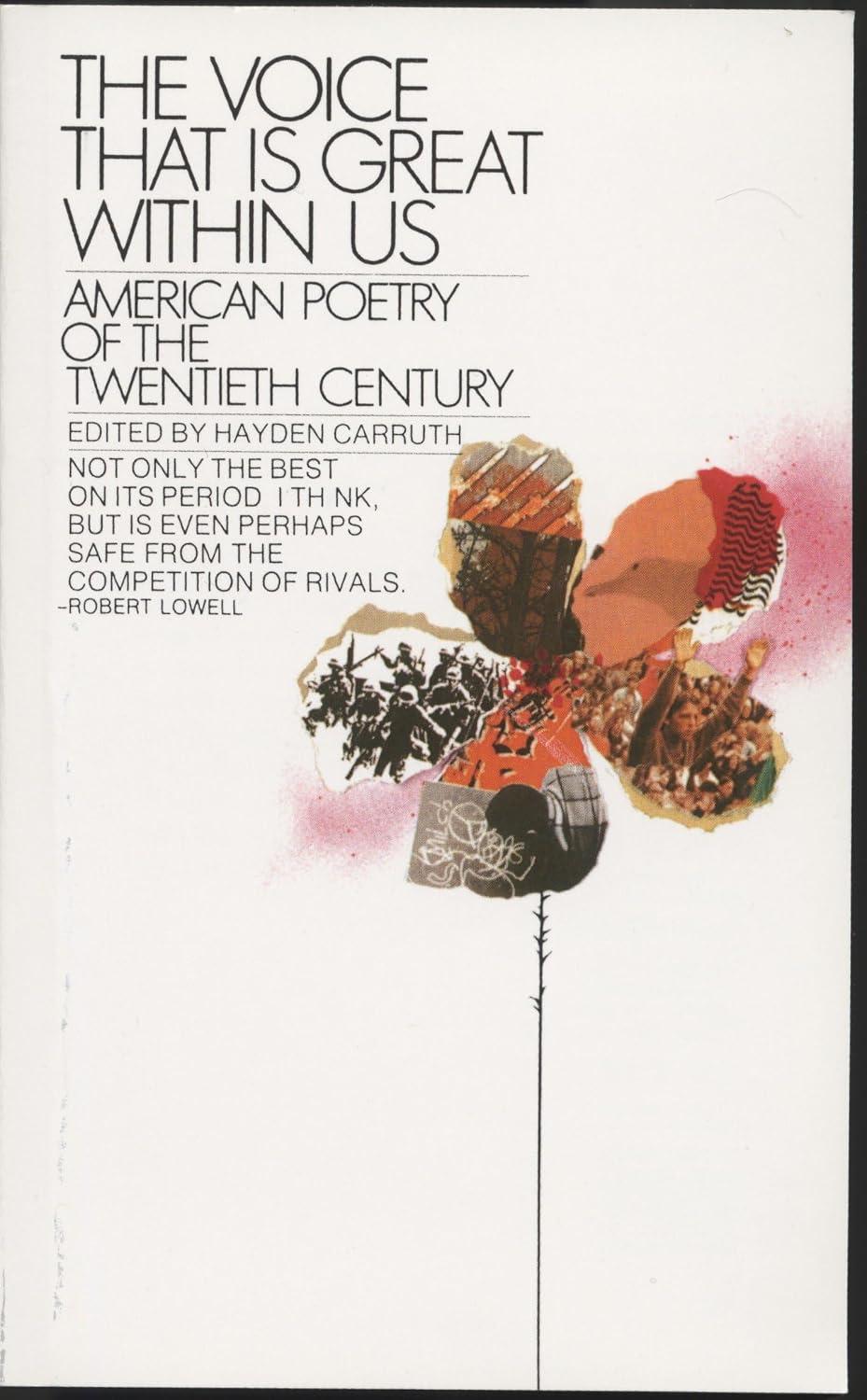
“What an achievement, these sixty years of poetry! In whatever terms we Americans regard the rest of our recent history, the score of things done well and done ill, this much at least we have done superlatively.”—Hayden Carruth This famous anthology includes the works of more than 130 major American poets of the modern period—Robert Frost, Paul Goodman, Carl Sandburg, T.S.
“What an achievement, these sixty years of poetry! In whatever terms we Americans regard the rest of our recent history, the score of things done well and done ill, this much at least we have done superlatively.”—Hayden Carruth This famous anthology includes the works of more than 130 major American poets of the modern period—Robert Frost, Paul Goodman, Carl Sandburg, T.S. Eliot, Ezra Pound, Allen Ginsberg, and Gwendolyn Brooks among them—along with short biographies of each. “Not only the best on its period, I think, but is even perhaps safe from the competition of rivals.”—Robert Lowell
Find this book on:
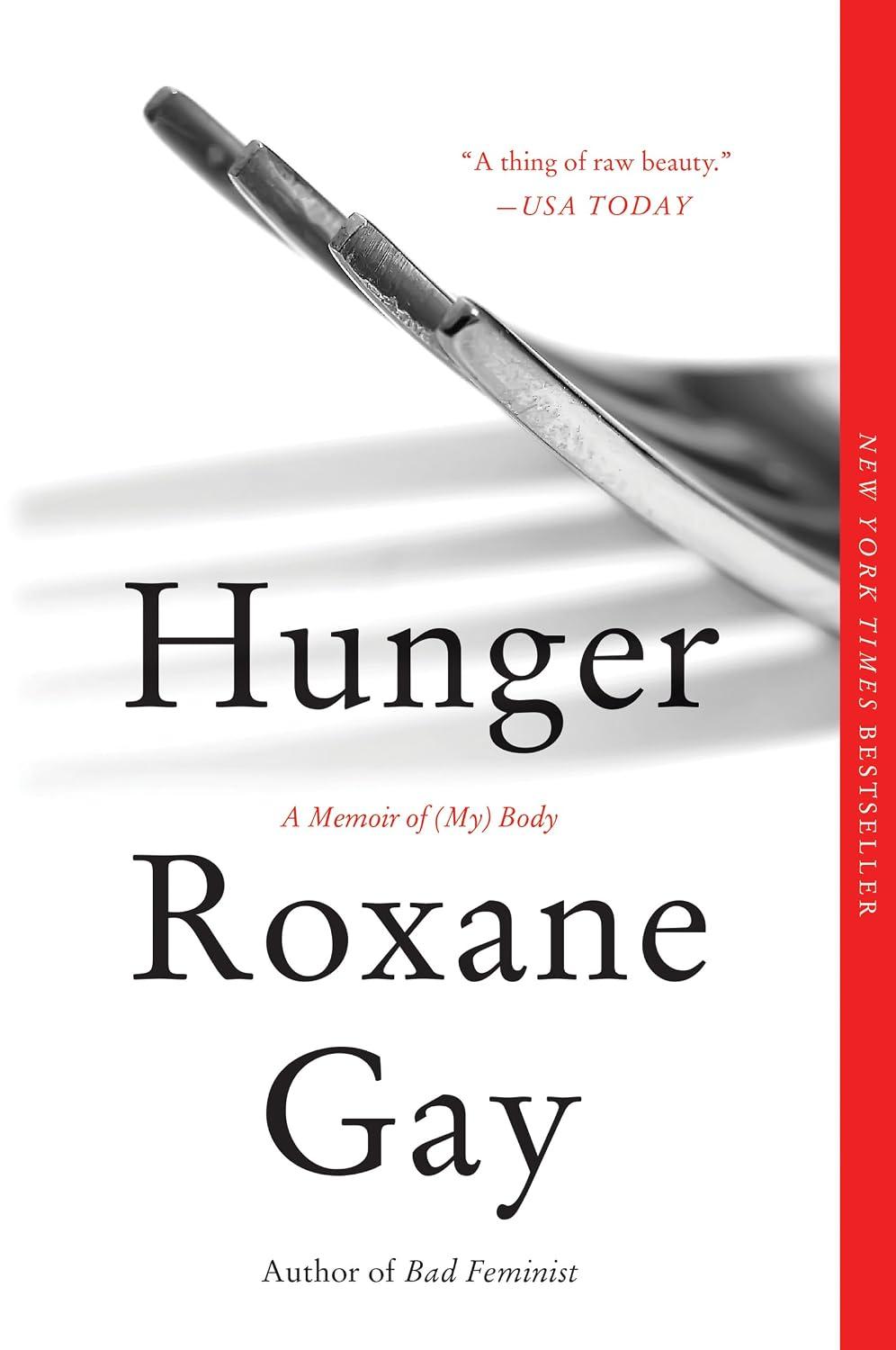
Hunger: A Memoir of (My) Body
Author:
Roxane Gay
Don't miss the Lifetime original movie, "Surviving the Silence: The Roxane Gay Story," based on Gay's New York Times bestselling memoir. It premieres September 5th.
Don't miss the Lifetime original movie, "Surviving the Silence: The Roxane Gay Story," based on Gay's New York Times bestselling memoir. It premieres September 5th. “A memoir that’s so brave, so raw, it feels as if [Gay]’s entrusting you with her soul.” — Seattle Times “It turns out that when a wrenching past is confronted with wisdom and bravery, the outcome can be compassion and enlightenment—both for the reader who has lived through this kind of unimaginable pain and for the reader who knows nothing of it. Roxane Gay shows us how to be decent to ourselves, and decent to one another. HUNGER is an amazing achievement in more ways than I can count.” — Ann Patchett From the New York Times bestselling author of Bad Feminist : a searingly honest and confessional memoir of food, weight, self-image, and learning how to feed your hunger while taking care of yourself. "I ate and ate and ate in the hopes that if I made myself big, my body would be safe. I buried the girl I was because she ran into all kinds of trouble. I tried to erase every memory of her, but she is still there, somewhere. . . . I was trapped in my body, one that I barely recognized or understood, but at least I was safe." In her phenomenally popular essays and long-running Tumblr blog, Roxane Gay has written with intimacy and sensitivity about food and body, using her own emotional and psychological struggles with body image and mental health as a means of exploring our shared anxieties over pleasure, consumption, appearance, and health. As a woman who describes her own body as "wildly undisciplined," Roxane understands the tension between desire and denial, between self-comfort and self-care. In Hunger, she explores her past—including the devastating act of violence and childhood trauma that acted as a turning point in her young life—and brings readers along on her journey to understand and ultimately save herself. With the bracing candor, vulnerability, and power that have made her one of the most admired writers of her generation, Roxane explores what it means to find self-discovery and learn to take care of yourself: how to feed your hungers for delicious and satisfying food, a smaller and safer body, and a body that can love and be loved—in a time when the bigger you are, the smaller your world becomes. This is not a story of triumph. It is the story of a body, a life, and a hunger that demands to be heard. A Memoir of the Body: Goes beyond a simple weight-loss narrative to explore one woman’s intensely personal and psychological struggle with food, consumption, and health. Unflinching Honesty: With bracing candor, Gay reflects on the devastating act of violence that became a turning point in her life and shaped her relationship with her body for decades. Feminist Cultural Criticism: A vital examination of what it means to be overweight and unseen in a culture obsessed with appearance and conformity. Body Image and Identity: Navigates the profound tension between desire and denial, self-comfort and self-care, and the ongoing journey to feed a hunger that is more than physical.
Find this book on:
Episode overview
President Trump and the modern right have a theory of beauty. You see it in Trump’s gilded Oval Office, his imagined arch and his executive order requiring classical and traditional styles for certain federal buildings.
This isn’t my theory of beauty, but it is a theory. And it’s a response, in part, to something that a lot of people have been feeling, and not just on the right: that the modern world is ugly, or getting uglier.
I’ve seen at least a dozen articles or videos over the last few years asking, “Is the world getting uglier?” They point to the drabness of new apartment blocks, the sameness of new cars and the reign of “greige” in homes and fashion.
So I’ve wanted to do an episode on this for a while. Why does the world seem to be getting uglier, or drabber? And at a moment when the right has a clear answer to this feeling, does the left have any answer at all?
Debbie Millman teaches at the School of Visual Arts in New York City and hosts the long-running podcast “Design Matters,” where she talks to creative people about design. In her long career as a brand designer, she revamped the logos for companies like Burger King, 7 Up and Häagen-Dazs. She’s also written a number of books on design, and recently wrote an article for Time magazine, “Is the World Getting Uglier?”