
Book description
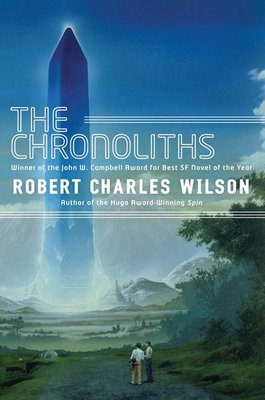
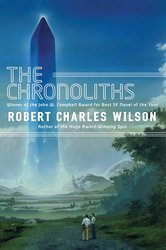
Hugo Award nominee and winner of the John W. Campbell Memorial Award One day in Thailand, 21st-century slacker Scott Warden witnesses an impossible event: the violent appearance of a 200-foot stone pillar. Its arrival collapses trees for a quarter mile around its base. It appears to be composed of an exotic form of matter. And the inscription chiseled into it commemorates a military victory…sixteen years hence. As more pillars arrive all over the world, all apparently from our own near future, a strange loop of causality keeps drawing Scott into the central mystery―and a final battle with the future.
Recommended on 1 episode:


Over the past month, there have been two dominant stories in American foreign policy. One, of course, is the war with Iran. The other is the much-anticipated summit between President Trump and Xi Jinping of China. And I think if you look closely at both of these stories, you see that our foreign policy has entered into a period of absolute incoherence.
I’m not even sure what the status of the Iran war is at this point. What is Trump trying to achieve? What is he willing to accept?
Taking a more hawkish approach to China has been a core and consistent principle of Trump’s since his first term. He’s been insistent that China has taken advantage of the United States and that America needed to change that dynamic and flex more power. But is that happening? Is that even Trump’s position anymore?
So I wanted to do an episode looking at China and Iran and trying to assess Trump’s foreign policy in general and the ways he’s remaking what America means on the world stage.
Ian Bremmer is the president and founder of Eurasia Group, a political risk research and consultancy firm, and the global affairs publication GZero. He’s also the author of, among other books, “Every Nation for Itself: What Happens When No One Leads the World.”
Books recommended:
Ian Bremmer
June 2, 2026
View