Books recommended
All guests

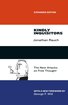
Kindly Inquisitors: The New Attacks on Free Thought, Expanded Edition
Jonathan Rauch, George F. Will

Episodes with Veronique de Rugy


On Jan. 19, the United States officially hit its debt limit. In response, the Treasury Department began using accounting maneuvers known as “extraordinary measures” to continue paying the government’s obligations temporarily. But according to Treasury Secretary Janet Yellen, that money could run out as soon as June 1. If the United States hasn’t raised or suspended its borrowing cap, known as the debt ceiling, by then, America will default on its debt.
But Republicans are currently refusing to raise the debt ceiling until their policy demands are met. Negotiations between House Speaker Kevin McCarthy and the Biden administration are ongoing, but it is very difficult to see a deal that McCarthy’s hard-line members would vote for and Biden would sign. Meanwhile, default — and the accompanying economic calamity — draws ever closer.
Veronique de Rugy is an economist at the Mercatus Center at George Mason University and a nationally syndicated columnist. For years, she’s argued that the United States’ debt levels are far too high and has defended the debt ceiling as a way to rein them in. I disagree. In my view, the debt ceiling is one of the most absurd and dangerous laws on the books. So I invited her on the show to make her case.
But I also wanted to talk about the broader fiscal picture on which this entire fight is predicated. America’s debt is currently about 100 percent of the U.S. G.D.P., up from just 35 percent in 2007, and is projected to reach 185 percent by 2052. Meanwhile, Social Security is projected to run out of its cash reserves by 2033, and the trust fund funding Medicare hospital coverage (Medicare Part A) is projected to run out by 2028.
What do those numbers actually mean? How worried should we be about them? And what could be done to address our growing debt?
Books recommended:



Veronique de Rugy
May 16, 2023
View