From this episode
Recommended books
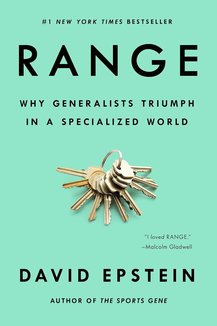
Range: Why Generalists Triumph in a Specialized World
Author:
David Epstein
The #1 New York Times bestseller that has all America talking—with a new afterword on expanding your range—as seen on CNN's Fareed Zakaria GPS, Morning Joe, CBS This Morning, and more. “The most important business—and parenting—book of the year.” — Forbes “Urgent and important.
The #1 New York Times bestseller that has all America talking—with a new afterword on expanding your range—as seen on CNN's Fareed Zakaria GPS, Morning Joe, CBS This Morning, and more. “The most important business—and parenting—book of the year.” — Forbes “Urgent and important. . . an essential read for bosses, parents, coaches, and anyone who cares about improving performance.” —Daniel H. Pink Shortlisted for the Financial Times /McKinsey Business Book of the Year Award Plenty of experts argue that anyone who wants to develop a skill, play an instrument, or lead their field should start early, focus intensely, and rack up as many hours of deliberate practice as possible. If you dabble or delay, you’ll never catch up to the people who got a head start. But a closer look at research on the world’s top performers, from professional athletes to Nobel laureates, shows that early specialization is the exception, not the rule. David Epstein examined the world’s most successful athletes, artists, musicians, inventors, forecasters and scientists. He discovered that in most fields—especially those that are complex and unpredictable—generalists, not specialists, are primed to excel. Generalists often find their path late, and they juggle many interests rather than focusing on one. They’re also more creative, more agile, and able to make connections their more specialized peers can’t see. Provocative, rigorous, and engrossing, Range makes a compelling case for actively cultivating inefficiency. Failing a test is the best way to learn. Frequent quitters end up with the most fulfilling careers. The most impactful inventors cross domains rather than deepening their knowledge in a single area. As experts silo themselves further while computers master more of the skills once reserved for highly focused humans, people who think broadly and embrace diverse experiences and perspectives will increasingly thrive.
Find this book on:



Kindly Inquisitors: The New Attacks on Free Thought, Expanded Edition
Authors:
Jonathan Rauch,
George F. Will
“A liberal society stands on the proposition that we should all take seriously the idea that we might be wrong. This means we must place no one, including ourselves, beyond the reach of criticism; it means that we must allow people to err, even where the error offends and upsets, as it often will.” So writes Jonathan Rauch in Kindly Inquisitors, which has challenged readers for more than twenty years with its bracing and provocative exploration of the issues surrounding attempts to limit free speech.
“A liberal society stands on the proposition that we should all take seriously the idea that we might be wrong. This means we must place no one, including ourselves, beyond the reach of criticism; it means that we must allow people to err, even where the error offends and upsets, as it often will.” So writes Jonathan Rauch in Kindly Inquisitors, which has challenged readers for more than twenty years with its bracing and provocative exploration of the issues surrounding attempts to limit free speech. In it, Rauch makes a persuasive argument for the value of “liberal science” and the idea that conflicting views produce knowledge within society. In this expanded edition of Kindly Inquisitors, a new foreword by George F. Will strikingly shows the book’s continued relevance, while a substantial new afterword by Rauch elaborates upon his original argument and brings it fully up to date. Two decades after the book’s initial publication, while some progress has been made, the regulation of hate speech has grown domestically―especially in American universities―and has spread even more internationally, where there is no First Amendment to serve as a meaningful check. But the answer to bias and prejudice, Rauch argues, is pluralism―not purism. Rather than attempting to legislate bias and prejudice out of existence or to drive them underground, we must pit them against one another to foster a more vigorous and fruitful discussion. It is this process that has been responsible for the growing acceptance of the moral acceptability of homosexuality over the last twenty years. And it is this process, Rauch argues, that will enable us as a society to replace hate with knowledge, both ethical and empirical. “It is a melancholy fact that this elegant book, which is slender and sharp as a stiletto, is needed, now even more than two decades ago. Armed with it, readers can slice through the pernicious ideas that are producing the still-thickening thicket of rules, codes, and regulations restricting freedom of thought and expression.”―George F. Will, from the foreword
Find this book on:
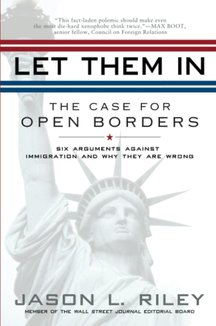
Let Them In: The Case for Open Borders
Author:
Jason L. Riley
A conservative columnist makes an eye-opening case for why immigration improves the lives of Americans and is important for the future of the country Separating fact from myth in today’s heated immigration debate, a member of The Wall Street Journal editorial board contends that foreign workers play a vital role in keeping America prosperous, that maintaining an open-border policy is consistent with free-market economic principals, and that the arguments put forward by opponents of immigration ultimately don’t hold up to scrutiny. In lucid, jargon-free prose aimed at the general-interest reader, Riley takes on the most common anti-immigrant complaints, including claims that today’s immigrants overpopulate the United States, steal jobs, depress wages, don’t assimilate, and pose an undue threat to homeland security.
A conservative columnist makes an eye-opening case for why immigration improves the lives of Americans and is important for the future of the country Separating fact from myth in today’s heated immigration debate, a member of The Wall Street Journal editorial board contends that foreign workers play a vital role in keeping America prosperous, that maintaining an open-border policy is consistent with free-market economic principals, and that the arguments put forward by opponents of immigration ultimately don’t hold up to scrutiny. In lucid, jargon-free prose aimed at the general-interest reader, Riley takes on the most common anti-immigrant complaints, including claims that today’s immigrants overpopulate the United States, steal jobs, depress wages, don’t assimilate, and pose an undue threat to homeland security. As the 2008 presidential election approaches with immigration reform on the front burner, Let Them In is essential reading for liberals and conservatives alike who want to bring an informed perspective to the discussion.
Find this book on:
Episode overview
On Jan. 19, the United States officially hit its debt limit. In response, the Treasury Department began using accounting maneuvers known as “extraordinary measures” to continue paying the government’s obligations temporarily. But according to Treasury Secretary Janet Yellen, that money could run out as soon as June 1. If the United States hasn’t raised or suspended its borrowing cap, known as the debt ceiling, by then, America will default on its debt.
But Republicans are currently refusing to raise the debt ceiling until their policy demands are met. Negotiations between House Speaker Kevin McCarthy and the Biden administration are ongoing, but it is very difficult to see a deal that McCarthy’s hard-line members would vote for and Biden would sign. Meanwhile, default — and the accompanying economic calamity — draws ever closer.
Veronique de Rugy is an economist at the Mercatus Center at George Mason University and a nationally syndicated columnist. For years, she’s argued that the United States’ debt levels are far too high and has defended the debt ceiling as a way to rein them in. I disagree. In my view, the debt ceiling is one of the most absurd and dangerous laws on the books. So I invited her on the show to make her case.
But I also wanted to talk about the broader fiscal picture on which this entire fight is predicated. America’s debt is currently about 100 percent of the U.S. G.D.P., up from just 35 percent in 2007, and is projected to reach 185 percent by 2052. Meanwhile, Social Security is projected to run out of its cash reserves by 2033, and the trust fund funding Medicare hospital coverage (Medicare Part A) is projected to run out by 2028.
What do those numbers actually mean? How worried should we be about them? And what could be done to address our growing debt?