Books recommended
All guests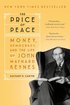

Episodes with Paul Krugman
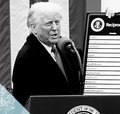

The tariffs President Trump unveiled this week were both bigger than most people expected and a lot more confusing. These aren’t the flat tariffs he proposed during the campaign. And they aren’t reciprocal tariffs, as he claimed in his Rose Garden speech. So what is Trump actually doing here?
I knew my former colleague Paul Krugman would have some thoughts. Krugman is a Nobel laureate trade economist who was a New York Times Opinion columnist for 25 years. He now writes an excellent newsletter on Substack, where he’s been trying to make sense of the theories behind Trump’s tariff policies and, now, their strange reality.
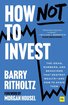
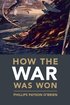
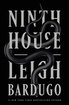
Books recommended:
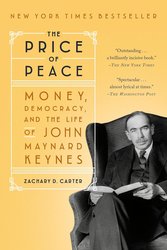
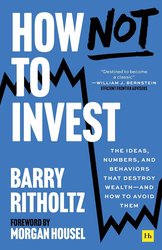
Paul Krugman
April 5, 2025
View


We’ll be back on Friday with a new episode. In the meantime, we wanted to share one of our favorite recent episodes from our sister podcast, “Matter of Opinion.”
Why does the economy look so good to economists but feel so bad to voters?
The Nobel laureate economist Paul Krugman joins the hosts on “Matter of Opinion” to discuss why inflation, interest rates and wages aren’t in line with voters’ perception of the economy. Then, they debate with Paul how big of an influence the economy will be on the 2024 presidential election, and which of the two presumed candidates, Joe Biden and Donald Trump, it could benefit. Plus, Ross Douthat’s lessons on aging, through Michael Caine impressions.
Paul Krugman
March 26, 2024
View


In recent months, the story of the U.S. economy has changed significantly. The January Consumer Price Index showed that annual inflation slowed for the seventh straight month. That month, the economy also added over half a million jobs, and unemployment reached 3.4 percent, its lowest level since 1969. In light of these trends, comparisons to the 1970s stagflation crisis have weakened, and the possibility of a “soft landing” looks increasingly likely.
But that doesn’t mean we’ve achieved victory. While the headline inflation numbers have looked promising, the devil is in the details. Answers to questions like how fast inflation has actually slowed, whether that slowdown will continue, how likely a future recession is, and how the Fed should act all next come down to which statistics and indicators you are looking at.
So I decided to bring on the Times Opinion columnist and Nobel laureate economist Paul Krugman to break down the data and what it says about inflation moving forward. We also discuss the debt ceiling crisis, why the Republican Party has failed to embrace a coherent economic agenda, whether the Biden administration’s industrial policy efforts could undermine its climate objectives, the 20th-century economics book that best explains why the United States has gotten so bad at building things, why Krugman — a longtime advocate of free trade — has come around to embrace greater protectionism, why he believes China’s economic ascendence is no longer inevitable, whether A.I. will replace huge numbers of white collar workers and more.
Books recommended:
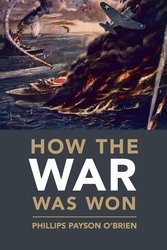
Paul Krugman
Feb. 17, 2023
View


The Biden administration’s first legislative priority is a $1.9 trillion economic rescue package. It’s the kind of mega-package where the individual policies contained inside it — a $15 minimum wage, $1,400 checks, a huge child tax credit expansion, a $50 billion virus testing infrastructure — would be big deals on their own. But together, this would be one of the most consequential packages ever passed.
So there’s a lot to talk about here. And who better to talk about it with than my now-colleague Paul Krugman? We dig into the details of the plan and then spiral off into some other topics I wanted to run by the nearest Nobel laureate: the major rethinking of debt and deficits among left-of-center economists, the differences between Keynesians and Modern Monetary Theorists, how Krugman made a bunch of money off Bitcoin (it’s not how you’d think!), why progressives need a better theory of technological change, Krugman’s favorite indie bands of the mid-2000s, and more.
Mentioned in this episode:
“Notes on the Coronacoma (Wonkish)” by Paul Krugman
“Why Markets Boomed in a Year of Human Misery” by Neil Irwin and Weiyi Cai
“Who’s Afraid of Budget Deficits?” By Jason Furman and Lawrence Summers
“Public Debt: Fiscal and Welfare Costs in a Time of Low Interest Rates” by Olivier Blanchard
“America’s anti-democratic Senate, in one number” by Ian Millhiser
Books recommended:
Paul Krugman
Jan. 29, 2021
View