Books recommended
All guests






Episodes with Bill McKibben

Already this summer, there have been huge wildfires in the Southwest and Great Plains and an extraordinary heat wave in Europe, as the world stares down the barrel of a powerful El Niño. Climate change is accelerating, and yet climate politics right now is in disarray.
But something else is happening, too. Advances in clean energy technology mean it is now possible to build a world of energy abundance that was the stuff of dreams just a few years ago. That means a new kind of climate politics is possible — one that doesn’t just talk about sacrifice and disaster prevention but also can present decarbonization as a path to somewhere better, where everyone has more, not less.
Bill McKibben is one of the best people at articulating that vision. He’s a founder of the climate action groups 350.org and Third Act, and he’s been at the vanguard of the climate movement for decades. His 1989 book, “The End of Nature,” is considered the first book on global warming written for a general audience. His latest book, published last year, is “Here Comes the Sun: A Last Chance for the Climate and a Fresh Chance for Civilization.”
Books recommended:
-
📕
The Glorians: Visitations from the Holy Ordinary
by
Terry Tempest Williams

-
📘
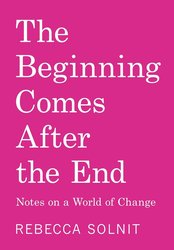
The Beginning Comes After the End: Notes on a World of Change
by
Rebecca Solnit
-
📗
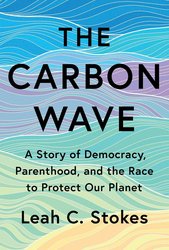
The Carbon Wave: A Story of Democracy, Parenthood, and the Race to Protect Our Planet
by
Leah C. Stokes
-
📙
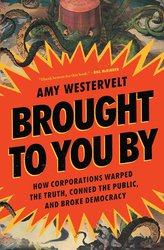
Brought to You By: How Corporations Warped the Truth, Conned the Public, and Broke Democracy
by
Amy Westervelt
-
📕
End Times Fascism: And the Fight for the Living World
by
Naomi Klein,
Astra Taylor

Bill McKibben
July 10, 2026
View


The fight against climate change is at a crossroads.
This past year, the climate movement in the United States achieved significant success. The recently passed Inflation Reduction Act represents the single largest investment in emissions reduction in U.S. history. More than a dozen states have taken some form of climate action in 2022 alone. Earlier this year, California — which, if it were a country, would have the fifth largest economy in the world — approved a record $54 billion in climate spending alongside sweeping new restrictions on fossil fuel development. These investments coincide with a wave of technological transformation: Over the past decade, the cost of solar energy has declined around 90 percent and that of onshore wind around 70 percent, making these energy sources economically competitive with fossil fuels for the first time.
“The new numbers turn the economic logic we’re used to upside down,” writes the climate activist and journalist Bill McKibben. To him, the import of this moment is clear: For the first time, McKibben argues, humanity has at our fingertips the tools needed to end humanity’s millenniums-long dependence on burning things for energy — and to save our climate in the process.
To those familiar with the climate movement, McKibben is a familiar name. His book “The End of Nature” has been compared to Rachel Carson’s “Silent Spring” in terms of its impact on the climate movement. He’s founded organizations like Third Act and 350.org, the latter of which is among the largest climate activist organizations in the world today. He was a key leader in the fight to block the Keystone XL pipeline. And he currently writes the influential newsletter “The Crucial Years.” Ask anyone in the climate movement today about their inspirations and McKibben will almost certainly top the list.
But in McKibben’s telling, the climate movement’s successes in getting us to this point actually require it to change. A movement founded on blocking bad things from happening now needs to turn to building at intensified speed; a movement that has long fought to preserve the natural world now has to help usher in a wholesale transformation of the global landscape; a movement that has long been critical of capitalism and economic growth now has to align itself with those forces in order to achieve its ends.
Those shifts will require new tactics, new animating ideas, new motivations and new priorities — with the future of the climate hanging in the balance. So I wanted to have McKibben on the show to talk about this dawning era of the climate fight we’re entering, and what changes the movement will have to make to meet this moment.
Books recommended:


Bill McKibben
Nov. 15, 2022
View