From this episode
Recommended books
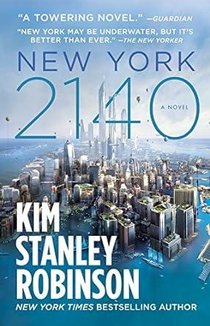
New York 2140
Author:
Kim Stanley Robinson
New York Times bestselling author Kim Stanley Robinson returns with a bold and brilliant vision of New York City in the next century. As the sea levels rose, every street became a canal.
New York Times bestselling author Kim Stanley Robinson returns with a bold and brilliant vision of New York City in the next century. As the sea levels rose, every street became a canal. Every skyscraper an island. For the residents of one apartment building in Madison Square, however, New York in the year 2140 is far from a drowned city. There is the market trader, who finds opportunities where others find trouble. There is the detective, whose work will never disappear -- along with the lawyers, of course. There is the internet star, beloved by millions for her airship adventures, and the building's manager, quietly respected for his attention to detail. Then there are two boys who don't live there, but have no other home -- and who are more important to its future than anyone might imagine. Lastly there are the coders, temporary residents on the roof, whose disappearance triggers a sequence of events that threatens the existence of all -- and even the long-hidden foundations on which the city rests.
Find this book on:


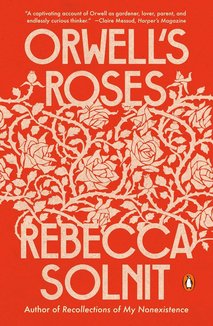
Orwell's Roses
Author:
Rebecca Solnit
Finalist for the National Book Critics Circle Award for Nonfiction Finalist for the PEN/Jacqueline Bograd Weld Award for Biography “An exhilarating romp through Orwell’s life and times and also through the life and times of roses.” —Margaret Atwood “A captivating account of Orwell as gardener, lover, parent, and endlessly curious thinker.” —Claire Messud, Harper's “Nobody who reads it will ever think of Nineteen Eighty-Four in quite the same way.” — Vogue A lush exploration of politics, roses, and pleasure, and a fresh take on George Orwell as an avid gardener whose political writing was grounded by his passion for the natural world “In the spring of 1936, a writer planted roses.” So be-gins Rebecca Solnit’s new book, a reflection on George Orwell’s passionate gardening and the way that his involvement with plants, particularly flowers, illuminates his other commitments as a writer and antifascist, and on the intertwined politics of nature and power. Sparked by her unexpected encounter with the roses he reportedly planted in 1936, Solnit’s account of this overlooked aspect of Orwell’s life journeys through his writing and his actions—from going deep into the coal mines of England, fighting in the Spanish Civil War, critiquing Stalin when much of the international left still supported him (and then critiquing that left) to his analysis of the relationship between lies and authoritarianism.
Finalist for the National Book Critics Circle Award for Nonfiction Finalist for the PEN/Jacqueline Bograd Weld Award for Biography “An exhilarating romp through Orwell’s life and times and also through the life and times of roses.” —Margaret Atwood “A captivating account of Orwell as gardener, lover, parent, and endlessly curious thinker.” —Claire Messud, Harper's “Nobody who reads it will ever think of Nineteen Eighty-Four in quite the same way.” — Vogue A lush exploration of politics, roses, and pleasure, and a fresh take on George Orwell as an avid gardener whose political writing was grounded by his passion for the natural world “In the spring of 1936, a writer planted roses.” So be-gins Rebecca Solnit’s new book, a reflection on George Orwell’s passionate gardening and the way that his involvement with plants, particularly flowers, illuminates his other commitments as a writer and antifascist, and on the intertwined politics of nature and power. Sparked by her unexpected encounter with the roses he reportedly planted in 1936, Solnit’s account of this overlooked aspect of Orwell’s life journeys through his writing and his actions—from going deep into the coal mines of England, fighting in the Spanish Civil War, critiquing Stalin when much of the international left still supported him (and then critiquing that left) to his analysis of the relationship between lies and authoritarianism. Through Solnit’s celebrated ability to draw unexpected connections, readers are drawn onward from Orwell‘s own work as a writer and gardener to encounter photographer Tina Modotti’s roses and her politics, agriculture and illusion in the USSR of his time with forcing lemons to grow in impossibly cold conditions, Orwell’s slave-owning ancestors in Jamaica, Jamaica Kincaid’s examination of colonialism and imperialism in the flower garden, and the brutal rose industry in Colombia that supplies the American market. The book draws to a close with a rereading of Nineteen Eighty-Four that completes Solnit’s portrait of a more hopeful Orwell, as well as offering a meditation on pleasure, beauty, and joy as acts of resistance.
Find this book on:
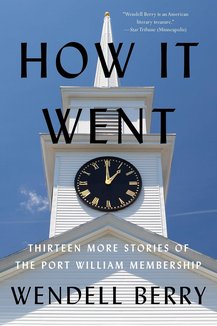
How it Went: Thirteen More Stories of the Port William Membership
Author:
Wendell Berry
Thirteen new stories of the Port William membership spanning the decades from World War II to the present moment For those readers of his poetry and inspired by his increasingly vital work as advocate for rational land use and the right-size life, these stories of Wendell Berry's offer entry into the fictional place of value and beauty that is Port William, Kentucky. Berry has said it's taken a lifetime for him to learn to write like an old man, and that's what we have here, stories told with grace and ease and majesty.
Thirteen new stories of the Port William membership spanning the decades from World War II to the present moment For those readers of his poetry and inspired by his increasingly vital work as advocate for rational land use and the right-size life, these stories of Wendell Berry's offer entry into the fictional place of value and beauty that is Port William, Kentucky. Berry has said it's taken a lifetime for him to learn to write like an old man, and that's what we have here, stories told with grace and ease and majesty. Wendell Berry is one of our greatest living American authors, writing with the wisdom of maturity and the incandescence that comes of love. These thirteen new works explore the memory and imagination of Andy Catlett, one of the well-loved central characters of the Port William saga. From 1932 to 2021, these stories span the length of Andy’s life, from before the outbreak of the Second World War to the threatened end of rural life in America.
Find this book on:
Episode overview
The fight against climate change is at a crossroads.
This past year, the climate movement in the United States achieved significant success. The recently passed Inflation Reduction Act represents the single largest investment in emissions reduction in U.S. history. More than a dozen states have taken some form of climate action in 2022 alone. Earlier this year, California — which, if it were a country, would have the fifth largest economy in the world — approved a record $54 billion in climate spending alongside sweeping new restrictions on fossil fuel development. These investments coincide with a wave of technological transformation: Over the past decade, the cost of solar energy has declined around 90 percent and that of onshore wind around 70 percent, making these energy sources economically competitive with fossil fuels for the first time.
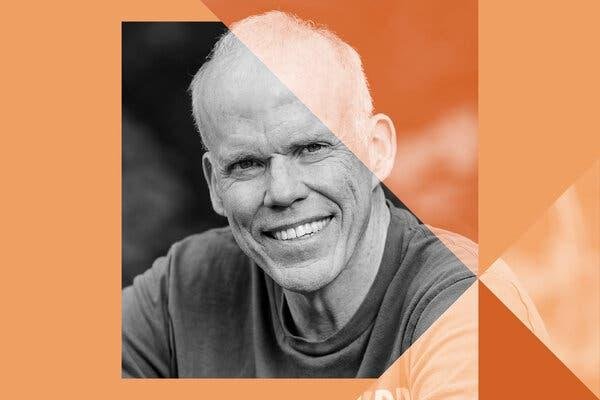
“The new numbers turn the economic logic we’re used to upside down,” writes the climate activist and journalist Bill McKibben. To him, the import of this moment is clear: For the first time, McKibben argues, humanity has at our fingertips the tools needed to end humanity’s millenniums-long dependence on burning things for energy — and to save our climate in the process.
To those familiar with the climate movement, McKibben is a familiar name. His book “The End of Nature” has been compared to Rachel Carson’s “Silent Spring” in terms of its impact on the climate movement. He’s founded organizations like Third Act and 350.org, the latter of which is among the largest climate activist organizations in the world today. He was a key leader in the fight to block the Keystone XL pipeline. And he currently writes the influential newsletter “The Crucial Years.” Ask anyone in the climate movement today about their inspirations and McKibben will almost certainly top the list.
But in McKibben’s telling, the climate movement’s successes in getting us to this point actually require it to change. A movement founded on blocking bad things from happening now needs to turn to building at intensified speed; a movement that has long fought to preserve the natural world now has to help usher in a wholesale transformation of the global landscape; a movement that has long been critical of capitalism and economic growth now has to align itself with those forces in order to achieve its ends.
Those shifts will require new tactics, new animating ideas, new motivations and new priorities — with the future of the climate hanging in the balance. So I wanted to have McKibben on the show to talk about this dawning era of the climate fight we’re entering, and what changes the movement will have to make to meet this moment.