
From this episode
Recommended books
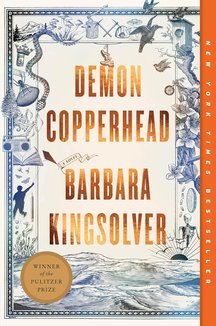
Demon Copperhead: A Pulitzer Prize Winner
Author:
Barbara Kingsolver
WINNER OF THE PULITZER PRIZE • WINNER OF THE WOMEN'S PRIZE FOR FICTION New York Times Readers’ Pick: Top 100 Books of the 21 st Century • An Oprah’s Book Club Selection • An Instant New York Times Bestseller • An Instant Wall Street Journal Bestseller • A #1 Washington Post Bestseller • A New York Times "Ten Best Books of the Year" "Demon is a voice for the ages—akin to Huck Finn or Holden Caulfield—only even more resilient.” —Beth Macy, author of Dopesick "May be the best novel of [the year]. .
WINNER OF THE PULITZER PRIZE • WINNER OF THE WOMEN'S PRIZE FOR FICTION New York Times Readers’ Pick: Top 100 Books of the 21 st Century • An Oprah’s Book Club Selection • An Instant New York Times Bestseller • An Instant Wall Street Journal Bestseller • A #1 Washington Post Bestseller • A New York Times "Ten Best Books of the Year" "Demon is a voice for the ages—akin to Huck Finn or Holden Caulfield—only even more resilient.” —Beth Macy, author of Dopesick "May be the best novel of [the year]. . . . Equal parts hilarious and heartbreaking, this is the story of an irrepressible boy nobody wants, but readers will love.” — Ron Charles, Washington Post From the acclaimed author of The Poisonwood Bible and The Bean Trees and the recipient of the National Book Foundation's Medal for Distinguished Contribution to American Letters , a brilliant novel that enthralls, compels, and captures the heart as it evokes a young hero’s unforgettable journey to maturity Set in the mountains of southern Appalachia, Demon Copperhead is the story of a boy born to a teenaged single mother in a single-wide trailer, with no assets beyond his dead father’s good looks and copper-colored hair, a caustic wit, and a fierce talent for survival. Relayed in his own unsparing voice, Demon braves the modern perils of foster care, child labor, derelict schools, athletic success, addiction, disastrous loves, and crushing losses. Through all of it, he reckons with his own invisibility in a popular culture where even the superheroes have abandoned rural people in favor of cities. Many generations ago, Charles Dickens wrote David Copperfield from his experience as a survivor of institutional poverty and its damages to children in his society. Those problems have yet to be solved in ours. Dickens is not a prerequisite for readers of this novel, but he provided its inspiration. In transposing a Victorian epic novel to the contemporary American South, Barbara Kingsolver enlists Dickens’ anger and compassion, and above all, his faith in the transformative powers of a good story. Demon Copperhead speaks for a new generation of lost boys, and all those born into beautiful, cursed places they can’t imagine leaving behind.
Find this book on:


A National Bestseller • Recommended by Financial Times as “What to Read in 2025” “The central argument of Our Dollar, Your Problem —that the greenback’s pre-eminence was never guaranteed and might plausibly be overturned—could hardly be more timely.”— The Economist A leading economist explores the global rise of the U.S. dollar and shows why its future stability is far from assured Our Dollar, Your Problem argues that America’s currency might not have reached today’s lofty pinnacle without a certain amount of good luck.
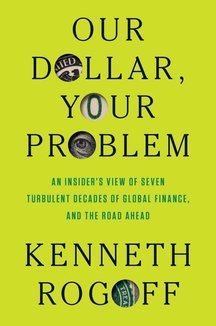
A National Bestseller • Recommended by Financial Times as “What to Read in 2025” “The central argument of Our Dollar, Your Problem —that the greenback’s pre-eminence was never guaranteed and might plausibly be overturned—could hardly be more timely.”— The Economist A leading economist explores the global rise of the U.S. dollar and shows why its future stability is far from assured Our Dollar, Your Problem argues that America’s currency might not have reached today’s lofty pinnacle without a certain amount of good luck. Drawing in part on his own experiences, including with policymakers and world leaders, Kenneth Rogoff animates the remarkable postwar run of the dollar—how it beat out the Japanese yen, the Soviet ruble, and the euro—and the challenges it faces today from crypto and the Chinese yuan, the end of reliably low inflation and interest rates, political instability, and the fracturing of the dollar bloc. Americans cannot take for granted that the Pax Dollar era will last indefinitely, not only because many countries are deeply frustrated with the system, but also because overconfidence and arrogance can lead to unforced errors. Rogoff shows how America’s outsized power and exorbitant privilege can spur financial instability—not just abroad but also at home.
Find this book on:
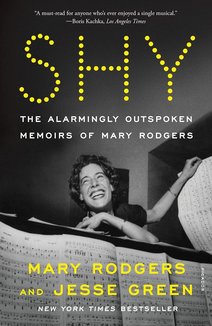
Shy
Author:
Mary Rodgers
The memoirs of Mary Rodgers―writer, composer, Broadway royalty, and “a woman who tried everything.” “What am I, bologna?” Mary Rodgers (1931–2014) often said. She was referring to being stuck in the middle of a talent sandwich: the daughter of one composer and the mother of another.
The memoirs of Mary Rodgers―writer, composer, Broadway royalty, and “a woman who tried everything.” “What am I, bologna?” Mary Rodgers (1931–2014) often said. She was referring to being stuck in the middle of a talent sandwich: the daughter of one composer and the mother of another. And not just any composers. Her father was Richard Rodgers, perhaps the greatest American melodist; her son, Adam Guettel, a worthy successor. What that leaves out is Mary herself, also a composer, whose musical Once Upon a Mattress remains one of the rare revivable Broadway hits written by a woman. Shy is the story of how it all happened: how Mary grew from an angry child, constrained by privilege and a parent’s overwhelming gift, to become not just a theater figure in her own right but also a renowned author of books for young readers (including the classic Freaky Friday ) and, in a final grand turn, a doyenne of philanthropy and the chairman of the Juilliard School. But in telling these stories―with copious annotations, contradictions, and interruptions from Jesse Green, the chief theater critic of The New York Times ― Shy also tells another, about a woman liberating herself from disapproving parents and pervasive sexism to find art and romance on her own terms. Whether writing for Judy Holliday or Rin Tin Tin, dating Hal Prince or falling for Stephen Sondheim over a game of chess at thirteen, Rodgers grabbed every chance possible―and then some. Both an eyewitness report from the golden age of American musical theater and a tale of a woman striving for a meaningful life, Shy is, above all, a chance to sit at the feet of the kind of woman they don’t make anymore―and never did. They make themselves.
Find this book on:
Episode overview
Trump’s “big, beautiful bill” is the cruelest and most irresponsible piece of domestic legislation to be seriously proposed in my lifetime.
When you think about this bill, you should think about risk. It would increase our risk of a fiscal crisis by adding a hefty sum to our nation’s debt, at a time when we’re alienating the countries that typically buy our debt. It would slash food stamps and strip health insurance from millions of people, increasing the risk that the safety net won’t be able to catch any of us, at a time when President Trump’s tariffs have increased the risk of a recession.
It’s what I’m calling the Big Budget Bomb. And if it passes, we’ll all be in the blast radius.
My guest today is Catherine Rampell. She’s an opinion columnist at The Washington Post and an anchor on MSNBC. She’s been covering this closely, so I asked her to come on the show to help talk through all the different risks this bill brings.
Editor’s note: This episode was recorded before the House passed Trump’s domestic policy package.