From this episode
Recommended books
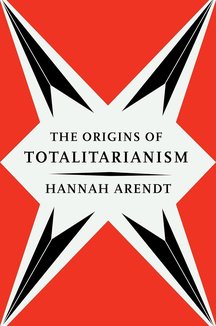
The Origins of Totalitarianism
Author:
Hannah Arendt
Hannah Arendt's definitive work on totalitarianism—an essential component of any study of twentieth-century political history—now with a new introduction by Anne Applebaum Hannah Arendt’s definitive work , The Origins of Totalitarianism, is an essential component of any study of twentieth-century political history. It begins with the rise of anti-Semitism in central and western Europe in the 1800s and continues with an examination of European colonial imperialism from 1884 to the outbreak of World War I.
Hannah Arendt's definitive work on totalitarianism—an essential component of any study of twentieth-century political history—now with a new introduction by Anne Applebaum Hannah Arendt’s definitive work , The Origins of Totalitarianism, is an essential component of any study of twentieth-century political history. It begins with the rise of anti-Semitism in central and western Europe in the 1800s and continues with an examination of European colonial imperialism from 1884 to the outbreak of World War I. This edition includes an introduction by Anne Applebaum – a leading voice on authoritarianism and Russian history – who fears that “once again, we are living in a world that Arendt would recognize.” Hannah Arendt explores the institutions and operations of totalitarian movements, focusing on the two genuine forms of totalitarian government in our time, Nazi Germany and Stalinist Russia, which she adroitly recognizes were two sides of the same coin, rather than opposing philosophies of Right and Left. From this vantage point, she discusses the evolution of classes into masses, the role of propaganda in dealing with the nontotalitarian world, the use of terror, and the nature of isolation and loneliness as preconditions for total domination.
Find this book on:


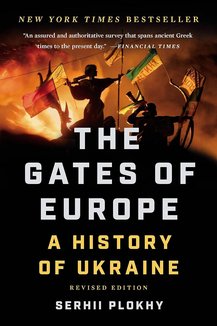
Gates of Europe
Author:
Serhii Plokhy
A New York Times bestseller, this definitive history of Ukraine is “an exemplary account of Europe’s least-known large country” ( Wall Street Journal). As Ukraine is embroiled in an ongoing struggle with Russia to preserve its territorial integrity and political independence, celebrated historian Serhii Plokhy explains that today’s crisis is a case of history repeating itself: the Ukrainian conflict is only the latest in a long history of turmoil over Ukraine’s sovereignty.
A New York Times bestseller, this definitive history of Ukraine is “an exemplary account of Europe’s least-known large country” ( Wall Street Journal). As Ukraine is embroiled in an ongoing struggle with Russia to preserve its territorial integrity and political independence, celebrated historian Serhii Plokhy explains that today’s crisis is a case of history repeating itself: the Ukrainian conflict is only the latest in a long history of turmoil over Ukraine’s sovereignty. Situated between Central Europe, Russia, and the Middle East, Ukraine has been shaped by empires that exploited the nation as a strategic gateway between East and West—from the Romans and Ottomans to the Third Reich and the Soviet Union. In The Gates of Europe , Plokhy examines Ukraine’s search for its identity through the lives of major Ukrainian historical figures, from its heroes to its conquerors. This revised edition includes new material that brings this definitive history up to the present. As Ukraine once again finds itself at the center of global attention, Plokhy brings its history to vivid life as he connects the nation’s past with its present and future.
Find this book on:
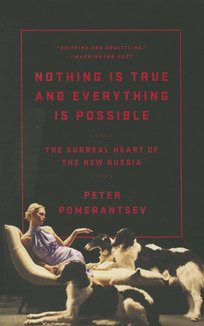
Nothing is True but Everything is Possible
Author:
Peter Pomerantsev
A journey into the glittering, surreal heart of 21st century Russia, where even dictatorship is a reality show Professional killers with the souls of artists, would-be theater directors turned Kremlin puppet-masters, suicidal supermodels, Hell's Angels who hallucinate themselves as holy warriors, and oligarch revolutionaries: welcome to the wild and bizarre heart of twenty-first-century Russia. It is a world erupting with new money and new power, changing so fast it breaks all sense of reality, home to a form of dictatorship-far subtler than twentieth-century strains-that is rapidly rising to challenge the West.
A journey into the glittering, surreal heart of 21st century Russia, where even dictatorship is a reality show Professional killers with the souls of artists, would-be theater directors turned Kremlin puppet-masters, suicidal supermodels, Hell's Angels who hallucinate themselves as holy warriors, and oligarch revolutionaries: welcome to the wild and bizarre heart of twenty-first-century Russia. It is a world erupting with new money and new power, changing so fast it breaks all sense of reality, home to a form of dictatorship-far subtler than twentieth-century strains-that is rapidly rising to challenge the West. When British producer Peter Pomerantsev plunges into the booming Russian TV industry, he gains access to every nook and corrupt cranny of the country. He is brought to smoky rooms for meetings with propaganda gurus running the nerve-center of the Russian media machine, and visits Siberian mafia-towns and the salons of the international super-rich in London and the US. As the Putin regime becomes more aggressive, Pomerantsev finds himself drawn further into the system. Dazzling yet piercingly insightful, Nothing Is True and Everything Is Possible is an unforgettable voyage into a country spinning from decadence into madness.
Find this book on:
Episode overview
“Americans and Europeans were guided through the new century by a tale about ‘the end of history,’ by what I will call the politics of inevitability, a sense that the future is just more of the present, that the laws of progress are known, that there are no alternatives, and therefore nothing really to be done,” writes the Yale historian Timothy Snyder in his 2018 book, “The Road to Unfreedom.”
The central thesis of “The Road to Unfreedom” is that different understandings of the past, its myths, histories and memories create radically different politics. Snyder wrote the book as a way of understanding Vladimir Putin’s 2014 invasion of Crimea and the West’s response, but its argument has become only more salient in recent weeks. You can’t understand Putin’s recent invasion of Ukraine without understanding his metaphysical attachment to the era of empire, his mythological telling of Russian-Ukrainian history, and his semi-mystical construction of what constitutes the Russian nation.
But Snyder’s more radical argument is that the West is also operating under its own mythological understanding of time — one that is so deeply ingrained in our collective psyche that it masquerades as common sense. And that understanding the influence of the “politics of inevitability” is essential to make sense of everything from the West’s misreading of Putin’s motivations to the internal fracturing of the European Union to the decline of liberal democracy across the globe.
So that’s where we start: with the central myths at the heart of the modern Western project — and the blind spots they have created. But Snyder is also a renowned historian of European great-power conflict who has written six books entirely or partly about Ukraine. So we also discuss the chasm between the radicalness of European integration and the tedium of European governance, why Snyder thinks Putin’s invasion is fundamentally the product of a Russian identity crisis, Ukraine’s unique history as a battleground for a great-power war, how Ukrainian identity transcends ethnicity and language, why Western leaders and analysts consistently fail to decipher Putin’s intentions, the huge difference between a Russian nation premised on myth and a Ukrainian nation forged by collective action, how Ukrainian resistance could inspire a Western vision for the future and more.