
From this episode
Recommended books
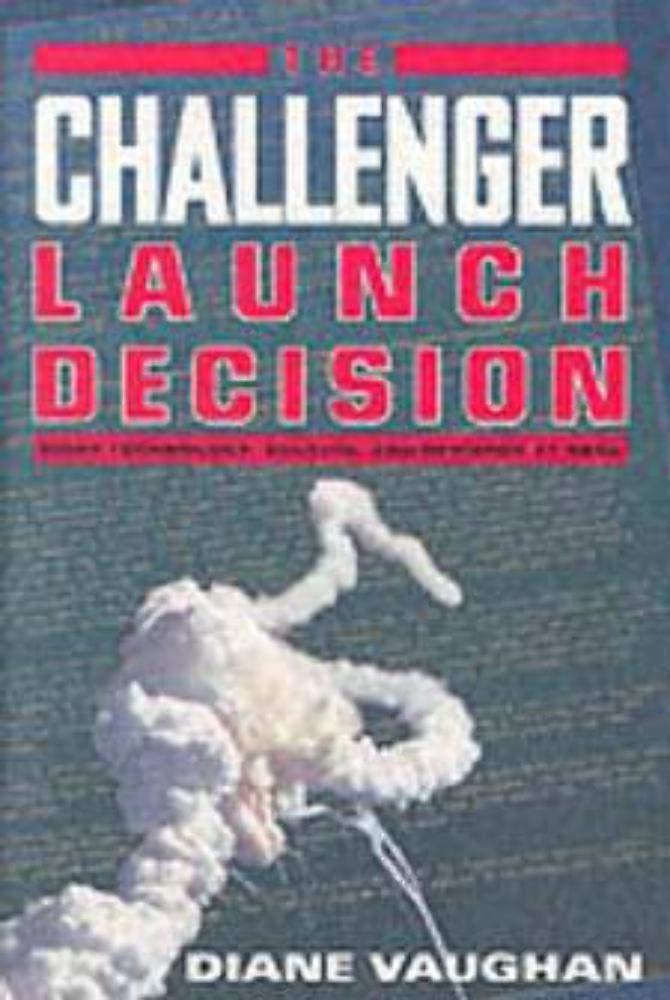
The Challenger Launch Decision: Risky Technology, Culture, and Deviance at NASA
Author:
Diane Vaughan
When the Space Shuttle Challenger exploded on January 28, 1986, millions of Americans became bound together in a single, historic moment. Many still vividly remember exactly where they were and what they were doing when they heard about the tragedy.
When the Space Shuttle Challenger exploded on January 28, 1986, millions of Americans became bound together in a single, historic moment. Many still vividly remember exactly where they were and what they were doing when they heard about the tragedy. In The Challenger Launch Decision, Diane Vaughan recreates the steps leading up to that fateful decision, contradicting conventional interpretations to prove that what occurred at NASA was not skulduggery or misconduct but a disastrous mistake. Journalists and investigators have historically cited production problems and managerial wrong-doing as the reasons behind the disaster. The Presidential Commission uncovered a flawed decision-making process at the space agency as well, citing a well-documented history of problems with the O-ring and a dramatic last-minute protest by engineers over the Solid Rocket Boosters as evidence of managerial neglect. Why did NASA managers, who not only had all the information prior to the launch but also were warned against it, decide to proceed? In retelling how the decision unfolded through the eyes of the managers and the engineers, Vaughan uncovers an incremental descent into poor judgment, supported by a culture of high-risk technology. She reveals how and why NASA insiders, when repeatedly faced with evidence that something was wrong, normalized the deviance so that it became acceptable to them. No safety rules were broken. No single individual was at fault. Instead, the cause of the disaster is a story not of evil but of the banality of organizational life. This powerful work explains why the Challenger tragedy must be reexamined and offers an unexpected warning about the hidden hazards of living in this technological age.
Find this book on:

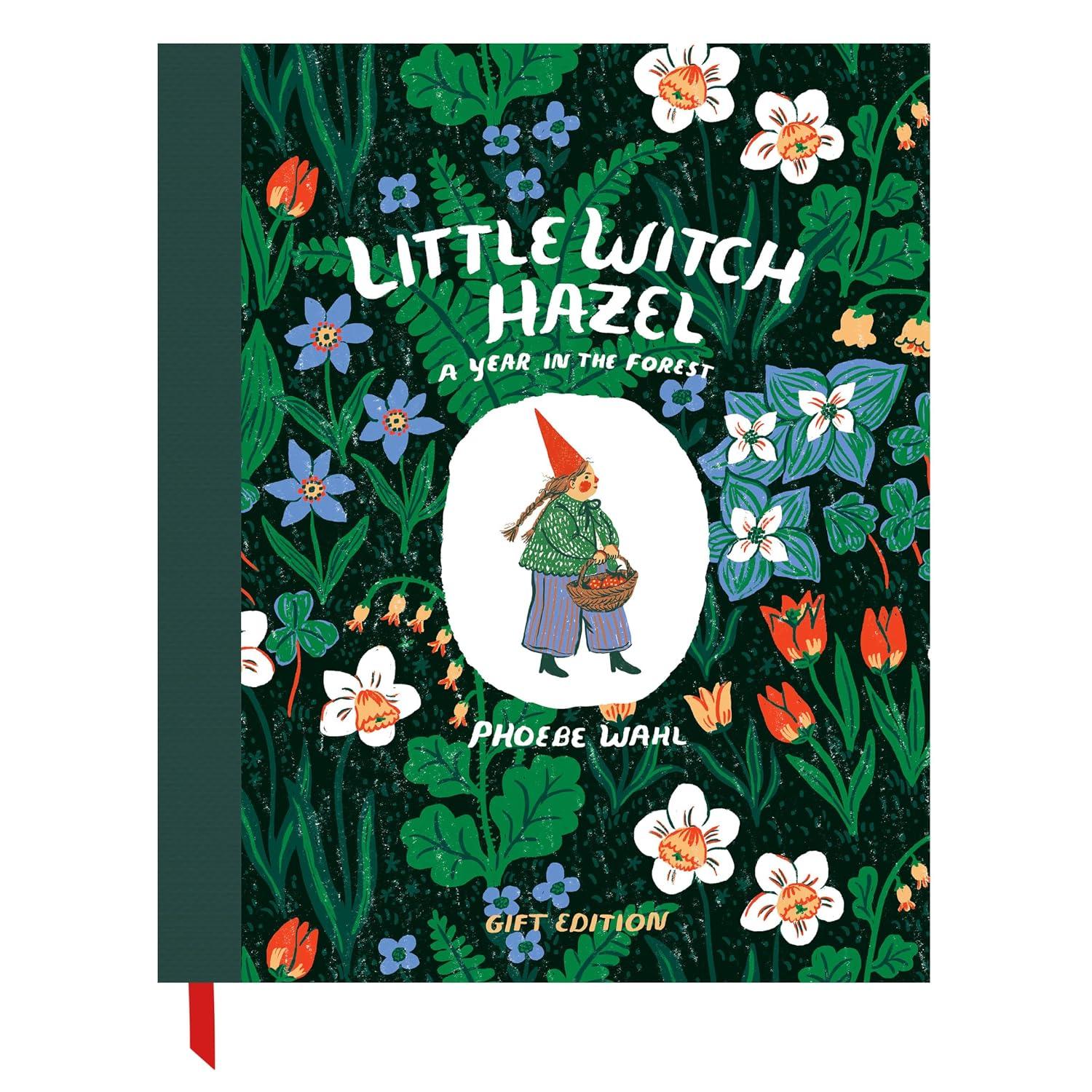
Little Witch Hazel: A Year in the Forest - Gift Edition
Author:
Phoebe Wahl
An earthy and beautiful picture book collection of four stories that celebrate the seasons, nature and life, from award-winning author-illustrator Phoebe Wahl, NOW AVAILABLE IN A BEAUTIFUL GIFT EDITION. This gorgeous gift edition has a newly redesigned cover, a ribbon bookmark and gold edges.
An earthy and beautiful picture book collection of four stories that celebrate the seasons, nature and life, from award-winning author-illustrator Phoebe Wahl, NOW AVAILABLE IN A BEAUTIFUL GIFT EDITION. This gorgeous gift edition has a newly redesigned cover, a ribbon bookmark and gold edges. Little Witch Hazel is a tiny witch who lives in the forest, helping creatures big and small. She's a midwife, an intrepid explorer, a hard worker and a kind friend. In this four-season volume, Little Witch Hazel rescues an orphaned egg, goes sailing on a raft, solves the mystery of a haunted stump and makes house calls to fellow forest dwellers. But when Little Witch Hazel needs help herself, will she get it in time? Little Witch Hazel is a beautiful ode to nature, friendship, wild things and the seasons that only Phoebe Wahl could create: an instant classic and a book that readers will pore over time and time again. This stunning new edition with a redesigned cover, ribbon bookmark and sprayed edges is the perfect gift for young readers and readers young at heart.
Find this book on:
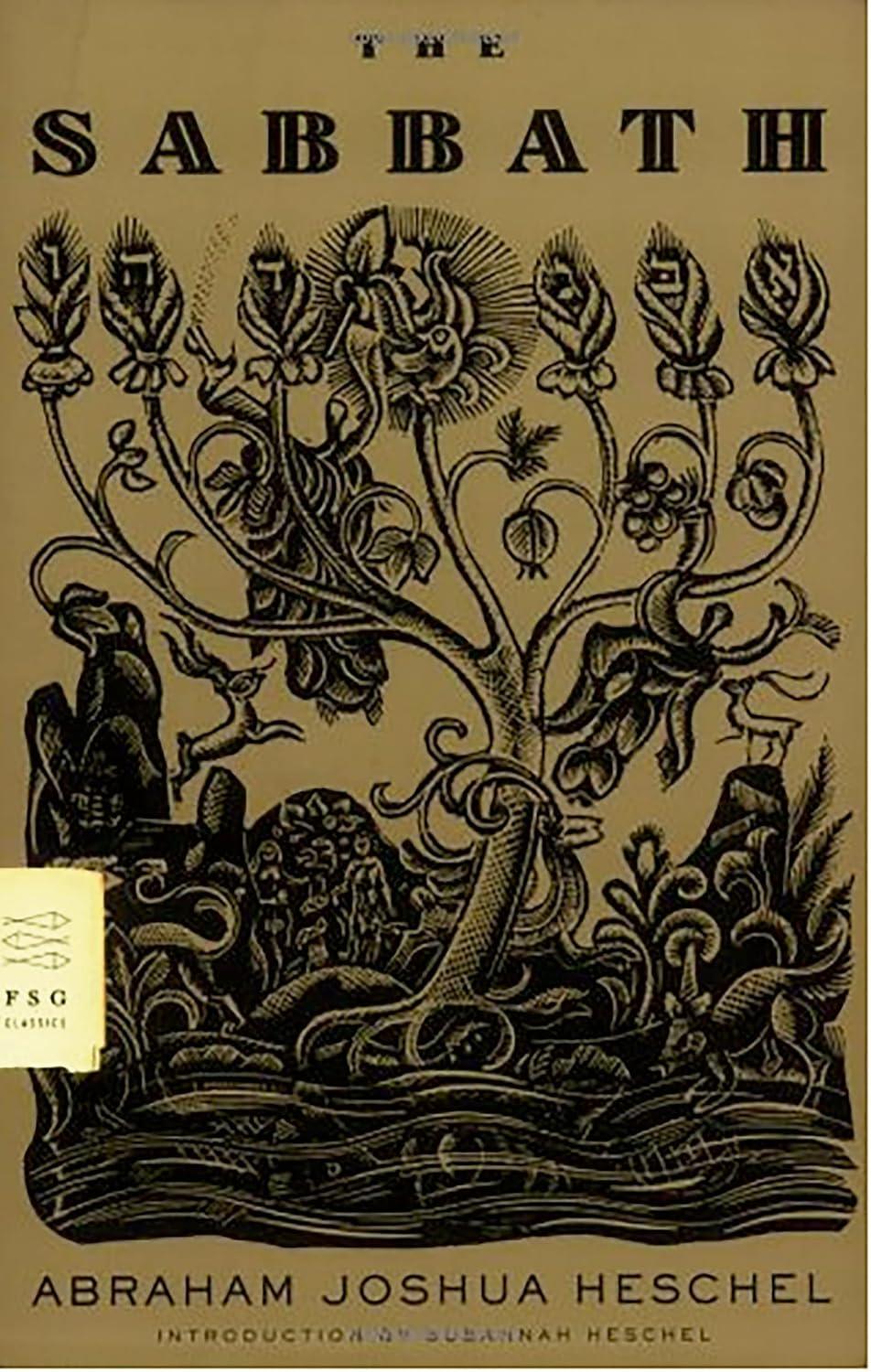
The Sabbath (FSG Classics)
Authors:
Abraham Joshua Heschel,
Ilya Schor,
Susannah Heschel
Elegant, passionate, and filled with the love of God's creation, Abraham Joshua Heschel's The Sabbath has been hailed as a classic of Jewish spirituality ever since its original publication-and has been read by thousands of people seeking meaning in modern life. In this brief yet profound meditation on the meaning of the Seventh Day, Heschel introduced the idea of an "architecture of holiness" that appears not in space but in time Judaism, he argues, is a religion of time: it finds meaning not in space and the material things that fill it but in time and the eternity that imbues it, so that "the Sabbaths are our great cathedrals." Featuring black-and-white illustrations by Ilya Schor
Elegant, passionate, and filled with the love of God's creation, Abraham Joshua Heschel's The Sabbath has been hailed as a classic of Jewish spirituality ever since its original publication-and has been read by thousands of people seeking meaning in modern life. In this brief yet profound meditation on the meaning of the Seventh Day, Heschel introduced the idea of an "architecture of holiness" that appears not in space but in time Judaism, he argues, is a religion of time: it finds meaning not in space and the material things that fill it but in time and the eternity that imbues it, so that "the Sabbaths are our great cathedrals." Featuring black-and-white illustrations by Ilya Schor
Find this book on:
Episode overview
Last week, David Robinson resigned from OpenAI. He’d been in charge of writing the safety reports for new models and came to believe that OpenAI and the broader artificial intelligence industry lack the safety culture necessary to protect the world from what they’re building.
Robinson has an unusual background for an A.I. frontier lab staffer. He’s a Rhodes scholar and Yale Law graduate, he founded a civil rights nonprofit and he advised the Biden White House. He did not come up in the hothouse of Silicon Valley. And when he joined OpenAI in 2023, he says, he saw A.I. as a useful tool, not as a technology that could pose catastrophic risks.
That’s changed. In Robinson’s first interview since leaving OpenAI, he tells me why.
(The New York Times has sued OpenAI and Microsoft claiming copyright infringement. The companies have denied those claims.)