
From this episode
Recommended books
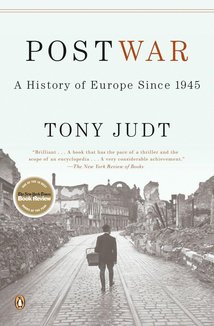
Postwar: A History of Europe Since 1945
Author:
Tony Judt
Finalist for the Pulitzer Prize • Winner of the Council on Foreign Relations Arthur Ross Book Award • One of the New York Times ’s 100 Best Books of the 21st Century “Impressive . .
Finalist for the Pulitzer Prize • Winner of the Council on Foreign Relations Arthur Ross Book Award • One of the New York Times ’s 100 Best Books of the 21st Century “Impressive . . . Mr. Judt writes with enormous authority.” —The Wall Street Journal “Magisterial . . . It is, without a doubt, the most comprehensive, authoritative, and yes, readable postwar history.” —The Boston Globe Almost a decade in the making, this much-anticipated grand history of postwar Europe from one of the world's most esteemed historians and intellectuals is a singular achievement. Postwar is the first modern history that covers all of Europe, both east and west, drawing on research in six languages to sweep readers through thirty-four nations and sixty years of political and cultural change-all in one integrated, enthralling narrative. Both intellectually ambitious and compelling to read, thrilling in its scope and delightful in its small details, Postwar is a rare joy.
Find this book on:


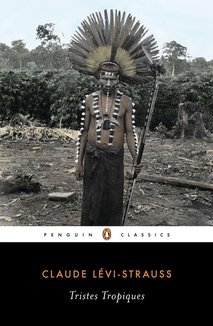
Tristes Tropiques (Penguin Classics)
Authors:
Claude Levi-Strauss,
John Weightman,
Doreen Weightman,
Patrick Wilcken
A milestone in the study of culture from the father of structural anthropology This watershed work records Claude Lévi-Strauss's search for "a human society reduced to its most basic expression." From the Amazon basin through the dense upland jungles of Brazil, Lévi-Strauss found the societies he was seeking among the Caduveo, Bororo, Nambikwara, and Tupi-Kawahib. More than merely recounting his time in their midst, Tristes Tropiques places the cultural practices of these peoples in a global context and extrapolates a fascinating theory of culture that has given the book an importance far beyond the fields of anthropology and continental philosophy.
A milestone in the study of culture from the father of structural anthropology This watershed work records Claude Lévi-Strauss's search for "a human society reduced to its most basic expression." From the Amazon basin through the dense upland jungles of Brazil, Lévi-Strauss found the societies he was seeking among the Caduveo, Bororo, Nambikwara, and Tupi-Kawahib. More than merely recounting his time in their midst, Tristes Tropiques places the cultural practices of these peoples in a global context and extrapolates a fascinating theory of culture that has given the book an importance far beyond the fields of anthropology and continental philosophy. The author's fresh approach, sense of humor, and openness to the sensuous mystique of the tropics make the scientific thrust of the book eminently accessible. For more than seventy years, Penguin has been the leading publisher of classic literature in the English-speaking world. With more than 1,700 titles, Penguin Classics represents a global bookshelf of the best works throughout history and across genres and disciplines. Readers trust the series to provide authoritative texts enhanced by introductions and notes by distinguished scholars and contemporary authors, as well as up-to-date translations by award-winning translators.
Find this book on:
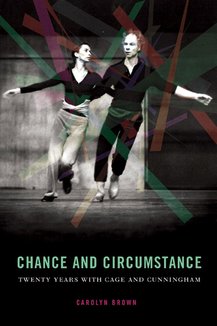
Chance and Circumstance: Twenty Years with Cage and Cunningham
Author:
Carolyn Brown
Carolyn Brown, one of the most renowned dancers of the last half-century, lived at the center of New York's bold and vibrant artistic community, which included not only dancers and choreographers but composers and painters as well. Brown's memoir recounts her own remarkable twenty-year tenure with the Merce Cunningham Dance Company and provides a first-hand account of a pivotal period in twentieth-century art.
Carolyn Brown, one of the most renowned dancers of the last half-century, lived at the center of New York's bold and vibrant artistic community, which included not only dancers and choreographers but composers and painters as well. Brown's memoir recounts her own remarkable twenty-year tenure with the Merce Cunningham Dance Company and provides a first-hand account of a pivotal period in twentieth-century art. From the 1950s to the 1970s, Brown developed close relationships with musical director John Cage and set-designer Robert Rauschenberg and with Cunningham himself. Brown's memoir reveals the personal dynamics between the reserved and moody Cunningham and the playful and ebullient Cage, as well as the controversial yet undeniably brilliant creativity that resulted when the two collaborated. Brown relates the company's rise from its cash-strapped early years when the group traveled by VW bus to perform in small venues to the 1964 world tour that left the group exhausted but finally brought them large-scale acclaim. A unique chronicle of the avant-garde's struggle for acceptance, Brown's memoir provides a riveting first-hand account of a little-documented era in modern dance that nonetheless had a tremendous impact on the course of art in the twentieth century.
Find this book on:
Episode overview
Free minds. Freedom fries. Free speech. The Freedom Caucus. Freedom from. Freedom to. What do Americans really mean when they talk about freedom?
Louis Menand’s “The Free World” is a 700-plus-page intellectual history of the Cold War period that traces the opening of the American mind to new ideas in art, literature, politics, music, foreign policy, criticism, higher education and campus activism. John Cage was making silent music, Jackson Pollock was throwing paint on canvases, Pauline Kael was giving us permission to actually enjoy movies. Thinkers like James Baldwin, Isaiah Berlin and Hannah Arendt were arguing over what it meant to be free. Liberatory movements were trying to actually make Americans free. But what did it all get us? Out of all this ferment and conflict, what forms of freedom did Americans secure, and which did we lose?
It’s hard to think of a writer better suited to explain the art and intellectual culture of the Cold War than Louis Menand. In his writing for The New Yorker and his Pulitzer Prize-winning book “The Metaphysical Club,” Menand has shown how ideas are born out of interactions between individuals and larger historical forces, and how philosophical traditions like pragmatism, Transcendentalism and abolitionism continue to profoundly shape our world.
In this conversation, we talk about the opening of the American mind, the rise of the American market and the narrowing of American politics. We discuss the avant-garde artists of the age and why Martin Luther King Jr.’s vision for equity has been lost. Oh, and how today’s elite universities are built atop the legacy of 1960s campus radicalism, whether the Beat writers were actually the rebels they’re remembered as, why John Cena is apologizing to China for calling Taiwan a country and more.
Mentioned in this episode:
“The Free World” by Louis Menand