
From this episode
Recommended books
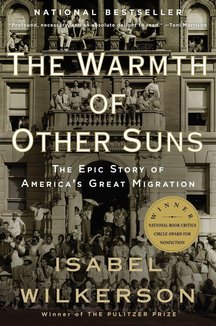
The Warmth of Other Suns: The Epic Story of America's Great Migration
Author:
Isabel Wilkerson
NEW YORK TIMES BESTSELLER • NATIONAL BOOK CRITICS CIRCLE AWARD WINNER • In this beautifully written masterwork, the Pulitzer Prize–winner and bestselling author of Caste chronicles one of the great untold stories of American history: the decades-long migration of black citizens who fled the South for northern and western cities, in search of a better life. One of The New York Times ’s 5 Best Books of the 21st Century “Profound, necessary and an absolute delight to read.” —Toni Morrison From 1915 to 1970, this exodus of almost six million people changed the face of America.
NEW YORK TIMES BESTSELLER • NATIONAL BOOK CRITICS CIRCLE AWARD WINNER • In this beautifully written masterwork, the Pulitzer Prize–winner and bestselling author of Caste chronicles one of the great untold stories of American history: the decades-long migration of black citizens who fled the South for northern and western cities, in search of a better life. One of The New York Times ’s 5 Best Books of the 21st Century “Profound, necessary and an absolute delight to read.” —Toni Morrison From 1915 to 1970, this exodus of almost six million people changed the face of America. Wilkerson compares this epic migration to the migrations of other peoples in history. She interviewed more than a thousand people, and gained access to new data and official records, to write this definitive and vividly dramatic account of how these American journeys unfolded, altering our cities, our country, and ourselves. With stunning historical detail, Wilkerson tells this story through the lives of three unique individuals: Ida Mae Gladney, who in 1937 left sharecropping and prejudice in Mississippi for Chicago, where she achieved quiet blue-collar success and, in old age, voted for Barack Obama when he ran for an Illinois Senate seat; sharp and quick-tempered George Starling, who in 1945 fled Florida for Harlem, where he endangered his job fighting for civil rights, saw his family fall, and finally found peace in God; and Robert Foster, who left Louisiana in 1953 to pursue a medical career, the personal physician to Ray Charles as part of a glitteringly successful medical career, which allowed him to purchase a grand home where he often threw exuberant parties. Wilkerson brilliantly captures their first treacherous and exhausting cross-country trips by car and train and their new lives in colonies that grew into ghettos, as well as how they changed these cities with southern food, faith, and culture and improved them with discipline, drive, and hard work. Both a riveting microcosm and a major assessment, The Warmth of Other Suns is a bold, remarkable, and riveting work, a superb account of an “unrecognized immigration” within our own land. Through the breadth of its narrative, the beauty of the writing, the depth of its research, and the fullness of the people and lives portrayed herein, this book is destined to become a classic.
Find this book on:


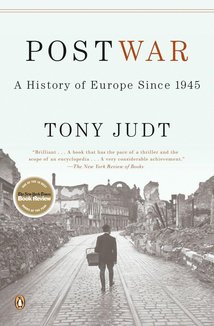
Postwar: A History of Europe Since 1945
Author:
Tony Judt
Finalist for the Pulitzer Prize • Winner of the Council on Foreign Relations Arthur Ross Book Award • One of the New York Times ’s 100 Best Books of the 21st Century “Impressive . .
Finalist for the Pulitzer Prize • Winner of the Council on Foreign Relations Arthur Ross Book Award • One of the New York Times ’s 100 Best Books of the 21st Century “Impressive . . . Mr. Judt writes with enormous authority.” —The Wall Street Journal “Magisterial . . . It is, without a doubt, the most comprehensive, authoritative, and yes, readable postwar history.” —The Boston Globe Almost a decade in the making, this much-anticipated grand history of postwar Europe from one of the world's most esteemed historians and intellectuals is a singular achievement. Postwar is the first modern history that covers all of Europe, both east and west, drawing on research in six languages to sweep readers through thirty-four nations and sixty years of political and cultural change-all in one integrated, enthralling narrative. Both intellectually ambitious and compelling to read, thrilling in its scope and delightful in its small details, Postwar is a rare joy.
Find this book on:
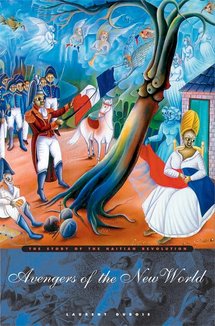
Avengers of the New World: The Story of the Haitian Revolution
Author:
Laurent Dubois
The first and only successful slave revolution in the Americas began in 1791 when thousands of brutally exploited slaves rose up against their masters on Saint-Domingue, the most profitable colony in the eighteenth-century Atlantic world. Within a few years, the slave insurgents forced the French administrators of the colony to emancipate them, a decision ratified by revolutionary Paris in 1794.
The first and only successful slave revolution in the Americas began in 1791 when thousands of brutally exploited slaves rose up against their masters on Saint-Domingue, the most profitable colony in the eighteenth-century Atlantic world. Within a few years, the slave insurgents forced the French administrators of the colony to emancipate them, a decision ratified by revolutionary Paris in 1794. This victory was a stunning challenge to the order of master/slave relations throughout the Americas, including the southern United States, reinforcing the most fervent hopes of slaves and the worst fears of masters. But, peace eluded Saint-Domingue as British and Spanish forces attacked the colony. A charismatic ex-slave named Toussaint Louverture came to France’s aid, raising armies of others like himself and defeating the invaders. Ultimately Napoleon, fearing the enormous political power of Toussaint, sent a massive mission to crush him and subjugate the ex-slaves. After many battles, a decisive victory over the French secured the birth of Haiti and the permanent abolition of slavery from the land. The independence of Haiti reshaped the Atlantic world by leading to the French sale of Louisiana to the United States and the expansion of the Cuban sugar economy. Laurent Dubois weaves the stories of slaves, free people of African descent, wealthy whites, and French administrators into an unforgettable tale of insurrection, war, heroism, and victory. He establishes the Haitian Revolution as a foundational moment in the history of democracy and human rights.
Find this book on:
Episode overview
You’ve heard plenty by now about the fights over teaching critical race theory and the 1619 Project. But behind those skirmishes is something deeper: A fight over the story we tell about America. Why that fight has so gripped our national discourse is the question of this podcast: What changes when a country’s sense of its own history changes? What changes when who gets to tell that story changes? What are the stakes here, and why now?
My guests for this conversation need little introduction. Nikole Hannah-Jones is an investigative journalist for the New York Times Magazine where she led the 1619 Project, and, before that, did incredible work on racial inequality in the American education system. Ta- Nehisi Coates is the author of books including “Between the World and Me” and “The Water Dancer,” essays including “The Case for Reparations,” and, for Marvel Comics, “Captain America” and “Black Panther.” Each of them has won more prestigious awards for their work than I could possibly list here, and both will be taking faculty positions at Howard University.
We discuss the 1619 Project, whether patriotism can coexist with shame and regret, the political power of American exceptionalism, the cracked foundations of American democracy, how journalism is and should be taught, our relationships to Twitter, what journalists can learn from children and much more.
Nikole Hannah-Jones book recommendations:
Black Reconstruction in America, 1860-1880 by W.E.B Du Bois
The Warmth of Other Suns by Isabel Wilkerson
Ta-Nehisi Coates book recommendations:
Postwar by Tony Judt
Avengers of the New World by Laurent Dubois
You can find transcripts (posted midday) and more episodes of "The Ezra Klein Show" at nytimes.com/ezra-klein-podcast, and you can find Ezra on Twitter @ezraklein.
Thoughts? Guest suggestions? Email us at [email protected].
“The Ezra Klein Show” is produced by Annie Galvin, Jeff Geld and Rogé Karma; fact-checking by Michelle Harris; original music by Isaac Jones; mixing by Jeff Geld, audience strategy by Shannon Busta. Special thanks to Kristin Lin.