
From this episode
Recommended books
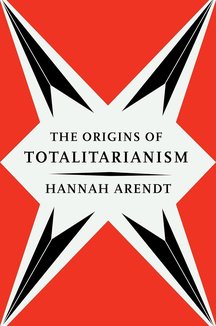
The Origins of Totalitarianism
Author:
Hannah Arendt
Hannah Arendt's definitive work on totalitarianism—an essential component of any study of twentieth-century political history—now with a new introduction by Anne Applebaum Hannah Arendt’s definitive work , The Origins of Totalitarianism, is an essential component of any study of twentieth-century political history. It begins with the rise of anti-Semitism in central and western Europe in the 1800s and continues with an examination of European colonial imperialism from 1884 to the outbreak of World War I.
Hannah Arendt's definitive work on totalitarianism—an essential component of any study of twentieth-century political history—now with a new introduction by Anne Applebaum Hannah Arendt’s definitive work , The Origins of Totalitarianism, is an essential component of any study of twentieth-century political history. It begins with the rise of anti-Semitism in central and western Europe in the 1800s and continues with an examination of European colonial imperialism from 1884 to the outbreak of World War I. This edition includes an introduction by Anne Applebaum – a leading voice on authoritarianism and Russian history – who fears that “once again, we are living in a world that Arendt would recognize.” Hannah Arendt explores the institutions and operations of totalitarian movements, focusing on the two genuine forms of totalitarian government in our time, Nazi Germany and Stalinist Russia, which she adroitly recognizes were two sides of the same coin, rather than opposing philosophies of Right and Left. From this vantage point, she discusses the evolution of classes into masses, the role of propaganda in dealing with the nontotalitarian world, the use of terror, and the nature of isolation and loneliness as preconditions for total domination.
Find this book on:


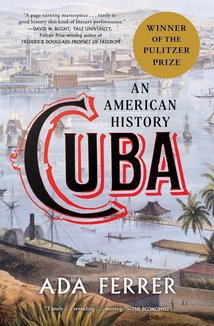
Cuba: An American History
Author:
Dr. Ada Ferrer
Winner of the Los Angeles Times Book Prize in History “Full of…lively insights and lucid prose” ( The Wall Street Journal ) an epic, sweeping history of Cuba and its complex ties to the United States—from before the arrival of Columbus to the present day—written by one of the world’s leading historians of Cuba. In 1961, at the height of the Cold War, the United States severed diplomatic relations with Cuba, where a momentous revolution had taken power three years earlier.
Winner of the Los Angeles Times Book Prize in History “Full of…lively insights and lucid prose” ( The Wall Street Journal ) an epic, sweeping history of Cuba and its complex ties to the United States—from before the arrival of Columbus to the present day—written by one of the world’s leading historians of Cuba. In 1961, at the height of the Cold War, the United States severed diplomatic relations with Cuba, where a momentous revolution had taken power three years earlier. For more than half a century, the stand-off continued—through the tenure of ten American presidents and the fifty-year rule of Fidel Castro. His death in 2016, and the retirement of his brother and successor Raúl Castro in 2021, have spurred questions about the country’s future. Meanwhile, politics in Washington—Barack Obama’s opening to the island, Donald Trump’s reversal of that policy, and the election of Joe Biden—have made the relationship between the two nations a subject of debate once more. Now, award-winning historian Ada Ferrer delivers an “important” ( The Guardian ) and moving chronicle that demands a new reckoning with both the island’s past and its relationship with the United States. Spanning more than five centuries, Cuba: An American History provides us with a front-row seat as we witness the evolution of the modern nation, with its dramatic record of conquest and colonization, of slavery and freedom, of independence and revolutions made and unmade. Along the way, Ferrer explores the sometimes surprising, often troubled intimacy between the two countries, documenting not only the influence of the United States on Cuba but also the many ways the island has been a recurring presence in US affairs. This is a story that will give Americans unexpected insights into the history of their own nation and, in so doing, help them imagine a new relationship with Cuba; “readers will close [this] fascinating book with a sense of hope” ( The Economist ). Filled with rousing stories and characters, and drawing on more than thirty years of research in Cuba, Spain, and the United States—as well as the author’s own extensive travel to the island over the same period—this is a stunning and monumental account like no other.
Find this book on:
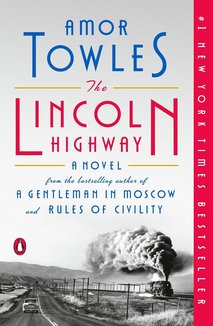
The Lincoln Highway: A Novel
Author:
Amor Towles
#1 NEW YORK TIMES BESTSELLER More than ONE MILLION copies sold A TODAY Show Read with Jenna Book Club Pick A New York Times Notable Book, a New York Times Readers’ Choice Best Book of the Century, and Chosen by Oprah Daily, Time, NPR, The Washington Post , Bill Gates and Barack Obama as a Best Book of the Year “Wise and wildly entertaining . .
#1 NEW YORK TIMES BESTSELLER More than ONE MILLION copies sold A TODAY Show Read with Jenna Book Club Pick A New York Times Notable Book, a New York Times Readers’ Choice Best Book of the Century, and Chosen by Oprah Daily, Time, NPR, The Washington Post , Bill Gates and Barack Obama as a Best Book of the Year “Wise and wildly entertaining . . . permeated with light, wit, youth.” — The New York Times Book Review “A classic that we will read for years to come.” — Jenna Bush Hager, Read with Jenna book club “Fantastic. Set in 1954, Towles uses the story of two brothers to show that our personal journeys are never as linear or predictable as we might hope .” —Bill Gates “A real joyride . . . elegantly constructed and compulsively readable.” —NPR The bestselling author of A Gentleman in Moscow and Rules of Civility and master of absorbing, sophisticated fiction returns with a stylish and propulsive novel set in 1950s America In June, 1954, eighteen-year-old Emmett Watson is driven home to Nebraska by the warden of the juvenile work farm where he has just served fifteen months for involuntary manslaughter. His mother long gone, his father recently deceased, and the family farm foreclosed upon by the bank, Emmett's intention is to pick up his eight-year-old brother, Billy, and head to California where they can start their lives anew. But when the warden drives away, Emmett discovers that two friends from the work farm have hidden themselves in the trunk of the warden's car. Together, they have hatched an altogether different plan for Emmett's future, one that will take them all on a fateful journey in the opposite direction—to the City of New York. Spanning just ten days and told from multiple points of view, Towles's third novel will satisfy fans of his multi-layered literary styling while providing them an array of new and richly imagined settings, characters, and themes. “Once again, I was wowed by Towles’s writing—especially because The Lincoln Highway is so different from A Gentleman in Moscow in terms of setting, plot, and themes. Towles is not a one-trick pony. Like all the best storytellers, he has range. He takes inspiration from famous hero’s journeys, including The Iliad , The Odyssey , Hamlet , Huckleberry Finn , and Of Mice and Men . He seems to be saying that our personal journeys are never as linear or predictable as an interstate highway. But, he suggests, when something (or someone) tries to steer us off course, it is possible to take the wheel.” – Bill Gates
Find this book on:
Episode overview
The experience of reading Hannah Arendt’s 1951 classic “The Origins of Totalitarianism” in the year 2022 is a disorienting one. Although Arendt is writing primarily about Nazi Germany and Stalinist Russia, her descriptions often capture aspects of our present moment more clearly than those of us living through it can ever hope to.
Arendt writes of entire populations who “had reached the point where they would, at the same time, believe everything and nothing, think that everything was possible and that nothing was true.” She describes “the masses’ escape from reality” as “a verdict against the world in which they are forced to live and in which they cannot exist.” She points out that in societies riddled with elite hypocrisy, “it seemed revolutionary to admit cruelty, disregard of human values, and general amorality, because this at least destroyed the duplicity upon which the existing society seemed to rest.”
It’s hard to read statements like these without immediately conjuring up images of Vladimir Putin’s Russia or Donald Trump’s presidency or the QAnon faithful. But that’s exactly the point: The reason Arendt is so relevant today is that her diagnosis doesn’t apply just to the Nazi or Soviet regimes she was writing about. It is more fundamentally about the characteristics of liberal societies that make them vulnerable to distinctly illiberal and authoritarian forces — weaknesses that, in many ways, have only become more pronounced in the 70 years since “The Origins of Totalitarianism” was first released.
Anne Applebaum is a staff writer for The Atlantic and a Pulitzer Prize-winning historian. Her writing — including her most recent book, “Twilight of Democracy: The Seductive Lure of Authoritarianism” — is focused on the resurgence of autocratic movements and governments around the world, and why members of Western societies have abandoned liberal democratic ideals in favor of strongman leaders, conspiratorial movements and authoritarian regimes. And in the introduction she wrote to a new edition of “The Origins of Totalitarianism,” Applebaum argues that Arendt’s insights are more relevant now than ever.
So this is a conversation that uses Arendt’s analysis as a window into our present. Applebaum and I discuss how “radical loneliness” lays the groundwork for authoritarianism, what Putin and Trump understand about human nature that most liberals miss, the seductive allure of groups like QAnon, the way that modern propaganda feeds off a combination of gullibility and cynicism, whether liberalism’s own logic is making societies vulnerable to totalitarian impulses, why efforts by populist politicians to upend conventional morality have held such appeal in Western liberal democracies, how the ideology of “economism” blinds Western liberals to their own societies’ deepest vulnerabilities, what liberals need to do differently to counteract the rise of global autocracy and more.