Books recommended
All guests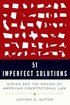
51 Imperfect Solutions: States and the Making of American Constitutional Law
Judge Jeffrey S. Sutton




Episodes with Kate Shaw


Trump was losing in the courts. He’s not anymore.
In the early months of the administration, the courts were proving a powerful check on President Trump, blocking many of his boldest actions. But those were the lower courts. In the past few months, the Supreme Court has weighed in, and it has handed Trump win after win after win.
So what do these decisions enable the president to do? And why is the Supreme Court giving Trump what he wants?
To pull all this apart, I’m joined by Kate Shaw. She is a former Supreme Court law clerk, a professor at the University of Pennsylvania Carey Law School and a host of the “Strict Scrutiny” podcast.
Note: This episode was recorded on Aug. 21, before Trump announced his intention to fire Lisa Cook from the Federal Reserve Board of Governors and before Immigration and Customs Enforcement re-arrested Kilmar Armando Abrego Garcia and began processing him for deportation to Uganda.
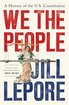
Books recommended:

Kate Shaw
Sept. 2, 2025
View


Donald Trump will enter office at a time when presidential power has significantly expanded, because of a string of Supreme Court decisions in recent years. These decisions can be understood to have two functions: They give presidents a “sword” to act more decisively and unilaterally, and a “shield” that protects them from prosecution against actions taken in their official capacity. What will these capacities mean for Trump’s second term — especially as he has promised to radically transform the federal government?
Gillian Metzger is a professor at Columbia Law School who has studied the presidency, the administrative state and the Supreme Court’s relationship to both. In this conversation, guest-hosted by Kate Shaw, a New York Times Opinion contributing writer and law professor, Metzger discusses two key Supreme Court cases — the Trump immunity case, which gave presidents broad protections from prosecution, and the Loper Bright Enterprises case, which overturned the Chevron doctrine, expanding judicial power. Shaw and Metzger also cover how much leeway Trump actually has to take some of the bolder executive actions he’s floated, including ending birthright citizenship; what still remains uncertain about the federal government’s regulatory powers in the post-Chevron regime; and more.
“The Demise of Deference — And the Rise of Delegation to Interpret?” by Thomas W. Merrill
“The DOGE Plan to Reform Government” by Elon Musk and Vivek Ramaswamy
Book recommendations
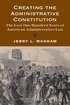
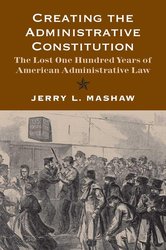
Creating the Administrative Constitution by Jerry L. Mashaw
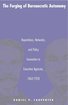
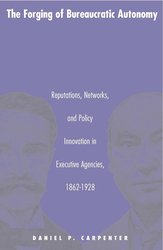
The Forging of Bureaucratic Autonomy by Daniel Carpenter
“Curation, Narration, Erasure” by Karen M. Tani
Thoughts? Guest suggestions? Email us at [email protected].
You can find transcripts (posted midday) and more episodes of “The Ezra Klein Show” at nytimes.com/ezra-klein-podcast. Book recommendations from all our guests are listed at https://www.nytimes.com/article/ezra-klein-show-book-recs.
This episode of “The Ezra Klein Show” was produced by Elias Isquith. Fact-checking by Michelle Harris, with Mary Marge Locker. Mixing by Isaac Jones, with Efim Shapiro and Aman Sahota. Our supervising editor is Claire Gordon. The show’s production team also includes Rollin Hu, Kristin Lin and Jack McCordick. Original music by Pat McCusker. Audience strategy by Kristina Samulewski and Shannon Busta. The executive producer of New York Times Opinion Audio is Annie-Rose Strasser.
Books recommended:
-
📙
Creating the Administrative Constitution: The Lost One Hundred Years of American Administrative Law (Yale Law Library Series in Legal History and Reference)
by
Jerry L. Mashaw
-
📕
The Forging of Bureaucratic Autonomy: Reputations, Networks, and Policy Innovation in Executive Agencies, 1862-1928.
by
Daniel Carpenter
Kate Shaw
,
Gillian Metzger
Dec. 17, 2024
View


In the past few weeks alone, the Supreme Court has delivered a firestorm of conservative legal victories. States now have far less leeway to restrict gun permits. The right to abortion is no longer constitutionally protected. The Environmental Protection Agency has been kneecapped in its ability to regulate carbon emissions, and by extension, all executive branch agencies will see their power significantly diminished.
But to focus only on this particular Supreme Court term is to miss the bigger picture: In the past few decades, conservative court majorities have dragged this country’s laws to the right on almost every issue imaginable. Shelby County v. Holder gutted the Voting Rights Act and opened the door for states to pass restrictive voting laws. Rucho v. Common Cause limited the court’s ability to curb partisan gerrymandering. Citizens United v. Federal Election Commission unleashed a torrent of campaign spending. Janus v. AFSCME Council 31 weakened unions. A whole slew of cases, including some decided on the shadow docket during the Covid-19 pandemic, undercut federal agencies’ power to help govern in an era of congressional gridlock. And that’s only a partial list.
Kate Shaw is a law professor at Cardozo School of Law, a co-host of the legal podcast Strict Scrutiny and a former clerk for Justice John Paul Stevens. In this episode, she walks me through the most significant Supreme Court cases over the past 20 years, from the court’s decision to hand George W. Bush the presidency in 2000, to the dismantling of the Voting Rights Act, to the assertion of an individual’s right to bear arms.
Along the way, we discuss the right’s decades-long effort to transform American law from the bench, how Republican-appointed judges have consistently entrenched Republican political power, the interpretive bankruptcy of constitutional originalism, how the Warren Court radicalized the conservative legal movement, what might happen to decisions like Obergefell v. Hodges now that the court majority seems to be so comfortable throwing out precedent, what cases to watch in the Roberts Court’s next term, and more.
Books recommended:
-
📘
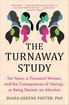
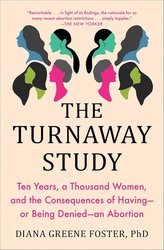
The Turnaway Study: Ten Years, a Thousand Women, and the Consequences of Having―or Being Denied―an Abortion
by
Diana Greene Foster Ph.D
-
📗
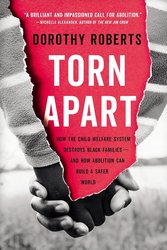
Torn Apart: How the Child Welfare System Destroys Black Families--and How Abolition Can Build a Safer World
by
Dorothy Roberts
-
📙
Who Decides?: States as Laboratories of Constitutional Experimentation
by
Jeffrey S. Sutton
-
📕
51 Imperfect Solutions: States and the Making of American Constitutional Law
by
Judge Jeffrey S. Sutton
Kate Shaw
July 1, 2022
View