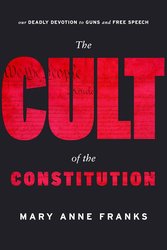
Books recommended
All guests

Episodes with Jamal Greene


“Getting race wrong early has led courts to get everything else wrong since,” writes Jamal Greene. But he probably doesn’t mean what you think he means.
Greene is a professor at Columbia Law School, and his book “How Rights Went Wrong” is filled with examples of just how bizarre American Supreme Court outcomes have become. An information processing company claims the right to sell its patients’ data to drug companies — it wins. A group of San Antonio parents whose children attend a school with no air-conditioning, uncertified teachers and a falling apart school building sue for the right to an equal education — they lose. A man from Long Island claims the right to use his homemade nunchucks to teach the “Shafan Ha Lavan” karate style, which he made up, to his children — he wins.
Greene’s argument is that in America, for specific reasons rooted in our ugly past, the way we think about rights has gone terribly awry. We don’t do constitutional law the way other countries do it. Rather, we recognize too few rights, and we protect them too strongly. That’s created a race to get everything ruled as a right, because once it’s a right, it’s unassailable. And that’s made the stakes of our constitutional conflicts too high. “If only one side can win, it might as well be mine,” Greene writes. “Conflict over rights can encourage us to take aim at our political opponents instead of speaking to them. And we shoot to kill.”
It’s a grim diagnosis. But, for Greene, it’s a hopeful one, too. Because it doesn’t have to be this way. Supreme Court decisions don’t have to feel so existential. Rights like food and shelter and education need not be wholly ignored by the courts. Other countries do things differently, and so can we.
This is a crucial moment for the court. Stephen Breyer is retiring. And in this term alone, the 6-3 conservative court is expected to hand down crucial decisions on some of the most divisive issues in American life: abortion, affirmative action, guns. So this is, in part, a conversation about the court we have and the decisions it is likely to make. But it’s also about what a radically different court system could look like.
We discuss the Supreme Court’s recent decisions on vaccine mandates, why Greene thinks judicial decision-making is closer to punditry than constitutional interpretation, the stark differences in how the German and American Supreme Courts handled the issue of abortion, Greene’s case for appointing nearly 200 justices to the U.S. Supreme Court, why we even have courts in the first place and much more.
Books recommended:

Jamal Greene
Feb. 4, 2022
View