Books recommended
All guests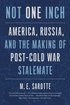




Episodes with Fiona Hill


The Russia-Ukraine war has changed considerably in recent weeks. Vladimir Putin is no longer talking explicitly about regime change in Ukraine. The Russian military has shifted its focus away from taking Kyiv and toward making territorial gains in Ukraine’s east. The prospect of an outright Ukrainian victory is no longer out of the question. And negotiations between the parties over a possible settlement appear to be making some progress.
There’s been a darker turn as well: Over the weekend, images surfaced of atrocities committed by the Russian military against Ukrainian civilians. And Western leaders are considering expanding military aid to Ukraine, initiating war crimes investigations and placing harsher sanctions on Russia in response.
Fiona Hill served as deputy assistant to the president and senior director for European and Russian affairs on the National Security Council under Donald Trump and as a national intelligence officer for Russia and Eurasia under Barack Obama and George W. Bush. I had her on the show a few weeks ago to help me make sense of the Russia-Ukraine conflict as it was developing at the time, and it was one of the most illuminating perspectives I’d heard on the topic. So I invited her back to discuss how the situation has changed, where we are now and what the conflict could look like.
We discuss why Hill has become pessimistic about the possibility of a peace deal, how the carnage in Bucha could alter the course of the conflict, why Russia has been so much weaker on the battlefield than expected, whether Ukraine can achieve an outright victory, why this war is making Putin more popular in Russia (not less), what else the West could be doing to support Ukraine, why Hill thinks we’re entering a “much darker” phase of the conflict, what role China could play in bringing about a negotiated settlement, what a renewed framework for European security could look like and more.
Fiona Hill
April 8, 2022
View


Vladimir Putin was looking for a swift invasion that would halt Ukraine’s drift toward the West, reveal NATO’s fractures and weaknesses and solidify Russia as a global power. In response, the West threatened moderate sanctions, but ultimately showed little interest in stepping between Russia and Ukraine.
Then came the war, and everything changed. Russia’s invasion met with valiant Ukrainian resistance. President Volodymyr Zelensky became an international hero. NATO countries unified behind a truly punishing sanctions regime and significant military support. Russia’s attack strengthened Ukraine’s national identity — and its desire to join the European Union. A conflict that the U.S. and Europe were treating as purely strategic is now a conflict about the West’s most fundamental values.
Much of this has felt hopeful, even inspiring, to those watching from the comfort of home. But it has the potential to unleash a truly terrifying spiral of escalation. Putin, feeling backed into a corner, has raised the stakes. Last week, he called the West’s sanctions akin to an act of war and has put Russia’s nuclear arsenal on alert. And the global wave of support for Ukraine has made it increasingly difficult for Western leaders to de-escalate. In the fog of war, it isn’t hard to imagine an accident or miscommunication that triggers a World War III-like scenario.
So what does a settlement here look like? What does Putin want? What would Zelensky accept? What will Europe and the U.S. sign onto? Is there any deal that could work for all the players?
There are few people better positioned to answer those questions than Fiona Hill. Hill is a senior fellow in the Center on the United States and Europe at the Brookings Institution. She served as deputy assistant to the president and senior director for European and Russian affairs on the National Security Council under Donald Trump and as a national intelligence officer for Russia and Eurasian affairs under Barack Obama and George W. Bush. And she is the co-author of the influential Putin biography “Mr. Putin: Operative in the Kremlin.”
We discuss how Putin’s motivations and ambitions have changed dramatically in the last decade, why Ukrainian identity is absolutely central to understanding this conflict, whether NATO expansionism is responsible for the current conflict, the different pathways the war could take, how political incentives have created a spiral of escalation for Russia, Ukraine and the West, whether the economic pain of the sanctions can incentivize regime change in Moscow, the possibility of China playing a mediating role in resolving the conflict, the dangers of backing Putin into a corner, whether Putin is willing to use nuclear weapons, what de-escalation could look like at this point, and much more.
Book recommendations:
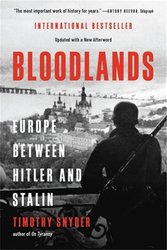
Bloodlands by Timothy Snyder
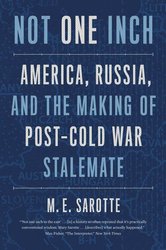
Not One Inch by M.E. Sarotte
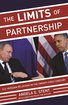
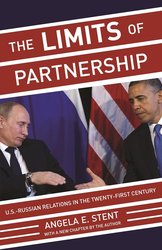
The Limits of Partnership by Angela Stent
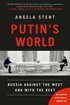
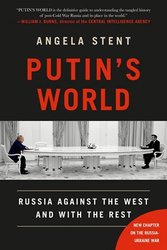
Putin’s World by Angela Stent
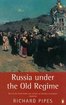
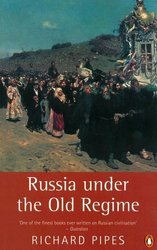
Russia Under the Old Regime by Richard Pipes
The Formation of the Soviet Union by Richard Pipes
Thoughts? Guest suggestions? Email us at [email protected].
You can find transcripts (posted midday) and more episodes of “The Ezra Klein Show” at nytimes.com/ezra-klein-podcast, and you can find Ezra on Twitter @ezraklein. Book recommendations from all our guests are listed at https://www.nytimes.com/article/ezra-klein-show-book-recs.
“The Ezra Klein Show” is produced by Annie Galvin, Jeff Geld and Rogé Karma; fact-checking by Michelle Harris; original music by Isaac Jones; mixing by Jeff Geld; audience strategy by Shannon Busta. Our executive producer is Irene Noguchi. Special thanks to Kristin Lin and Kristina Samulewski.
Books recommended:
-
📘
Putin's World: Russia Against the West and with the Rest
by
Angela Stent
-
📗
Not One Inch: America, Russia, and the Making of Post-Cold War Stalemate (The Henry L. Stimson Lectures Series)
by
M. E. Sarotte
-
📙
Bloodlands
by
Timothy Snyder
-
📕
The Limits of Partnership: U.S.-Russian Relations in the Twenty-First Century - Updated Edition
by
Angela E. Stent
-
📘
Russia under the Old Regime: Second Edition
by
Richard Pipes
-
📗
The Formation of the Soviet Union: Communism and Nationalism, 1917-1923 (Russian Research Center Studies)
by
Richard Pipes
Fiona Hill
March 8, 2022
View