Books recommended
All guests


Episodes with Aaron Retica
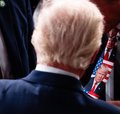

President Trump’s approval ratings on the economy, immigration and trade are deep in the red. But in Tuesday night’s State of the Union address, he decided to tell the American people: You don’t know what you’re talking about.
“Today our border is secure, our spirit is restored, inflation is plummeting, incomes are rising fast. The roaring economy is roaring like never before,” he said.
I’m not going to fact-check the president in this episode. But I do want to ask: Even if he can’t be honest with the American people, is he at least being honest with himself?
My editor Aaron Retica joins me to discuss.
Aaron Retica
Feb. 25, 2026
View


The economy has started blinking red. President Trump’s tariffs have been roiling markets. Consumer sentiment was already down. G.D.P. forecasts are predicting slower growth. And on Tuesday night Trump declared to Congress and the nation that things had never been better.
Something was different about this speech. The level of baldfaced lying. The way Republicans cheered along. How uncomfortable and uncertain Democrats seemed. It was as if, watching it all, you could feel something rupturing.
My editor, Aaron Retica, joins me to talk through Trump’s fifth address to Congress.
This episode contains strong language.
Thoughts? Guest suggestions? Email us at [email protected].
You can find transcripts (posted midday) and more episodes of “The Ezra Klein Show” at nytimes.com/ezra-klein-podcast. Book recommendations from all our guests are listed at https://www.nytimes.com/article/ezra-klein-show-book-recs.
This episode of “The Ezra Klein Show” was produced by our supervising editor, Claire Gordon. Fact-checking by Michelle Harris. Mixing by Isaac Jones, with Aman Sahota. The show’s production team also includes Rollin Hu, Elias Isquith, Kristin Lin and Jack McCordick. Original music by Pat McCusker. Audience strategy by Kristina Samulewski and Shannon Busta. The executive producer of New York Times Opinion Audio is Annie-Rose Strasser.
Aaron Retica
March 5, 2025
View
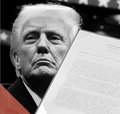

There’s a quieter transition happening beneath the pageantry of this week’s inaugural events — a transition not of power per se but of the rules around how power in Washington works. And the new rules look very different from the old ones.
In this conversation, I’m joined by Aaron Retica, an editor at large for New York Times Opinion (and my column editor), to discuss what President Trump’s inaugural address and first round of executive orders signal about the administration to come. We talk about the end of birthright citizenship and the renegotiation of American belonging, why Trump is so fixated on Greenland and the Panama Canal, his retro-futurist vision of American power, the unsettling arrival of a new tech oligarchy and more.
Aaron Retica
Jan. 22, 2025
View
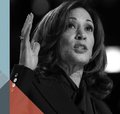

On Thursday night, Kamala Harris reintroduced herself to America. And by the standards of Democratic convention speeches, this one was pretty unusual. In this conversation I’m joined by my editor, Aaron Retica, to discuss what Harris’s speech reveals about the candidate, the campaign she’s going to run and how she believes she can win in November.
Aaron Retica
Aug. 23, 2024
View


President Biden gave a raucous State of the Union speech last Thursday, offering his pitch for why he should be president for a second term. It’s the clearest picture we have yet of Biden’s campaign message for 2024. But while he listed off all kinds of proposals, it’s not as easy to parse what a second Biden term might actually look like. So I sat down with my editor Aaron Retica, who had a lot of questions for me about the speech itself and what Biden would be likely to accomplish if he got another four years in the job.
We discuss how my argument for Biden to step aside holds up after he gave such a deft, high-energy performance; what a second Biden administration would likely do when it comes to abortion rights and foreign policy; the issues that didn’t receive much attention in the speech but would likely play a huge role in a second Biden term; the strongest 2024 campaign message that I’ve heard so far; and whether this is a Locke election or a Hobbes election — and what that means.
Books recommended:
-
📕
Tip O' Neill and the Democratic Century: A Biography
by
John A. Farrell

-
📘
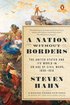
A Nation Without Borders: The United States and Its World in an Age of Civil Wars, 1830-1910 (The Penguin History of the United States)
by
Steven Hahn,
Eric Foner

-
📗
The Field of Blood: Violence in Congress and the Road to Civil War
by
Joanne B. Freeman

Aaron Retica
March 12, 2024
View

As I head into a three-month book leave, I wanted to take some time to address a wide array of listeners’ questions. My column editor, Aaron Retica, joins me for a conversation that ranges from the content of my forthcoming book and President Biden’s climate record to the simulation hypothesis and legalized psychedelic therapy.
We also discuss what the I-95 collapse — and remarkably quick repairs — tell us about government’s ability to build quickly, the problems with everything-bagel liberalism, what it would mean to treat climate change like the emergency that it is, why I dislike analogies between Biden and Franklin Roosevelt, why health care reform has receded from the center of American political debate, whether liberals are being too soft on Hunter Biden, why I am staunchly against term limits for Congress, what kinds of work are most undervalued in American society, why I’ve become less pessimistic about artificial intelligence disinformation, why I left Twitter but have been enjoying Threads, the challenges of keeping a Sabbath practice and more.
This episode contains strong language.
Note: Starting next week, “The Ezra Klein Show” will be releasing episodes only once per week, every Tuesday, until Ezra returns from his book leave in early November. These episodes will be hosted by a range of guest hosts.
Aaron Retica
July 25, 2023
View


As 2022 comes to a close, we decided to invite listeners to send in questions for an ask-me-anything episode. And boy, did you all deliver. We received hundreds of fantastic questions, and my column editor, Aaron Retica, joined me to ask some of them. Is equality of opportunity preferable to equality of outcomes? What would a better version of Twitter look like? Are Republicans more politically savvy than Democrats? What do recent advances in artificial intelligence mean for the future of our society?
We also discuss why I think ChatGPT is simultaneously overhyped and deeply unnerving, whether Joe Manchin’s policy obstructionism helped Democrats at the midterms, the death of the expanded child tax credit, why I’m more bullish than ever on eliminating the filibuster, whether Mitch McConnell is actually the strategic mastermind that liberals portray him as, why I’m skeptical of Twitter as a tool for social justice, whether the advent of social media has actually made our lives better in any measurable way and more. And we end with my New Year’s resolution practices and a whole bunch of music and children’s books recommendations.
Note: “The Ezra Klein Show” will be taking a break during the holidays, but we will be back with new episodes starting on Jan. 3, 2023.
Aaron Retica
Dec. 16, 2022
View


The results of Tuesday’s midterm elections are still trickling in, but the broader story is clear: The red wave that many anticipated never materialized. Republicans gained 54 House seats against Bill Clinton in 1994 and 63 seats against Barack Obama in 2010. It doesn’t look as though the G.O.P. will secure anything close to that in 2022, and Democrats could retain their narrow control of the Senate — all against the backdrop of raging inflation and low approval ratings for President Biden.
Why didn’t Democrats get wiped out? Why did so many Republicans underperform while others, like Gov. Ron DeSantis of Florida, won decisively? And what does it all imply for 2024?
To talk through the midterm results and their implications, I am joined by my column’s editor, Aaron Retica. We discuss why this election ended up being so shockingly close; how Democrats’ performance could, paradoxically, make it harder for Biden to win in 2024; why the significance of DeSantis’s victory is probably being overhyped; why inflation didn’t seem to matter nearly as much to the elections’ outcomes as most analysts believed it would; how a possible DeSantis-Donald Trump fight in the 2024 Republican primaries could create electoral space for more traditional Republicans to break through; John Fetterman’s distinct working-class appeal in Pennsylvania, the moral calculus of Democrats’ decision to bolster extreme Republican candidates in the primaries; the uncertain future of American democracy and more.
(Note: This episode was recorded on the afternoon of Wednesday, Nov. 9.)
Aaron Retica
Nov. 10, 2022
View