
From this episode
Recommended books
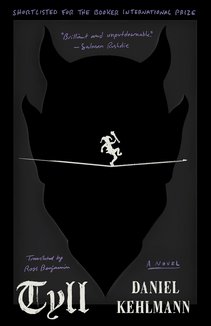
Tyll: A Novel
Authors:
Daniel Kehlmann,
Ross Benjamin
The New York Times Best Historical Fiction of 2020 The Guardian' s Best Fiction of 2020 Thrillist 's Best Books of the Year Daniel Kehlmann transports the medieval legend of the trickster Tyll Ulenspiegel to the seventeenth century in an enchanting work of magical realism, macabre humor, and rollicking adventure. Tyll is a scrawny boy growing up in a quiet village until his father, a miller with a forbidden interest in alchemy and magic, is found out by the church.
The New York Times Best Historical Fiction of 2020 The Guardian' s Best Fiction of 2020 Thrillist 's Best Books of the Year Daniel Kehlmann transports the medieval legend of the trickster Tyll Ulenspiegel to the seventeenth century in an enchanting work of magical realism, macabre humor, and rollicking adventure. Tyll is a scrawny boy growing up in a quiet village until his father, a miller with a forbidden interest in alchemy and magic, is found out by the church. After Tyll flees with the baker’s daughter, he falls in with a traveling performer who teaches him his trade. As a juggler and a jester, Tyll forges his own path through a world devastated by the Thirty Years’ War, evading witch-hunters, escaping a collapsed mine outside a besieged city, and entertaining the exiled King and Queen of Bohemia along the way. The result is both a riveting story and a moving tribute to the power of art in the face of the senseless brutality of history. Translated from the German by Ross Benjamin
Find this book on:


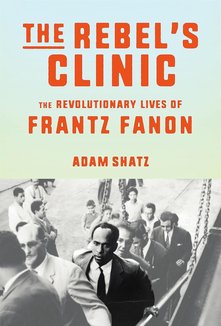
The Rebel's Clinic: The Revolutionary Lives of Frantz Fanon
Author:
Adam Shatz
One of The New York Times’ best books of 2024 so far Named a best book of 2024 by The New Yorker and Vulture Longlisted for the 2024 Baillie Gifford Prize for Non-Fiction “Nimble and engrossing . .
One of The New York Times’ best books of 2024 so far Named a best book of 2024 by The New Yorker and Vulture Longlisted for the 2024 Baillie Gifford Prize for Non-Fiction “Nimble and engrossing . . . [An] exemplary work of public intellectualism.” ―Becca Rothfeld, The Washington Post "Undoubtedly the best [biography of Fanon] . . . A remarkable achievement." ―Robert J. C. Young, Los Angeles Review of Books A revelatory biography of the writer-activist who inspired today’s movements for social and racial justice. In the era of Black Lives Matter, Frantz Fanon’s shadow looms larger than ever. He was the intellectual activist of the postcolonial era, and his writings about race, revolution, and the psychology of power continue to shape radical movements across the world. In this searching biography, Adam Shatz tells the story of Fanon’s stunning journey, which has all the twists of a Cold War–era thriller. Fanon left his modest home in Martinique to fight in the French Army during World War II; when the war was over, he fell under the influence of Existentialism while studying medicine in Lyon and trying to make sense of his experiences as a Black man in a white city. Fanon went on to practice a novel psychiatry of “dis-alienation” in rural France and Algeria, and then join the Algerian independence struggle, where he became a spokesman, diplomat, and clandestine strategist. He died in 1961, while under the care of the CIA in a Maryland hospital. Today, Fanon’s Black Skin, White Masks and The Wretched of the Earth have become canonical texts of the Black and global radical imagination, comparable to James Baldwin’s essays in their influence. And yet they are little understood. In The Rebel’s Clinic , Shatz offers a dramatic reconstruction of Fanon’s extraordinary life―and a guide to the books that underlie today’s most vital efforts to challenge white supremacy and racial capitalism. Includes 8 pages of black-and-white photographs
Find this book on:
Episode overview
I stumbled on a Zadie Smith line recently that stopped me in my tracks. She was writing in January 2017, and describing the political stakes of that period — Brexit in the U.K., Trump in the U.S. — and the way you could feel it changing people.
“Millions of more or less amorphous selves will now necessarily find themselves solidifying into protesters, activists, marchers, voters, firebrands, impeachers, lobbyists, soldiers, champions, defenders, historians, experts, critics. You can’t fight fire with air. But equally you can’t fight for a freedom you’ve forgotten how to identify.”
What Smith is describing felt so familiar — how politics can sometimes feel like it demands we put aside our internal conflict, our uncertainty, so we can take a strong position. I see it so often in myself and people around me, and yet I rarely hear it talked about. And Smith’s ability to give language to these kinds of quiet battles inside of ourselves is one reason she’s been one of my favorite writers for years.
Smith is the author of novels, including “White Teeth,” “On Beauty” and “NW,” as well as many essays and short stories. Her latest novel, “The Fraud,” also deals with politics and identity. It’s about a case in 19th-century London, but it has eerie resonances with our current political moment. I wasn’t surprised to learn that Trump and populism were front of mind for her when she wrote it. In this conversation, we discuss what populism is really channeling, why Smith refuses the “bait” of wokeness, how people have been “modified” by smartphones and social media, and more.
This episode contains strong language.