From this episode
Recommended books
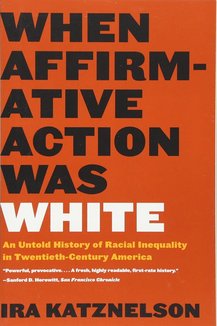
A groundbreaking work that exposes the twisted origins of affirmative action. In this "penetrating new analysis" ( New York Times Book Review ) Ira Katznelson fundamentally recasts our understanding of twentieth-century American history and demonstrates that all the key programs passed during the New Deal and Fair Deal era of the 1930s and 1940s were created in a deeply discriminatory manner.
A groundbreaking work that exposes the twisted origins of affirmative action. In this "penetrating new analysis" ( New York Times Book Review ) Ira Katznelson fundamentally recasts our understanding of twentieth-century American history and demonstrates that all the key programs passed during the New Deal and Fair Deal era of the 1930s and 1940s were created in a deeply discriminatory manner. Through mechanisms designed by Southern Democrats that specifically excluded maids and farm workers, the gap between blacks and whites actually widened despite postwar prosperity. In the words of noted historian Eric Foner, "Katznelson's incisive book should change the terms of debate about affirmative action, and about the last seventy years of American history."
Find this book on:


Racial Conflict and Economic Development (The W.E.B. Du Bois Lectures, 1982)
Author:
W. Arthur Lewis
Book by Lewis, W. Arthur
Book by Lewis, W. Arthur
Find this book on:
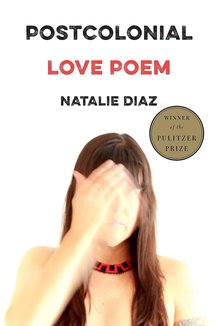
Postcolonial Love Poem: Poems
Author:
Natalie Diaz
WINNER OF THE 2021 PULITZER PRIZE IN POETRY FINALIST FOR THE 2020 NATIONAL BOOK AWARD FOR POETRY Natalie Diaz’s highly anticipated follow-up to When My Brother Was an Aztec , winner of an American Book Award Postcolonial Love Poem is an anthem of desire against erasure. Natalie Diaz’s brilliant second collection demands that every body carried in its pages―bodies of language, land, rivers, suffering brothers, enemies, and lovers―be touched and held as beloveds.
WINNER OF THE 2021 PULITZER PRIZE IN POETRY FINALIST FOR THE 2020 NATIONAL BOOK AWARD FOR POETRY Natalie Diaz’s highly anticipated follow-up to When My Brother Was an Aztec , winner of an American Book Award Postcolonial Love Poem is an anthem of desire against erasure. Natalie Diaz’s brilliant second collection demands that every body carried in its pages―bodies of language, land, rivers, suffering brothers, enemies, and lovers―be touched and held as beloveds. Through these poems, the wounds inflicted by America onto an indigenous people are allowed to bloom pleasure and tenderness: “Let me call my anxiety, desire , then. / Let me call it, a garden .” In this new lyrical landscape, the bodies of indigenous, Latinx, black, and brown women are simultaneously the body politic and the body ecstatic. In claiming this autonomy of desire, language is pushed to its dark edges, the astonishing dunefields and forests where pleasure and love are both grief and joy, violence and sensuality. Diaz defies the conditions from which she writes, a nation whose creation predicated the diminishment and ultimate erasure of bodies like hers and the people she loves: “I am doing my best to not become a museum / of myself. I am doing my best to breathe in and out. // I am begging: Let me be lonely but not invisible .” Postcolonial Love Poem unravels notions of American goodness and creates something more powerful than hope―in it, a future is built, future being a matrix of the choices we make now, and in these poems, Diaz chooses love.
Find this book on:
Episode overview
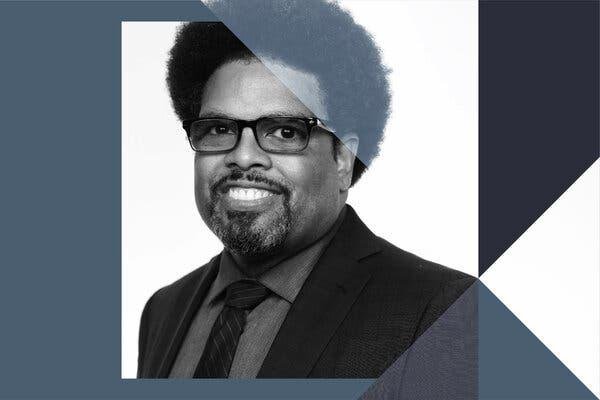
“Wealth is the paramount indicator of economic prosperity and well-being,” says the economist Darrick Hamilton. He’s right. Policy analysis tends to focus on income, but it is wealth that often determines whether we can send our kids to college, pay for an illness, quit a job, start a business or make a down payment on a home. Wealth is also the source of some of our deepest social inequalities: The top 10 percent of households in the U.S. own about 70 percent of the nation’s wealth, and the typical Black family has about one-tenth the wealth of the typical white family.
Hamilton is an economist at the New School who has spent decades studying the origins of the United States’ wealth disparities and how to close them. His “baby bonds” proposal — which would give poor children up to $50,000 in wealth by the time they become adults — has been put forward as national legislation by politicians like Senator Cory Booker and Representative Ayanna Pressley, and a state-level version of it is about to be established in Connecticut. So I asked him on the show to walk me through the structure of wealth in America today, the policy decisions undergirding that structure and the kinds of policies we could pass to dismantle it.