
From this episode
Recommended books
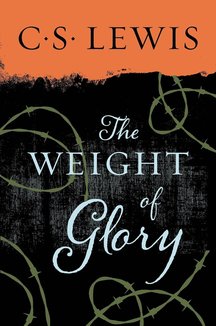
The Weight of Glory
Author:
C. S. Lewis
What does it mean to glorify God? What does it mean to be an Enjoyer of God?
What does it mean to glorify God? What does it mean to be an Enjoyer of God? Does it mean we should put controls on ourselves and our personal enjoyment of life? According to C.S. Lewis, our ultimate destiny is to partake in God’s glory because we’re created by God and for God. The Weight of Glory by C.S. Lewis is a collection of nine sermons delivered by Lewis during World War II. Lewis’s writings explore the concept of glory and how it relates to our spiritual journey. He presents key discussions that every person should consider: · The respect we should give each other · The need for constant learning · The importance of forgiveness · The need for collaboration amongst opposing sides This is a book for C. S. Lewis fans and readers interested in learning more about heaven, Christian theology, and church community. “Like a good chess player, Satan is always trying to maneuver you into a position where you can save your castle only by losing your bishop.” Lewis reminds us in The Weight of Glory that there are no ordinary people and we live in a society of possible gods and goddesses, so we should treat each other like it.
Find this book on:


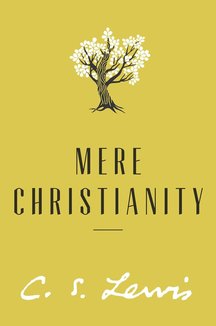
Mere Christianity
Authors:
C. S. Lewis,
Kathleen Norris
"C.S. Lewis is the ideal persuader for the half-convinced, for the good man who would like to be a Christian but finds his intellect getting in the way." — Anthony Burgess, New York Times Book Review Our moral consciousness and moral judgements are proof to the human race that a moral being exists—God.
"C.S. Lewis is the ideal persuader for the half-convinced, for the good man who would like to be a Christian but finds his intellect getting in the way." — Anthony Burgess, New York Times Book Review Our moral consciousness and moral judgements are proof to the human race that a moral being exists—God. Mere Christianity explores the core beliefs of Christianity by providing an unequaled opportunity for believers and nonbelievers alike to hear a powerful, rational case for the Christian faith. A brilliant collection, Mere Christianity remains strikingly fresh for the modern reader and at the same time confirms C. S. Lewis’s reputation as one of the leading writer and thinkers of our age. The book brings together Lewis’ legendary broadcast talks during World War II. Lewis discusses that everyone is curious about: right and wrong, human nature, morality, marriage, sins, forgiveness, faith, hope, generosity, and kindness.
Find this book on:
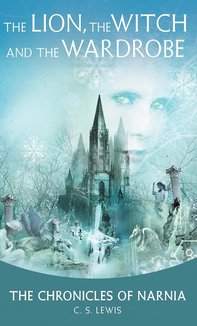
The Lion, the Witch, and the Wardrobe
Authors:
C. S. Lewis,
Pauline Baynes
Don’t miss one of America’s top 100 most-loved novels, selected by PBS’s The Great American Read. A mass-market paperback edition of The Lion, the Witch and the Wardrobe , book two in the classic fantasy series The Chronicles of Narnia .
Don’t miss one of America’s top 100 most-loved novels, selected by PBS’s The Great American Read. A mass-market paperback edition of The Lion, the Witch and the Wardrobe , book two in the classic fantasy series The Chronicles of Narnia . This edition features cover art by Cliff Nielsen and interior black-and-white illustrations by the series' original illustrator, Pauline Baynes. Four adventurous siblings—Peter, Susan, Edmund, and Lucy Pevensie—step through a wardrobe door and into the land of Narnia, a land frozen in eternal winter and enslaved by the power of the White Witch. But when almost all hope is lost, the return of the Great Lion, Aslan, signals a great change . . . and a great sacrifice. The Lion, the Witch and the Wardrobe is the second book in C. S. Lewis's classic fantasy series, which has been drawing readers of all ages into a magical land with unforgettable characters for over sixty years. This is a stand-alone read, but if you would like to explore more of the Narnian realm, pick up The Horse and His Boy , the third book in The Chronicles of Narnia.
Find this book on:
Why did Christianity begin, and why did it take the shape it did? To answer this question - which any historian must face - renowned New Testament scholar N.
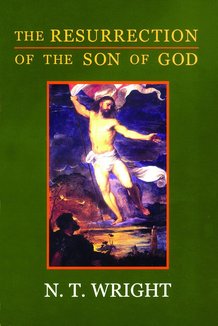
Why did Christianity begin, and why did it take the shape it did? To answer this question - which any historian must face - renowned New Testament scholar N. T. Wright focuses on the key question: what precisely happened at Easter? What did the early Christians mean when they said that Jesus of Nazareth had been raised from the dead? What can be said today about this belief? This book, third in Wright's series Christian Origins and the Question of God, sketches a map of ancient beliefs about life after death, in both the Greco-Roman and Jewish worlds. It then highlights the fact that the early Christians' belief about the afterlife belonged firmly on the Jewish spectrum, while introducing several new mutations and sharper definitions. This, together with other features of early Christianity, forces the historian to read the Easter narratives in the gospels, not simply as late rationalizations of early Christian spirituality, but as accounts of two actual events: the empty tomb of Jesus and his "appearances." How do we explain these phenomena? The early Christians' answer was that Jesus had indeed been bodily raised from the dead; that was why they hailed him as the messianic "son of God." No modern historian has come up with a more convincing explanation. Facing this question, we are confronted to this day with the most central issues of worldview and theology.
Find this book on:
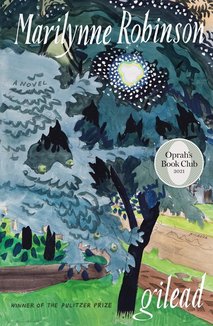
Gilead (Oprah's Book Club): A Novel
Author:
Marilynne Robinson
A NEW YORK TIMES BESTSELLER • OPRAH’S BOOK CLUB PICK • WINNER OF THE PULITZER PRIZE FOR FICTION • NATIONAL BOOK CRITICS CIRCLE AWARD WINNER • A NEW YORK TIMES NOTABLE BOOK • MORE THAN 1 MILLION COPIES SOLD “Quietly powerful [and] moving.” O, The Oprah Magazine (recommended reading) Winner of the Pulitzer Prize and National Book Critics Circle Award, GILEAD is a hymn of praise and lamentation to the God-haunted existence that Reverend Ames loves passionately, and from which he will soon part. In 1956, toward the end of Reverend John Ames's life, he begins a letter to his young son, an account of himself and his forebears.
A NEW YORK TIMES BESTSELLER • OPRAH’S BOOK CLUB PICK • WINNER OF THE PULITZER PRIZE FOR FICTION • NATIONAL BOOK CRITICS CIRCLE AWARD WINNER • A NEW YORK TIMES NOTABLE BOOK • MORE THAN 1 MILLION COPIES SOLD “Quietly powerful [and] moving.” O, The Oprah Magazine (recommended reading) Winner of the Pulitzer Prize and National Book Critics Circle Award, GILEAD is a hymn of praise and lamentation to the God-haunted existence that Reverend Ames loves passionately, and from which he will soon part. In 1956, toward the end of Reverend John Ames's life, he begins a letter to his young son, an account of himself and his forebears. Ames is the son of an Iowan preacher and the grandson of a minister who, as a young man in Maine, saw a vision of Christ bound in chains and came west to Kansas to fight for abolition: He "preached men into the Civil War," then, at age fifty, became a chaplain in the Union Army, losing his right eye in battle. Reverend Ames writes to his son about the tension between his father--an ardent pacifist--and his grandfather, whose pistol and bloody shirts, concealed in an army blanket, may be relics from the fight between the abolitionists and those settlers who wanted to vote Kansas into the union as a slave state. And he tells a story of the sacred bonds between fathers and sons, which are tested in his tender and strained relationship with his namesake, John Ames Boughton, his best friend's wayward son. This is also the tale of another remarkable vision--not a corporeal vision of God but the vision of life as a wondrously strange creation. It tells how wisdom was forged in Ames's soul during his solitary life, and how history lives through generations, pervasively present even when betrayed and forgotten.
Find this book on:
Episode overview
With Roe now overturned, the evangelical movement has achieved one of its decades-old political priorities. But for many evangelicals, this isn’t the moment of celebration and unity it may have first appeared to be. In the wake of the decision in Dobbs v. Jackson Women’s Health Organization, Russell Moore — a former president of the Ethics & Religious Liberty Commission, the policy wing of the Southern Baptist Convention — described the state of evangelicalism as one of “disarray.” He argues that surface-level political allegiances paint over much deeper divisions within what has become an increasingly polarized movement. Understanding those divisions and what they portend for evangelicalism is deeply important, in large part because of the movement’s immense power in American politics.
Moore is the editor in chief of Christianity Today; the author of numerous books, including “Onward: Engaging the Culture Without Losing the Gospel”; and one of the most visible leaders in the evangelical movement right now. But he has also voiced some of the most stinging criticism of the movement’s current direction. He believes that evangelicals’ embrace of Donald Trump was a mistake and that the way many evangelicals are approaching the culture wars — with what Moore calls a “siege mentality” — is toxic for the faith. He encourages his fellow evangelicals to embrace their role as a “moral minority” in America instead of desperately clinging to political and cultural power. “The shaking of American culture is no sign that God has given up on American Christianity,” he writes in “Onward.” “In fact, it may be a sign that God is rescuing American Christianity from itself.”
So this is a conversation about how evangelicalism morphed into the political identity we know it as today, why so many evangelicals have come to embrace apocalyptic thinking about politics and where the movement goes next now that Roe has been overturned.
Mentioned
“The Supreme Court Needs to Be Less Central to American Public Life” by Russell Moore
Book Recommendations
The Weight of Glory by C.S. Lewis
Mere Christianity by C.S. Lewis
The Lion, the Witch and the Wardrobe by C.S. Lewis
The Resurrection of the Son of God by N.T. Wright
The Gilead Novels by Marilynne Robinson
This episode was hosted by Jane Coaston, the host of “The Argument.” Previously, she was the senior politics reporter at Vox, with a focus on conservatism and the G.O.P. Her work has appeared on MSNBC, CNN and NPR and in National Review, The Washington Post, The Ringer and ESPN Magazine, among others.
Thoughts? Guest suggestions? Email us at [email protected].
You can find transcripts (posted midday) and more episodes of “The Ezra Klein Show” at nytimes.com/ezra-klein-podcast, and you can find Ezra on Twitter @ezraklein. Book recommendations from all our guests are listed at https://www.nytimes.com/article/ezra-klein-show-book-recs.
“The Ezra Klein Show” is produced by Annie Galvin and Rogé Karma; fact-checking by Michelle Harris, Mary Marge Locker and Kate Sinclair; original music by Isaac Jones; mixing by Sonia Herrero and Isaac Jones; audience strategy by Shannon Busta. Special thanks to Kristin Lin and Kristina Samulewski.