From this episode
Recommended books
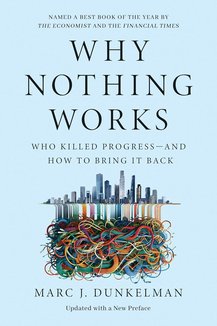
Why Nothing Works: Who Killed Progress―and How to Bring It Back
Author:
Marc J. Dunkelman
A provocative exploration of the forces that keep us from getting things done, and how we can restore confidence in government. “Dunkelman summarizes the history perfectly.” —David Brooks, The New York Times Named a Best Book of the Year by Financial Times • The Economist America was once a country that did big things.
A provocative exploration of the forces that keep us from getting things done, and how we can restore confidence in government. “Dunkelman summarizes the history perfectly.” —David Brooks, The New York Times Named a Best Book of the Year by Financial Times • The Economist America was once a country that did big things. But today, even while facing a host of pressing challenges—a housing shortage, a climate crisis, dilapidated infrastructure—we feel stuck. As Marc J. Dunkelman reveals, America is the victim of a vetocracy that allows nearly anyone to stifle progress. While conservatives deserve some blame, progressives have overlooked an unlikely culprit: their own fears of “The Establishment.” A half century ago, reformers began to put speaking truth to power ahead of exercising that power for good. Now, the ensuing gridlock has pummeled faith in public institutions of all sorts and opened the door for MAGA-style populism. Why Nothing Works uncovers the roots of this predicament, and boldly shows how progressives can once again build a better future for all.
Find this book on:


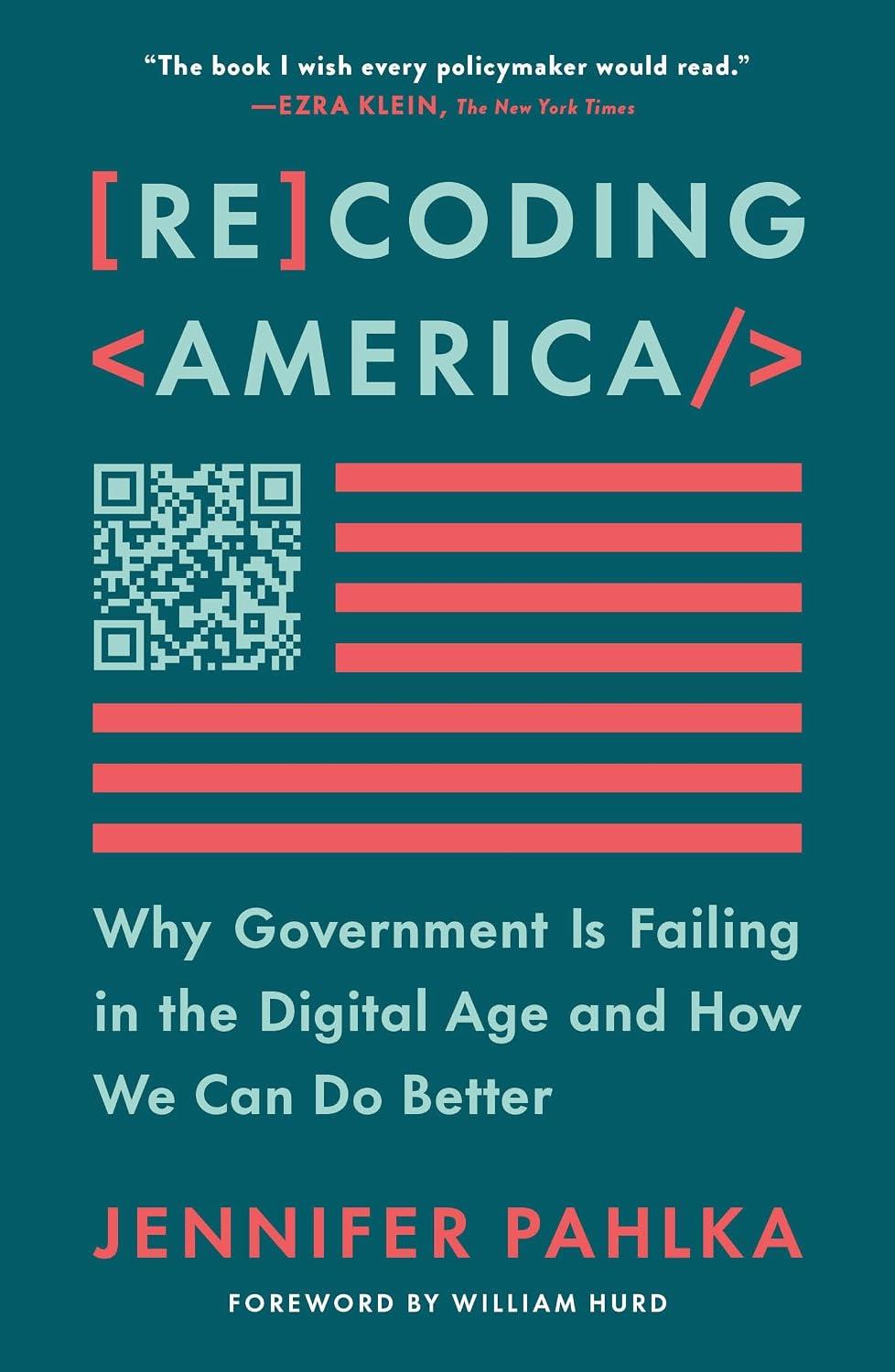
Recoding America
Author:
Jennifer Pahlka
Named one of NPR's Best Books of 2023 Named one of Ezra Klein's "Books That Explain Where We Are in 2023," The New York Times Learn more about Jennifer Pahlka's work at recodingamerica.us. “The book I wish every policymaker would read.” ― Ezra Klein, The New York Times A bold call to reexamine how our government operates―and sometimes fails to ― from President Obama’s former deputy chief technology officer and the founder of Code for America Just when we most need our government to work―to decarbonize our infrastructure and economy, to help the vulnerable through a pandemic, to defend ourselves against global threats―it is faltering.
Named one of NPR's Best Books of 2023 Named one of Ezra Klein's "Books That Explain Where We Are in 2023," The New York Times Learn more about Jennifer Pahlka's work at recodingamerica.us. “The book I wish every policymaker would read.” ― Ezra Klein, The New York Times A bold call to reexamine how our government operates―and sometimes fails to ― from President Obama’s former deputy chief technology officer and the founder of Code for America Just when we most need our government to work―to decarbonize our infrastructure and economy, to help the vulnerable through a pandemic, to defend ourselves against global threats―it is faltering. Government at all levels has limped into the digital age, offering online services that can feel even more cumbersome than the paperwork that preceded them and widening the gap between the policy outcomes we intend and what we get. But it’s not more money or more tech we need. Government is hamstrung by a rigid, industrial-era culture, in which elites dictate policy from on high, disconnected from and too often disdainful of the details of implementation. Lofty goals morph unrecognizably as they cascade through a complex hierarchy. But there is an approach taking hold that keeps pace with today’s world and reclaims government for the people it is supposed to serve. Jennifer Pahlka shows why we must stop trying to move the government we have today onto new technology and instead consider what it would mean to truly recode American government.
Find this book on:
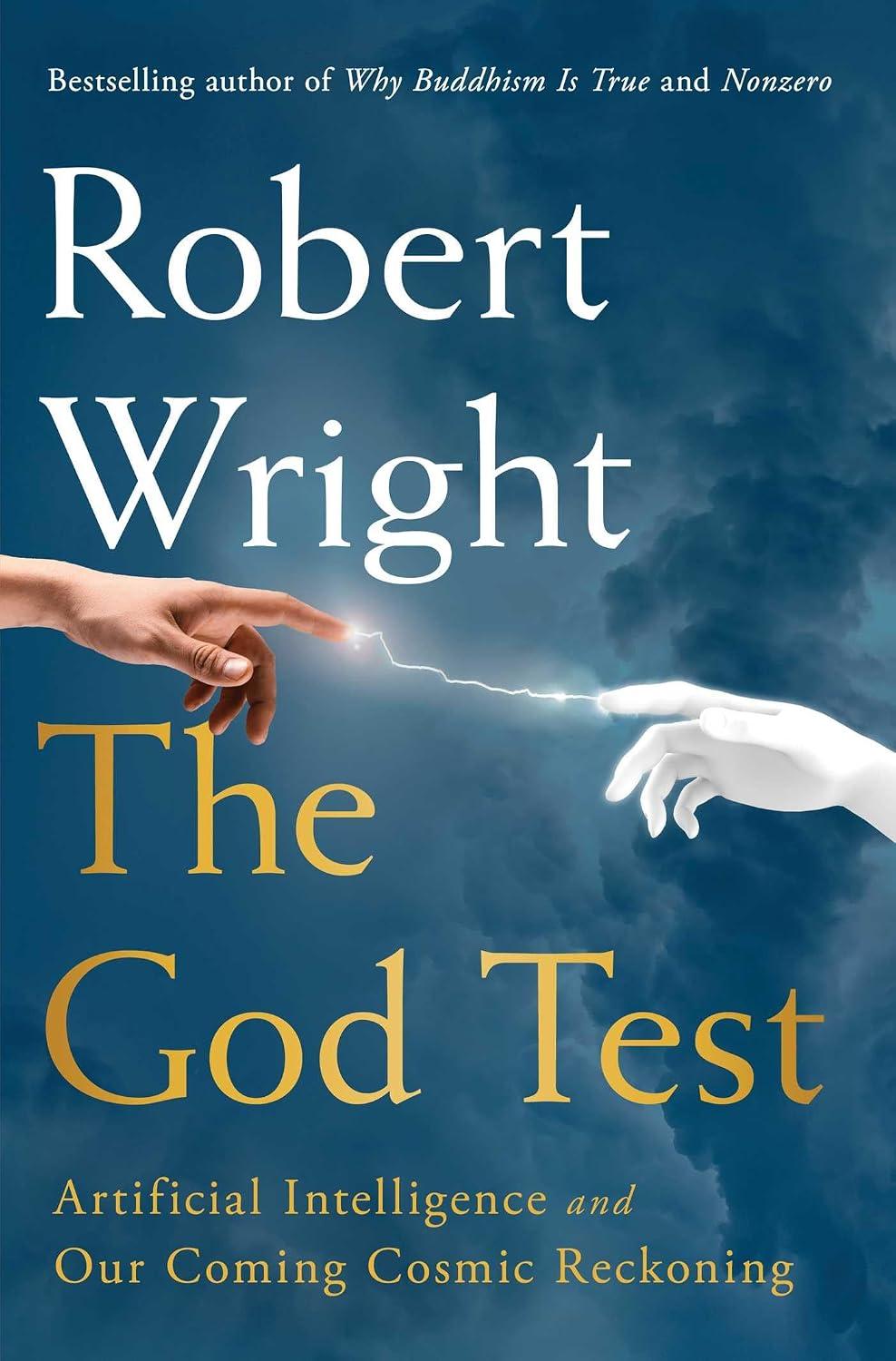
The God Test: Artificial Intelligence and Our Coming Cosmic Reckoning
Author:
Robert Wright
From bestselling author and Pulitzer Prize finalist Robert Wright comes a sweeping new view of artificial intelligence—as an evolutionary force that will pose deep political and spiritual challenges and could, in the process, give our species a unifying sense of purpose. The God Test is the first book to capture the power behind the AI revolution—to clearly explain the breakthroughs that sparked the current wave of advance and compellingly show why this wave will grow in magnitude and meaning.
From bestselling author and Pulitzer Prize finalist Robert Wright comes a sweeping new view of artificial intelligence—as an evolutionary force that will pose deep political and spiritual challenges and could, in the process, give our species a unifying sense of purpose. The God Test is the first book to capture the power behind the AI revolution—to clearly explain the breakthroughs that sparked the current wave of advance and compellingly show why this wave will grow in magnitude and meaning. Written by one of our foremost public intellectuals, and informed by his decades of chronicling the digital age, the book argues that we are about to witness the most abruptly dramatic social transformation in the history of our species. Wright says that to truly understand this moment in technological history, we need to expand our perspective beyond the last century or even the whole history of technology and look back across billions of years of life on Earth. The advance of AI, he argues, is driven by evolutionary dynamics like those that led to intelligent life in the first place. And understanding those dynamics can empower us to confront our climactic challenge: Can we muster the political, moral, and even spiritual resources needed to guide this technology wisely? If we fail, the consequences for the whole planet could be grave. But if we meet the challenge—if we pass “the God test”—we can live in a world where humanity thrives, finding not just happiness but deeper meaning and purpose. The very machines that might otherwise imperil or oppress us can enrich us, helping us transcend the psychological impediments to human concord and fulfillment.
Find this book on:
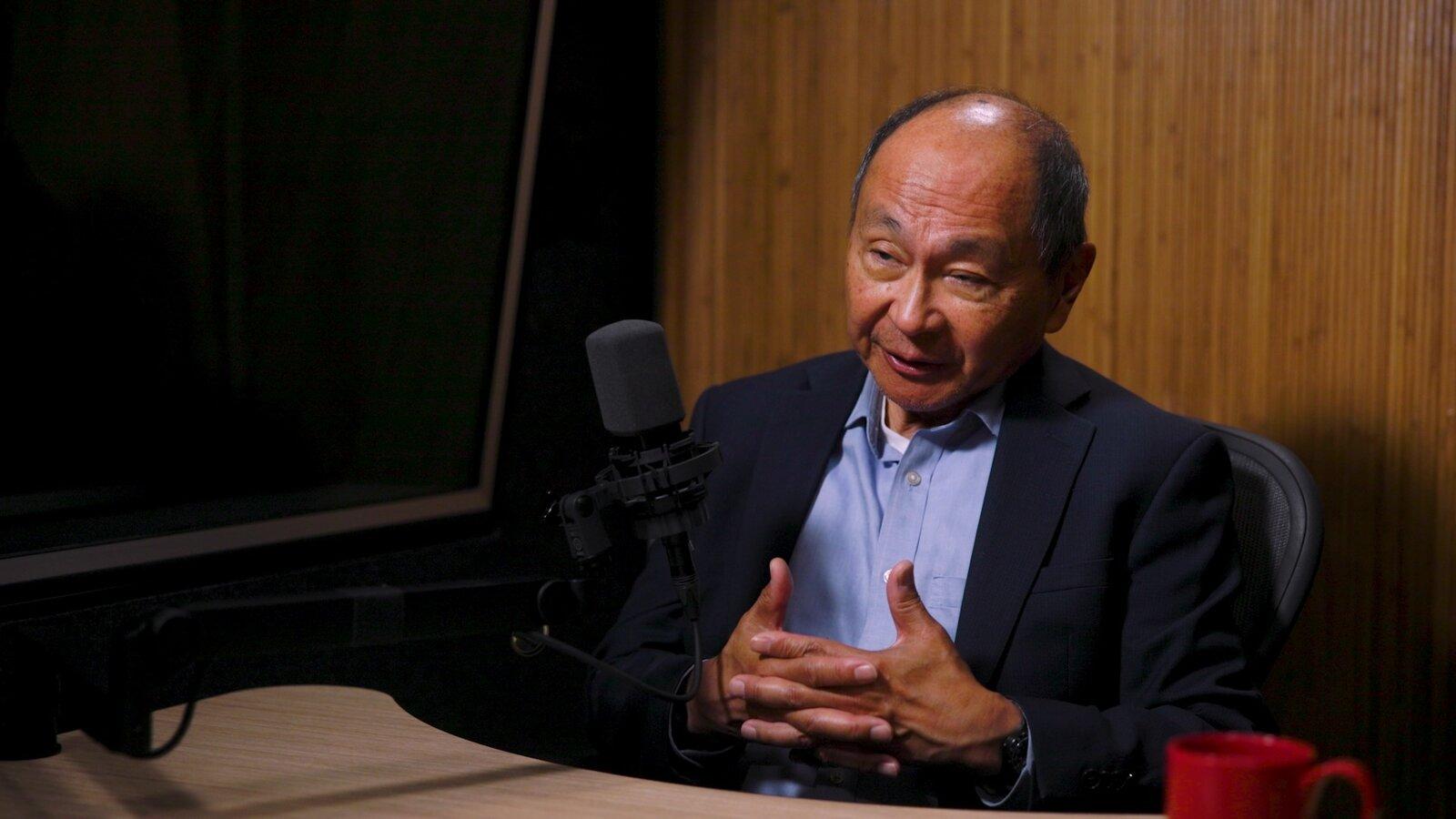
Episode overview
Francis Fukuyama's “The End of History and the Last Man” is one of the most insightful books for understanding the strangeness and instability of this political moment.
Fukuyama wrote his landmark book more than 30 years ago, and it’s typically remembered as a triumphalist argument, heralding the permanent victory of liberal democracy at the end of the Cold War. But that’s not quite right. Fukuyama also talked about the serious weaknesses he saw in liberal democracy — how it may not fully satisfy the human soul — and his warnings feel very prescient now.
So I wanted to have Fukuyama on the show to talk through the ideas in his book and how he sees them today, at a time when liberal democracy seems increasingly imperiled around the world. Fukuyama is a political scientist at Stanford University and the author of a number of other great books of political theory, as well as a new memoir, “In the Realm of the Last Man.”