
From this episode
Recommended books
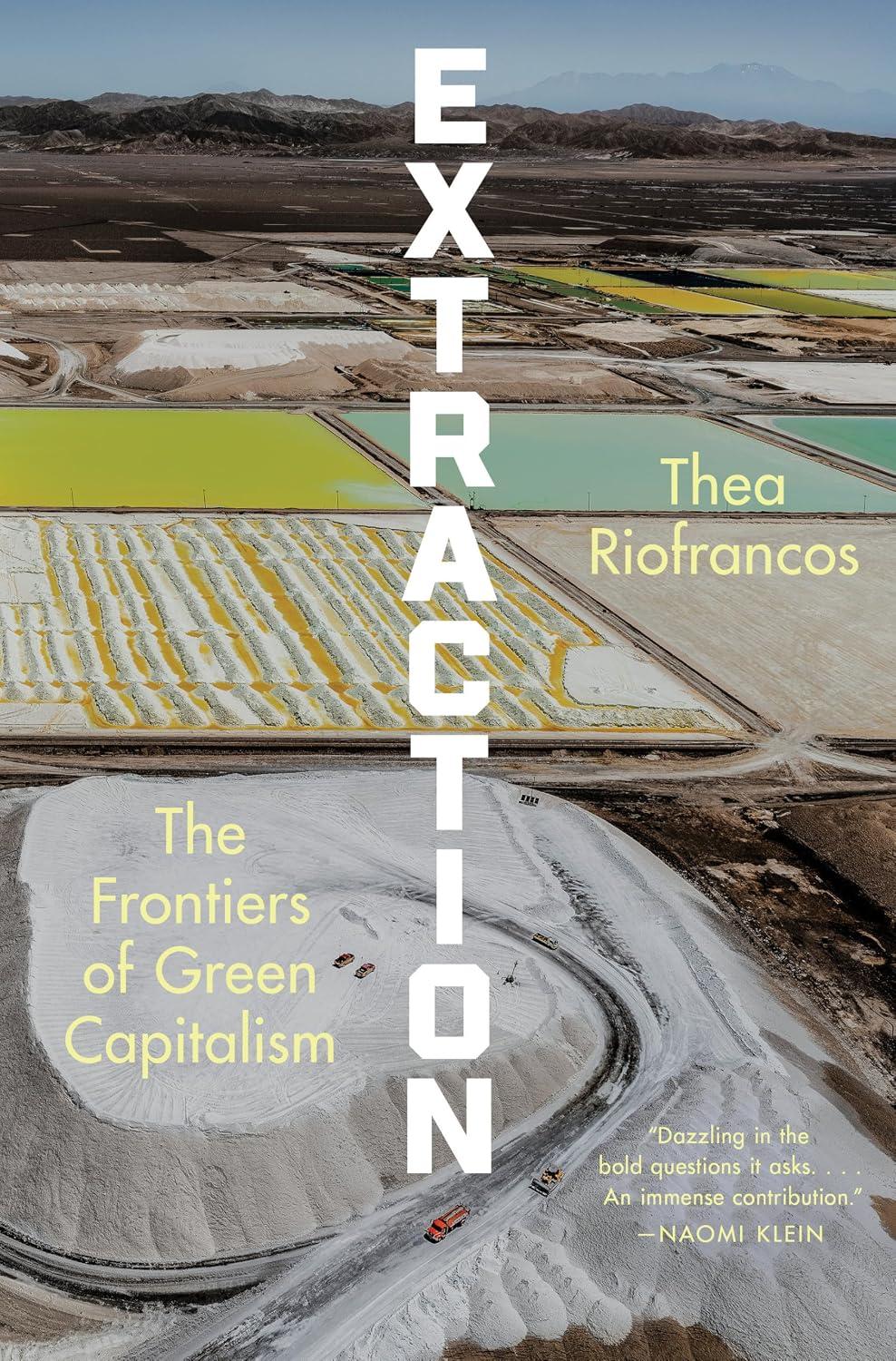
Extraction: The Frontiers of Green Capitalism
Author:
Thea Riofrancos
"Dazzling in the bold questions it asks.…An immense contribution." ―Naomi Klein An in-depth investigation into the growing industry of green technologies and the environmental, social, and political consequences of the mining it requires. Lithium, a crucial input in the batteries powering electric vehicles, has the potential to save the world from climate change.
"Dazzling in the bold questions it asks.…An immense contribution." ―Naomi Klein An in-depth investigation into the growing industry of green technologies and the environmental, social, and political consequences of the mining it requires. Lithium, a crucial input in the batteries powering electric vehicles, has the potential to save the world from climate change. But even green solutions come at a cost. Mining lithium is environmentally destructive. We therefore confront a dilemma: Is it possible to save the world by harming it in the process? Having spent over a decade researching mining and oil sectors in Latin America, Thea Riofrancos is a leading voice on resource extraction. In Extraction , she draws on groundbreaking fieldwork on the global race for lithium. Taking readers from the breathtaking salt flats of Chile’s Atacama Desert, to Nevada’s glorious Silver Peak Range, to the rolling hills of the Barroso Region of Portugal, she reveals the social and environmental costs of “critical minerals.” In Washington, DC, and Brussels, she tracks the escalating geopolitics of green technology supply chains. And she takes stock of new policy paradigms in the Global South, where governments seek to leverage mineral assets to jumpstart green development. In the process, Riofrancos uncovers surprising links across history, from colonial conquest to the 1970s energy crisis, to our still uncertain green future. While unregulated mining could inflict irreversible harm, Riofrancos offers optimistic proposals to transform the governance of mining while also reducing the sheer volume of global extraction. A rigorous and hopeful call to action, Extraction shares how we can harmonize climate goals with social justice―and set the planet on a course to ecological flourishing. 4 chapter openers
Find this book on:

Silicon Empires: The Fight for the Future of AI
Author:
Nick Srnicek
Since the emergence of ChatGPT, generative AI has been heralded as a technology poised to revolutionize our world. But beyond the hype and hyperbole, who truly wields power over this transformative technology?
Since the emergence of ChatGPT, generative AI has been heralded as a technology poised to revolutionize our world. But beyond the hype and hyperbole, who truly wields power over this transformative technology? In Silicon Empires , Nick Srnicek explores the geopolitical economy of artificial intelligence, revealing how a handful of powerful corporations and states are engaged in a monumental struggle to control its future. Srnicek moves beyond the headlines to lay bare the elaborate strategies that these silicon empires - from tech giants to great powers - are deploying to capture the immense value of AI. This incisive analysis uncovers the deep-seated tensions between corporate ambitions and national interests, and the profound consequences of this new era of technological competition. As the race for AI supremacy accelerates, Srnicek compellingly demonstrates that the decisions being made in the boardrooms of Silicon Valley and the halls of government will shape the distribution of wealth and power on a global scale for decades to come. Now available as an audiobook.
Find this book on:
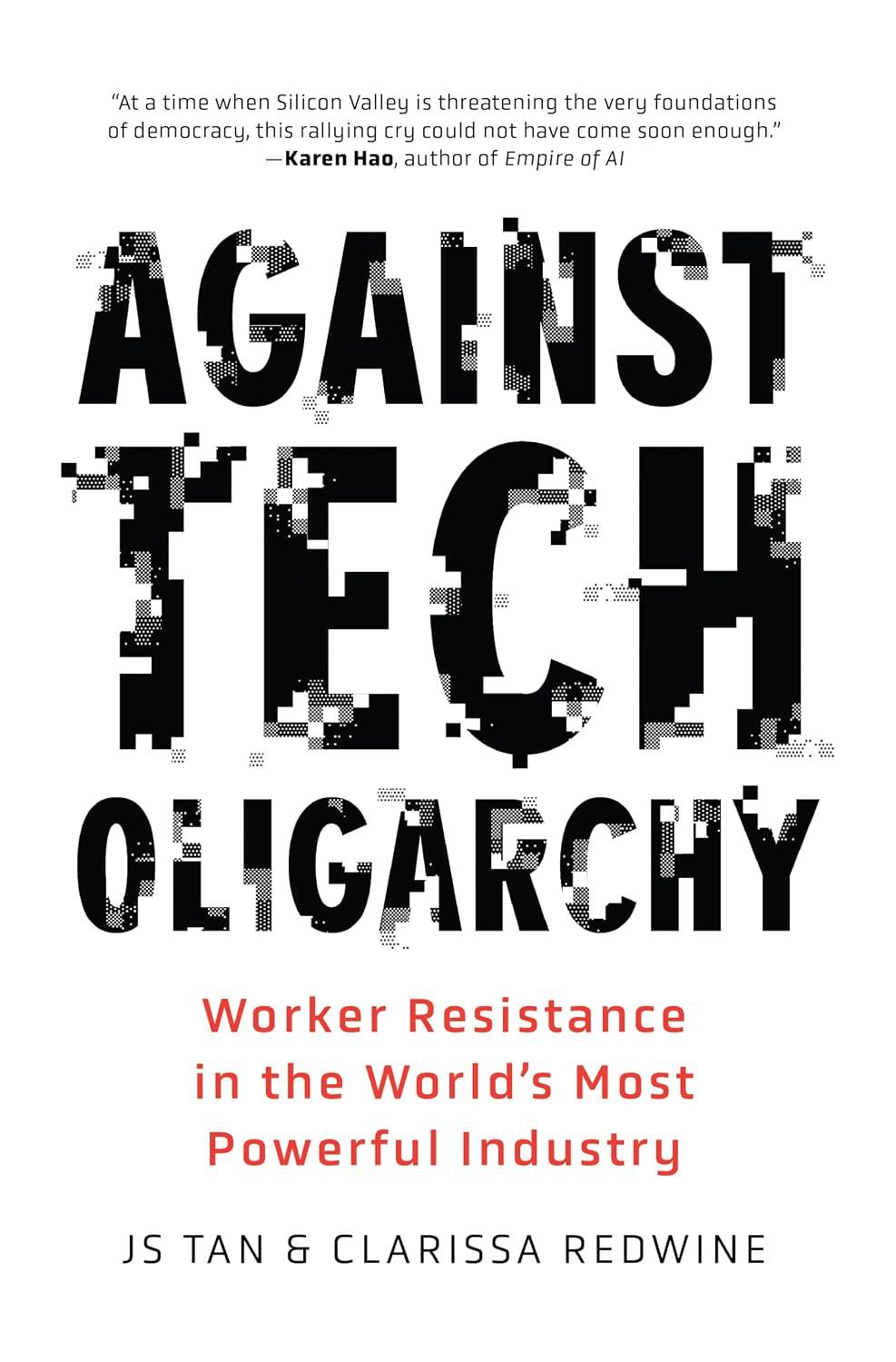
Against Tech Oligarchy: Worker Resistance in the World’s Most Powerful Industry
Authors:
JS Tan,
Clarissa Redwine
As tech bosses fall in line with the right, tech workers are fighting back. This is the rousing inside story of their movement―and the way it spawned an anti-worker backlash now reshaping the industry.
As tech bosses fall in line with the right, tech workers are fighting back. This is the rousing inside story of their movement―and the way it spawned an anti-worker backlash now reshaping the industry. After Donald Trump’s election in 2016, the tech industry sprang into action to oppose his right-wing agenda, with workers and CEOs alike joining mass mobilizations against the new president’s anti-immigrant policies. But it wasn’t long before the tech bosses started to fall in line with the new administration. In response, tens of thousands of tech workers protested against their own employers for betraying the progressive values that once defined the industry―including organizing against military contracts, walking out to protest sexism, and even launching a wave of union drives. By the early 2020s, these workers had sparked what observers were calling the tech worker movement , one that seemed capable of checking the industry’s reckless growth and reactionary drift. But as their struggle grew, so did the employers’ backlash. A new class consciousness took root among tech's billionaire owners. Hell-bent on stamping out any and all dissent, tech executives embraced Trumpism, fired organizers, and began lashing out against the “woke” ideology they blamed for turning their once loyal employees against them―and replacing the good tech jobs of the 2010s with incessant layoffs, grind culture, and a management style that treats workers as disposable. Against Tech Oligarchy provides a gripping account of this inspiring workers' movement and the rise of the hostile labor politics that define Silicon Valley today.
Find this book on:
Episode overview
Ahead of the midterm elections, Elon Musk has become the single largest campaign donor in any election cycle, giving about $450 million to Republicans. It is just a fraction of a percent of his near-trillion-dollar net worth.
Musk’s control over SpaceX, Starlink, X, Tesla and Neuralink, on top of his riches, has given him power over wealth, attention and critical infrastructure that few human beings have ever amassed before. What does he want to do with all this power? What is he trying to buy with his campaign spending? What is the world he wants to build?
Quinn Slobodian is a professor of international history at Boston University. He’s the author of “Globalists,” “Hayek’s Bastards” and, most recently, “Muskism: A Guide for the Perplexed,” which he co-wrote with Ben Tarnoff.