
From this episode
Recommended books
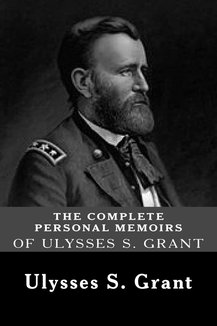
The Complete Personal Memoirs of Ulysses S. Grant
Authors:
Ulysses S. Grant,
David S. Nolen,
Louie P. Gallo,
John F. Marszalek,
Frank J. Williams
General Grant's personal memoirs are a must read for all Civil War buffs and those even remotely interested in history. This book, which includes both Volume I and II, articulately spells out the military career of one of the United States' greatest generals.
General Grant's personal memoirs are a must read for all Civil War buffs and those even remotely interested in history. This book, which includes both Volume I and II, articulately spells out the military career of one of the United States' greatest generals. Grant's memoirs are well-written, thoughtful, insightful, and offer more than a glimpse into the mind of U.S. Grant. Volume I opens with a heartfelt preface where Grant explains how his diminishing health pushed him to complete this work and "asking no favor but hoping (his remarks) will meet the approval of the reader." They most definitely do. Following the preface, the reader is given a (very) short review of his early childhood, life at West Point, and early Army life. The next one hundred pages are dedicated to the Mexican War followed by his resignation from the military and civilian life in Illinois. The remainder of Volume I and all of Volume II extensively deal with the war between the states. Volume I (written before Grant realized he was critically ill) is rich in detail of the various military campaigns and his ascension through the military ranks. Volume II hurls the reader into the conflict, reads rapidly, and is rife with Grant's personal observations and insights. This second volume picks up where the first left off--following Vicksburg to the campaigns in Tennessee to the Battle of the Wilderness to Sherman's March to the Sea to the Battle of Franklin right up to Appomattox and all the events of April and May 1865. These campaigns are told from the commanding general's perspective with great overview and detail. However, what really makes Volume II special are all the personal observations and insightful comments about those Grant served with and against. Grant is thoughtful and displays much about himself as this great book draws to a close. An eloquently written, detailed, first-person account of the Civil War that offers much to those who read it.
Find this book on:


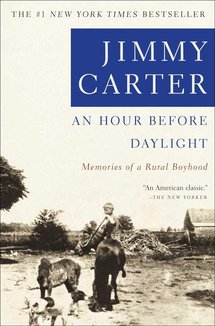
An Hour Before Daylight: Memories of a Rural Boyhood
Author:
Jimmy Carter
“An American classic.” — The New Yorker In An Hour Before Daylight, Jimmy Carter, bestselling author of Living Faith and Sources of Strength, recreates his Depression-era boyhood on a Georgia farm before the civil rights movement forever changed it and the country. Carter writes about the powerful rhythms of countryside and community in a sharecropping economy, offering an unforgettable portrait of his father, a brilliant farmer and a strict segregationist who treated black workers with respect and fairness; his strong-willed and well-read mother; and the five other people who shaped his early life, three of whom were black.
“An American classic.” — The New Yorker In An Hour Before Daylight, Jimmy Carter, bestselling author of Living Faith and Sources of Strength, recreates his Depression-era boyhood on a Georgia farm before the civil rights movement forever changed it and the country. Carter writes about the powerful rhythms of countryside and community in a sharecropping economy, offering an unforgettable portrait of his father, a brilliant farmer and a strict segregationist who treated black workers with respect and fairness; his strong-willed and well-read mother; and the five other people who shaped his early life, three of whom were black. Carter's clean and eloquent prose evokes a time when the cycles of life were predictable and simple and the rules were heartbreaking and complex. In his singular voice and with a novelist's gift for detail, Jimmy Carter creates a sensitive portrait of an era that shaped the nation and recounts a classic, American story of enduring importance.
Find this book on:
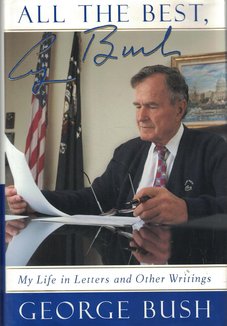
All The Best, George Bush: My Life in Letters and Other Writings
Authors:
George H.W. Bush,
George H. W. Bush
One of the most private presidents since "Silent Cal" Coolidge shares his life in correspondence, diary entries, memos, and other writings, from his letter home as an eighteen-year-old Navy pilot during World War II to one written to his children on the eve of Desert Storm.
One of the most private presidents since "Silent Cal" Coolidge shares his life in correspondence, diary entries, memos, and other writings, from his letter home as an eighteen-year-old Navy pilot during World War II to one written to his children on the eve of Desert Storm.
Find this book on:
Episode overview
Although 12 candidates have entered the Republican presidential race so far, only Gov. Ron DeSantis of Florida is polling anywhere close to Donald Trump. What does DeSantis actually believe? How has he governed? And what case will he make to Republicans to vote for him over Trump?
To answer those questions, I wanted to spend some time reading DeSantis in his own words. So I invited Carlos Lozada — the Pulitzer Prize-winning former book critic for The Washington Post, current Times Opinion columnist and the author of “What Were We Thinking: A Brief Intellectual History of the Trump Era” — to join me. Lozada has read many, many books by and about Republican politicians, including DeSantis’s two books, “Dreams From Our Founding Fathers: First Principles in the Age of Obama” from 2011 and “The Courage to Be Free: Florida’s Blueprint for America’s Revival,” released this year.
We discuss DeSantis’s striking definition of — and rhetorical assault on — “elites,” why his campaign book makes no effort to showcase bipartisan credentials, DeSantis’s awkward transition from a Tea Party figure to MAGA crusader, what DeSantis has actually done as governor of Florida, why Florida’s Covid record is such a cornerstone of his political appeal, what DeSantis means by “wokeness” and why he’s waging a “war” on it, the surprising absence of major economic ideas from his book, how he is trying to differentiate himself from Trump without alienating Trump voters, whether his aggressive actions toward Disney will backfire and more.