
From this episode
Recommended books
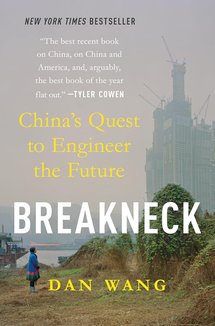
Breakneck: China's Quest to Engineer the Future
Author:
Dan Wang
NEW YORK TIMES BESTSELLER Shortlisted for the Financial Times and Schroders Business Book of the Year Award One of The New Yorker 's Best Books of the Year • One of NPR's "Books We Love" of 2025 • A Financial Times Best Book of the Year • An August 2025 Next Big Idea Club Must-Read Book • One of Bookbub's Best Nonfiction of 2025 • A China Books Review Best Book of 2025 • An Inc. Best Business Book of 2025 A riveting, firsthand investigation of China’s seismic progress, its human costs, and what it means for America.
NEW YORK TIMES BESTSELLER Shortlisted for the Financial Times and Schroders Business Book of the Year Award One of The New Yorker 's Best Books of the Year • One of NPR's "Books We Love" of 2025 • A Financial Times Best Book of the Year • An August 2025 Next Big Idea Club Must-Read Book • One of Bookbub's Best Nonfiction of 2025 • A China Books Review Best Book of 2025 • An Inc. Best Business Book of 2025 A riveting, firsthand investigation of China’s seismic progress, its human costs, and what it means for America. For close to a decade, technology analyst Dan Wang―“a gifted observer of contemporary China” (Ross Douthat)―has been living through the country’s astonishing, messy progress. China’s towering bridges, gleaming railways, and sprawling factories have improved economic outcomes in record time. But rapid change has also sent ripples of pain throughout the society. This reality―political repression and astonishing growth ―is not a paradox, but rather a feature of China’s engineering mindset. In Breakneck , Wang blends political, economic, and philosophical analysis with reportage to reveal a provocative new framework for understanding China―one that helps us see America more clearly, too. While China is an engineering state, relentlessly pursuing megaprojects, the United States has stalled. America has transformed into a lawyerly society, reflexively blocking everything, good and bad. Blending razor-sharp analysis with immersive storytelling, Wang offers a gripping portrait of a nation in flux. Breakneck traverses metropolises like Shanghai, Chongqing, and Shenzhen, where the engineering state has created not only dazzling infrastructure but also a sense of optimism. The book also exposes the downsides of social engineering, including the surveillance of ethnic minorities, political suppression, and the traumas of the one-child policy and zero-Covid. In an era of animosity and mistrust, Wang unmasks the shocking similarities between the United States and China. Breakneck reveals how each country points toward a better path for the other: Chinese citizens would be better off if their government could learn to value individual liberties, while Americans would be better off if their government could learn to embrace engineering―and to produce better outcomes for the many, not just the few.
Find this book on:

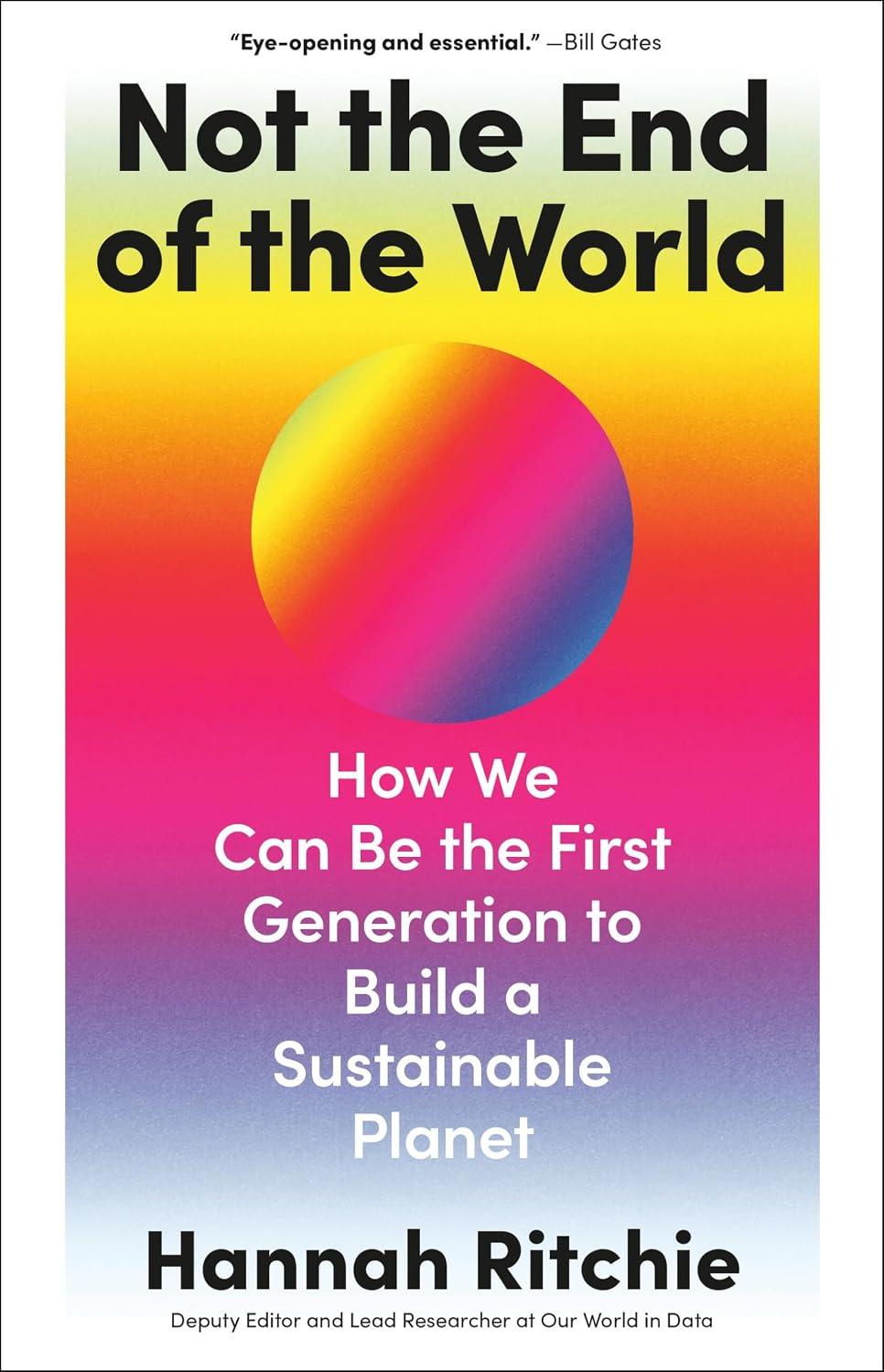
Not the End of the World: How We Can Be the First Generation to Build a Sustainable Planet
Author:
Hannah Ritchie
This "eye-opening and essential" book (Bill Gates) will transform how you see our biggest environmental problems—and explains how we can solve them. It’s become common to tell kids that they’re going to die from climate change.
This "eye-opening and essential" book (Bill Gates) will transform how you see our biggest environmental problems—and explains how we can solve them. It’s become common to tell kids that they’re going to die from climate change. We are constantly bombarded by doomsday headlines that tell us the soil won’t be able to support crops, fish will vanish from our oceans, and that we should reconsider having children. But in this bold, radically hopeful book, data scientist Hannah Ritchie argues that if we zoom out, a very different picture emerges. In fact, the data shows we’ve made so much progress on these problems that we could be on track to achieve true sustainability for the first time in human history. Did you know that: Carbon emissions per capita are actually down Deforestation peaked back in the 1980s The air we breathe now is vastly improved from centuries ago And more people died from natural disasters a hundred years ago? Packed with the latest research, practical guidance, and enlightening graphics, this book will make you rethink almost everything you’ve been told about the environment. Not the End of the World will give you the tools to understand our current crisis and make lifestyle changes that actually have an impact. Hannah cuts through the noise by outlining what works, what doesn’t, and what we urgently need to focus on so we can leave a sustainable planet for future generations. These problems are big. But they are solvable. We are not doomed. We can build a better future for everyone. Let’s turn that opportunity into reality.
Find this book on:
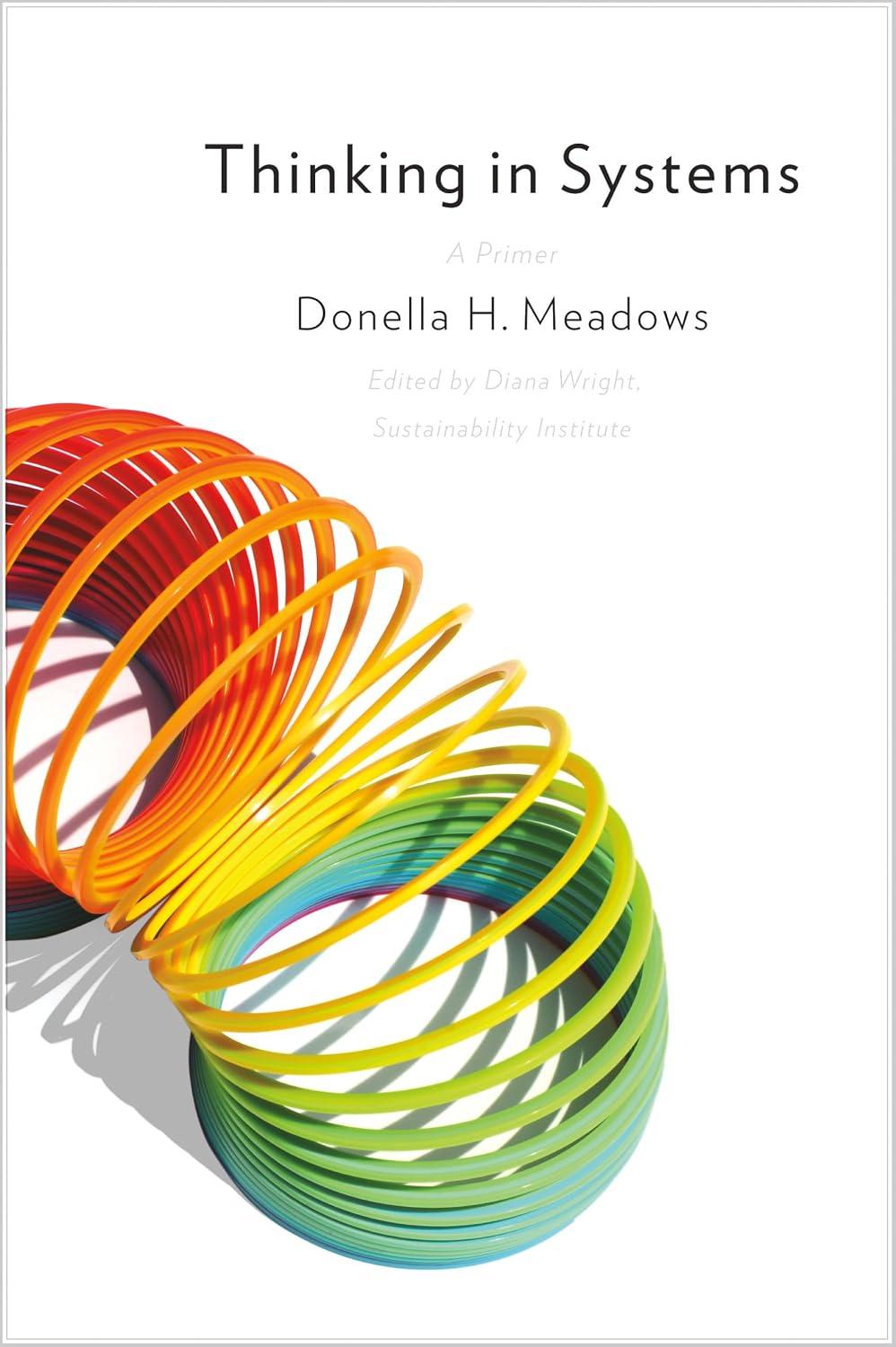
Thinking in Systems: International Bestseller
Authors:
Donella H. Meadows,
Diana Wright
The classic book on systems thinking—with more than half a million copies sold worldwide! “This is a fabulous book… This book opened my mind and reshaped the way I think about investing.”— Forbes “A modern classic”— The New Yorker In the years following her role as the lead author of the international bestseller, Limits to Growth —the first book to show the consequences of unchecked growth on a finite planet—Donella Meadows remained a pioneer of environmental and social analysis until her untimely death in 2001.
The classic book on systems thinking—with more than half a million copies sold worldwide! “This is a fabulous book… This book opened my mind and reshaped the way I think about investing.”— Forbes “A modern classic”— The New Yorker In the years following her role as the lead author of the international bestseller, Limits to Growth —the first book to show the consequences of unchecked growth on a finite planet—Donella Meadows remained a pioneer of environmental and social analysis until her untimely death in 2001. Thinking in Systems is a concise and crucial book offering insight for problem solving on scales ranging from the personal to the global. Edited by the Sustainability Institute’s Diana Wright, this essential primer brings systems thinking out of the realm of computers and equations and into the tangible world, showing readers how to develop the systems-thinking skills that thought leaders across the globe consider critical for 21st-century life. Some of the biggest problems facing the world—war, hunger, poverty, and environmental degradation—are essentially system failures. They cannot be solved by fixing one piece in isolation from the others, because even seemingly minor details have enormous power to undermine the best efforts of too-narrow thinking. While readers will learn the conceptual tools and methods of systems thinking, the heart of the book is grander than methodology. Donella Meadows was known as much for nurturing positive outcomes as she was for delving into the science behind global dilemmas. She reminds readers to pay attention to what is important, not just what is quantifiable, to stay humble, and to stay a learner. In a world growing ever more complicated, crowded, and interdependent, Thinking in Systems helps readers avoid confusion and helplessness, the first step toward finding proactive and effective solutions. “ Thinking in Systems is required reading for anyone hoping to run a successful company, community, or country. Learning how to think in systems is now part of change-agent literacy. And this is the best book of its kind.”—Hunter Lovins
Find this book on:
Episode overview
At the center of the country’s debates over artificial intelligence is a simple but hard question: What kind of technology is this?
Is A.I. a kind of “alien mind”? Are we unleashing a new species on the planet, one that will transform human society so completely that historical analogies to past technologies simply don’t hold? Or is A.I. more normal than that?
Arvind Narayanan is a professor of computer science at Princeton University and the director of the Center for Information Technology Policy. And he’s an author, alongside his colleague Sayash Kapoor, of the extremely influential essay “A.I. as Normal Technology.”
In that essay, and then in a Substack under that name, they lay out their case that A.I. is in fact something we’ve seen before — or at least, it’s close enough to past revolutionary technologies that we have a road map to deal with it. So I wanted to bring Narayanan on the show to hear that perspective.