From this episode
Recommended books
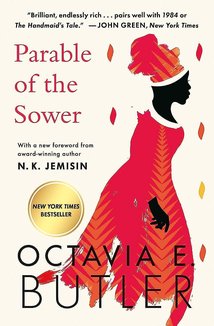
Parable of the Sower (Parable, 1)
Author:
Octavia E. Butler
This acclaimed post-apocalyptic novel of hope and terror from an award-winning author "pairs well with 1984 or The Handmaid's Tale " and includes a foreword by N. K.
This acclaimed post-apocalyptic novel of hope and terror from an award-winning author "pairs well with 1984 or The Handmaid's Tale " and includes a foreword by N. K. Jemisin (John Green, New York Times ). When global climate change and economic crises lead to social chaos in the early 2020s, California becomes full of dangers, from pervasive water shortage to masses of vagabonds who will do anything to live to see another day. Fifteen-year-old Lauren Olamina lives inside a gated community with her preacher father, family, and neighbors, sheltered from the surrounding anarchy. In a society where any vulnerability is a risk, she suffers from hyperempathy, a debilitating sensitivity to others' emotions. Precocious and clear-eyed, Lauren must make her voice heard in order to protect her loved ones from the imminent disasters her small community stubbornly ignores. But what begins as a fight for survival soon leads to something much more: the birth of a new faith . . . and a startling vision of human destiny.
Find this book on:


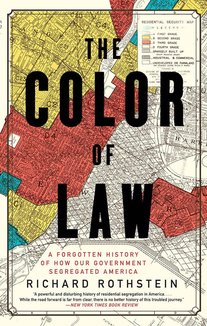
The Color of Law: A Forgotten History of How Our Government Segregated America
Author:
Richard Rothstein
New York Times Bestseller • Notable Book of the Year • Editors' Choice Selection One of Bill Gates’ “Amazing Books” of the Year One of Publishers Weekly ’s 10 Best Books of the Year Longlisted for the National Book Award for Nonfiction An NPR Best Book of the Year Winner of the Hillman Prize for Nonfiction Gold Winner • California Book Award (Nonfiction) Finalist • Los Angeles Times Book Prize (History) Finalist • Brooklyn Public Library Literary Prize This “powerful and disturbing history” exposes how American governments deliberately imposed racial segregation on metropolitan areas nationwide ( New York Times Book Review ). Widely heralded as a “masterful” ( Washington Post ) and “essential” ( Slate ) history of the modern American metropolis, Richard Rothstein’s The Color of Law offers “the most forceful argument ever published on how federal, state, and local governments gave rise to and reinforced neighborhood segregation” (William Julius Wilson).
New York Times Bestseller • Notable Book of the Year • Editors' Choice Selection One of Bill Gates’ “Amazing Books” of the Year One of Publishers Weekly ’s 10 Best Books of the Year Longlisted for the National Book Award for Nonfiction An NPR Best Book of the Year Winner of the Hillman Prize for Nonfiction Gold Winner • California Book Award (Nonfiction) Finalist • Los Angeles Times Book Prize (History) Finalist • Brooklyn Public Library Literary Prize This “powerful and disturbing history” exposes how American governments deliberately imposed racial segregation on metropolitan areas nationwide ( New York Times Book Review ). Widely heralded as a “masterful” ( Washington Post ) and “essential” ( Slate ) history of the modern American metropolis, Richard Rothstein’s The Color of Law offers “the most forceful argument ever published on how federal, state, and local governments gave rise to and reinforced neighborhood segregation” (William Julius Wilson). Exploding the myth of de facto segregation arising from private prejudice or the unintended consequences of economic forces, Rothstein describes how the American government systematically imposed residential segregation: with undisguised racial zoning; public housing that purposefully segregated previously mixed communities; subsidies for builders to create whites-only suburbs; tax exemptions for institutions that enforced segregation; and support for violent resistance to African Americans in white neighborhoods. A groundbreaking, “virtually indispensable” study that has already transformed our understanding of twentieth-century urban history ( Chicago Daily Observer ), The Color of Law forces us to face the obligation to remedy our unconstitutional past. 13 illustrations
Find this book on:
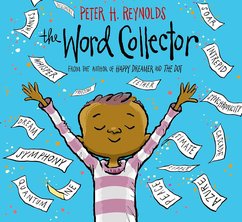
The Word Collector
Author:
Peter H. Reynolds
From the beloved bestselling creator of The Dot and our own Happy Dreamer comes an inspiring story about the transformative and profound power of words. A New York Times Bestseller Named an Outstanding Literary Work for Children by the NAACP Some people collect stamps.
From the beloved bestselling creator of The Dot and our own Happy Dreamer comes an inspiring story about the transformative and profound power of words. A New York Times Bestseller Named an Outstanding Literary Work for Children by the NAACP Some people collect stamps. Some people collect coins. Some people collect art. And Jerome? Jerome collected words . . . In this extraordinary new tale from Peter H. Reynolds, Jerome discovers the magic of the words all around him -- short and sweet words, two-syllable treats, and multisyllable words that sound like little songs. Words that connect, transform, and empower.From the creator of The Dot , I Am Human , and Happy Dreamer comes a celebration of finding your own words -- and the impact you can have when you share them with the world.
Find this book on:
Episode overview
“The American landscape was once graced with resplendent public swimming pools, some big enough to hold thousands of swimmers at a time,” writes Heather McGhee in her new book, “The Sum of Us: What Racism Costs Everyone and How We Can Prosper Together.” These pools were the pride of their communities, monuments to what public investment could do. But they were, in many places, whites-only. Then came the desegregation orders. The pools would need to be open to everyone. But these communities found a loophole. They could close them for everyone. Drain them. Fill them with concrete. Shutter their parks departments entirely. And so they did.
It’s a shocking tale. But it’s too easily dismissed as yet one more story of America’s racist past. McGhee shows otherwise. Drained-pool politics are still with us today and shaping issues of far more consequence than pool access. Drained-pool politics — if “they” can also have it, then no one can — helps explain why America still doesn’t have a truly universal health care system, a child care system, a decent social safety net. McGhee, the former president of the think tank Demos, offers a devastating tour of American public policy, and she shows how drained-pool politics have led to less for everyone, not just their intended targets.
I asked McGhee to join me for a discussion about drained-pool politics, the zero-sum stories at the heart of American policymaking, how people define and understand their political interests, and the path forward. This is, in my view, a hopeful book, and a hopeful conversation. There are so many issues where the trade-offs are real, and binding. But in this space, there are vast “solidarity dividends” just waiting for us, if we are willing to stand with, rather than against, each other.