
From this episode
Recommended books
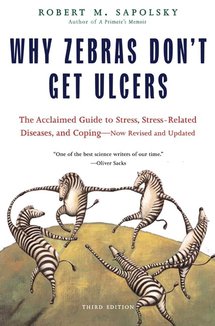
Why Zebras Don't Get Ulcers, Third Edition
Author:
Robert M. Sapolsky
Renowned primatologist Robert Sapolsky offers a completely revised and updated edition of his most popular work, with over 225,000 copies in print Now in a third edition, Robert M. Sapolsky's acclaimed and successful Why Zebras Don't Get Ulcers features new chapters on how stress affects sleep and addiction, as well as new insights into anxiety and personality disorder and the impact of spirituality on managing stress.
Renowned primatologist Robert Sapolsky offers a completely revised and updated edition of his most popular work, with over 225,000 copies in print Now in a third edition, Robert M. Sapolsky's acclaimed and successful Why Zebras Don't Get Ulcers features new chapters on how stress affects sleep and addiction, as well as new insights into anxiety and personality disorder and the impact of spirituality on managing stress. As Sapolsky explains, most of us do not lie awake at night worrying about whether we have leprosy or malaria. Instead, the diseases we fear-and the ones that plague us now-are illnesses brought on by the slow accumulation of damage, such as heart disease and cancer. When we worry or experience stress, our body turns on the same physiological responses that an animal's does, but we do not resolve conflict in the same way-through fighting or fleeing. Over time, this activation of a stress response makes us literally sick. Combining cutting-edge research with a healthy dose of good humor and practical advice, Why Zebras Don't Get Ulcers explains how prolonged stress causes or intensifies a range of physical and mental afflictions, including depression, ulcers, colitis, heart disease, and more. It also provides essential guidance to controlling our stress responses. This new edition promises to be the most comprehensive and engaging one yet.
Find this book on:


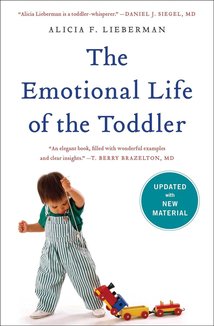
The Emotional Life of the Toddler
Author:
Alicia F. Lieberman
Now updated with new material throughout, Alicia F. Lieberman’s The Emotional Life of the Toddler is the, detailed look into the varied and intense emotional life of children aged one to three.
Now updated with new material throughout, Alicia F. Lieberman’s The Emotional Life of the Toddler is the, detailed look into the varied and intense emotional life of children aged one to three. Anyone who has followed an active toddler around for a day knows that a child of this age is a whirlwind of explosive, contradictory, and ever-changing emotions. Alicia F. Lieberman offers an in-depth examination of toddlers’ emotional development and illuminates how to optimize this crucial stage so that toddlers can develop into emotionally healthy children and adults. Drawing on her lifelong research, Dr. Lieberman addresses commonly asked questions and issues. Why, for example, is “no” often the favorite response of the toddler? How should parents deal with the anger they might feel when their toddler is being aggressively stubborn? Why does a crying toddler run to his mother for a hug only to push himself vigorously away as soon as she begins to embrace him? This updated edition also addresses 21st-century concerns such as how to handle screen time on devices and parenting in a post-internet world. Hailed as “groundbreaking” by The Boston Globe after its initial publication, the new edition includes the latest research on this crucial stage of development. With the help of numerous examples and vivid cases, Lieberman answers these and other questions, providing, in the process, a rich, insightful profile of the roller coaster emotional world of the toddler.
Find this book on:
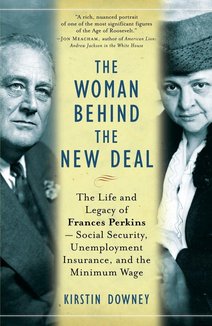
“Kirstin Downey’s lively, substantive and—dare I say—inspiring new biography of Perkins . .
“Kirstin Downey’s lively, substantive and—dare I say—inspiring new biography of Perkins . . . not only illuminates Perkins’ career but also deepens the known contradictions of Roosevelt’s character.” —Maureen Corrigan, NPR Fresh Air One of Franklin Delano Roosevelt’s closest friends and the first female secretary of labor, Perkins capitalized on the president’s political savvy and popularity to enact most of the Depression-era programs that are today considered essential parts of the country’s social safety network.
Find this book on:
Episode overview
Dr. Nadine Burke Harris’s pioneering work on how childhood trauma shapes adult outcomes led to her being named the first surgeon general of California. That was in 2019. And then, of course, the novel coronavirus hit. The job of California’s surgeon general in 2020 was not what it was in 2019. But in some ways, Burke Harris’s expertise was more necessary than ever.
This conversation is about the growing evidence that difficult experiences we face as children reverberate in our lives decades later. It’s profound research that should reshape how we think about social insurance, public morality and criminal justice. But it’s also a conversation about what the coronavirus has done to children — whether this year will be a trauma that marks a generation, and remakes their lives. How has it changed socialization for toddlers — like my 2-year-old son? What has it meant for children who can’t go to school, who watched their parents lose work or who had family members die alone in a hospital? How do we help them? How do we even understand what they’ve gone through, particularly when they can’t tell us?
We also discuss the lessons California learned from the early difficulties in its vaccine rollout (“simplicity saves lives,” Burke Harris says), why we need to be investing a lot more in mental health therapeutics, the debate over universal child allowances, how to address racial and income disparities in vaccine distribution, the drivers of vaccine hesitancy in Black and brown communities, what a safe path to post-pandemic reopening would look like, why Covid-19 cases have been declining across the country, and much more.
This is one of those conversations that will leave you looking at vast swaths of public policy differently. Don’t miss it.
Mentioned in this episode:
The Deepest Well: Healing the Long-Term Effects of Childhood Adversity by Nadine Burke Harris
“Roadmap for Resilience: The California Surgeon General’s Report on Adverse Childhood Experiences, Toxic Stress, and Health”
“Relationship of childhood abuse and household dysfunction to many of the leading causes of death in adults. The Adverse Childhood Experiences (ACE) Study”
“The prevalence of Adverse Childhood Experiences (ACE) in the lives of juvenile offenders”
“Adverse childhood experiences and the risk of premature mortality”