From this episode
Recommended books
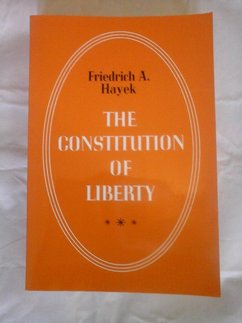
The Constitution of Liberty
Author:
Friedrich A. Hayek
"One of the great political works of our time, . .
"One of the great political works of our time, . . . the twentieth-century successor to John Stuart Mill's essay, 'On Liberty.'"—Henry Hazlitt, Newsweek "A reflective, often biting, commentary on the nature of our society and its dominant thought by one who is passionately opposed to the coercion of human beings by the arbitrary will of others, who puts liberty above welfare and is sanguine that greater welfare will thereby ensue."—Sidney Hook, New York Times Book Review In this classic work Hayek restates the ideals of freedom that he believes have guided, and must continue to guide, the growth of Western civilization. Hayek's book, first published in 1960, urges us to clarify our beliefs in today's struggle of political ideologies.
Find this book on:


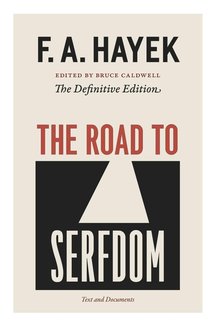
The Road to Serfdom: Text and Documents--The Definitive Edition (The Collected Works of F. A. Hayek, Volume 2)
Authors:
F. A. Hayek,
Bruce Caldwell
An unimpeachable classic work in political philosophy, intellectual and cultural history, and economics, The Road to Serfdom has inspired and infuriated politicians, scholars, and general readers for half a century. Originally published in 1944—when Eleanor Roosevelt supported the efforts of Stalin, and Albert Einstein subscribed lock, stock, and barrel to the socialist program— The Road to Serfdom was seen as heretical for its passionate warning against the dangers of state control over the means of production.
An unimpeachable classic work in political philosophy, intellectual and cultural history, and economics, The Road to Serfdom has inspired and infuriated politicians, scholars, and general readers for half a century. Originally published in 1944—when Eleanor Roosevelt supported the efforts of Stalin, and Albert Einstein subscribed lock, stock, and barrel to the socialist program— The Road to Serfdom was seen as heretical for its passionate warning against the dangers of state control over the means of production. For F. A. Hayek, the collectivist idea of empowering government with increasing economic control would lead not to a utopia but to the horrors of Nazi Germany and Fascist Italy. First published by the University of Chicago Press on September 18, 1944, The Road to Serfdom garnered immediate, widespread attention. The first printing of 2,000 copies was exhausted instantly, and within six months more than 30,000 books were sold. In April 1945, Reader’s Digest published a condensed version of the book, and soon thereafter the Book-of-the-Month Club distributed this edition to more than 600,000 readers. A perennial best seller, the book has sold 400,000 copies in the United States alone and has been translated into more than twenty languages, along the way becoming one of the most important and influential books of the century. With this new edition, The Road to Serfdom takes its place in the series The Collected Works of F. A. Hayek. The volume includes a foreword by series editor and leading Hayek scholar Bruce Caldwell explaining the book's origins and publishing history and assessing common misinterpretations of Hayek's thought. Caldwell has also standardized and corrected Hayek's references and added helpful new explanatory notes. Supplemented with an appendix of related materials ranging from prepublication reports on the initial manuscript to forewords to earlier editions by John Chamberlain, Milton Friedman, and Hayek himself, this new edition of The Road to Serfdom will be the definitive version of Hayek's enduring masterwork.
Find this book on:
If there is one book that can claim to provide the solution to all problems of humanity, it is the holy Bhagavad Gita. Simply reading this book and comprehending the life-changing, ageless, and profound wisdom contained in its 701 magnificent verses is enough to change the path of one’s life and bring it to the peak of perfection.
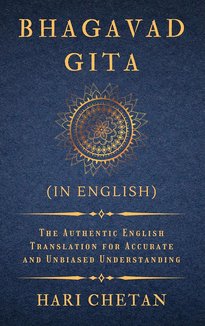
If there is one book that can claim to provide the solution to all problems of humanity, it is the holy Bhagavad Gita. Simply reading this book and comprehending the life-changing, ageless, and profound wisdom contained in its 701 magnificent verses is enough to change the path of one’s life and bring it to the peak of perfection. That is why, after hearing this transcendental discourse of Lord Krishna, Arjuna exclaims to Him, “O Achyuta (The Changeless One), my delusion is destroyed, and my memory (about one’s true identity) has been regained by me through Your grace. I am firmly situated; my doubts are gone. I will now act according to Your word.” [Bhagavad Gita 18.73] The Bhagavad Gita is not a religious book and is not intended to be read and acted upon by the adherents of a particular religion. It’s a guidebook for life; a how-to manual. It is a medicine for the infected souls of the Kali-Yuga, the dark age. And there is no religion in medicine. The Bhagavad Gita is the most sacred conversation ever between Lord Krishna and his friend Prince Arjuna just before the beginning of the great war of Mahabharata, on the holy battlefield of Kurukshetra, where the Lord enlightens a bewildered Arjuna about the biggest truths of the universe . This dialogue is considered to contain the nectar of all Vedic scriptures, the most ancient scriptures of the world. By reading the Bhagavad Gita, you will discover answers to the most important questions in life , such as: Who are you? What is your purpose in life and how to fulfill that purpose? Is there a God? If yes, who is God, and how to know and reach Him? Is God one or many? What is your relationship with God? What is death and why you do not need to fear death? What happens after death? Do heaven and hell exist? Is reincarnation real? What is Yoga? What are the different types of Yoga? How to be a Yogi? How does the Law of Karma work? Why are we all living life the wrong way? And how you can live your life the right way? How to see yourself and your life from the right perspective? How to master your mind and get rid of negative emotions like worry, fear, anger, jealousy, and sadness for good? How to be always happy? What is the most perfect method of meditation? Hari Chetan’s translation of the Bhagavad Gita is the outcome of his two decades of experience in the field of Vedic philosophy. The following are some of the distinguishing aspects of this English translation: All the verses of the Bhagavad Gita are accurately translated from the original Sanskrit texts. The translations are presented in their authentic form, free from any sectarian bias . The translations are kept simple without sacrificing accuracy, essence, and spirit. The gaps arising while translating verses from Sanskrit to English have been taken care of to preserve the intended meaning of each verse. Context has been given due importance while establishing the meaning of each word with the aim of providing correct interpretation. To facilitate self-explanatory translations, additional explanations are given in parentheses in the verses. Additional explanations are provided in the form of notes at appropriate places. The historical background of Mahabharata is included for perfect understanding. To help you test your understanding, a printable workbook is included. All of this adds up to a complete translation of the holy Bhagavad Gita in English. Read This Book to Uncover The Secret Wisdom of the Bhagavad Gita and Change Your Life Forever!
Find this book on:
Episode overview
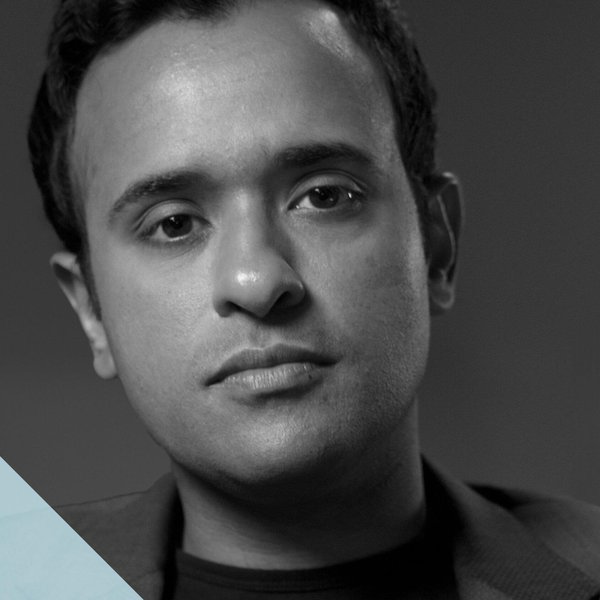
Vivek Ramaswamy burst onto the national scene last year as a wild card candidate for the Republican presidential nomination. Here was a relatively unknown biotech executive with no political experience, pitching himself as someone who could carry on Donald Trump’s movement. Trump ultimately won that primary contest handily, but Ramaswamy was a breakout star. There was even chatter that he might be Trump’s V.P. pick.
Trump, of course, ended up choosing JD Vance — Ramaswamy’s friend and former classmate — who has a very different vision for the future of Trumpism. But Ramaswamy believes the future of the Trump movement is still up for grabs and is fighting hard for his camp to win out over the one that Vance represents, including in his new book, “Truths: The Future of America First.”
In this conversation, we discuss the two competing visions that Ramaswamy sees as lurking beneath the surface of Trumpism, what he calls “national protectionist” and “national libertarian,” whether his vision is really so different from Paul Ryan-style conservativism, why he thinks these debates within the Republican Party are really deep down about identity and what it means to be an American.