From this episode
Recommended books
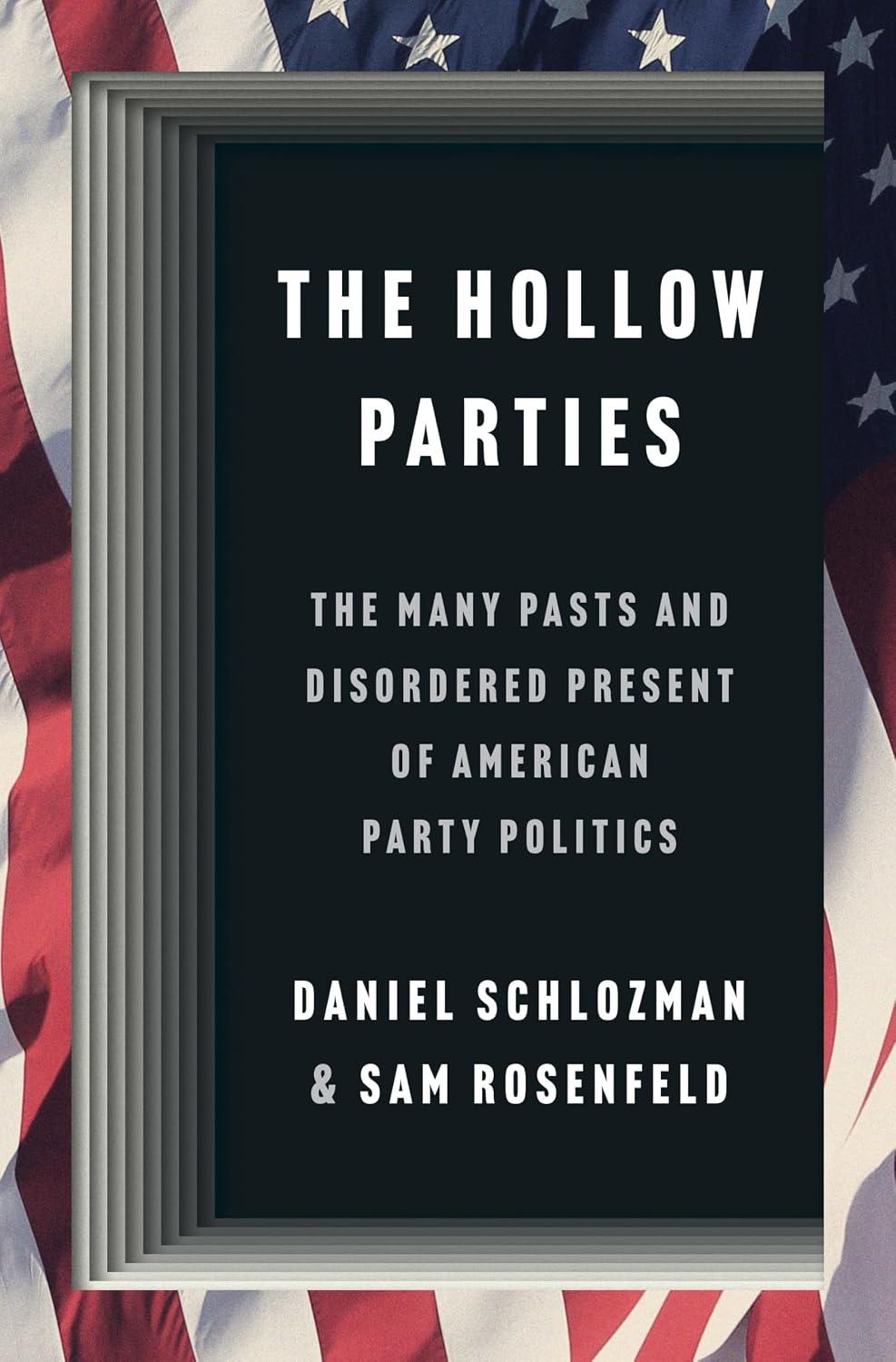
The Hollow Parties: The Many Pasts and Disordered Present of American Party Politics (Princeton Studies in American Politics)
Authors:
Daniel Schlozman,
Sam Rosenfeld
A major history from the Founding to our embittered present that “explains the void” ( Politico ) at the center of America’s political parties Featured on The Ezra Klein Show and The Weekly Show with Jon Stewart America’s political parties are hollow shells of what they could be, locked in a polarized struggle for power and unrooted as civic organizations. The Hollow Parties takes readers from the rise of mass party politics in the Jacksonian era through the years of Barack Obama and Donald Trump.
A major history from the Founding to our embittered present that “explains the void” ( Politico ) at the center of America’s political parties Featured on The Ezra Klein Show and The Weekly Show with Jon Stewart America’s political parties are hollow shells of what they could be, locked in a polarized struggle for power and unrooted as civic organizations. The Hollow Parties takes readers from the rise of mass party politics in the Jacksonian era through the years of Barack Obama and Donald Trump. Today’s parties, at once overbearing and ineffectual, have emerged from the interplay of multiple party traditions that reach back to the Founding. Daniel Schlozman and Sam Rosenfeld paint unforgettable portraits of figures such as Martin Van Buren, whose pioneering Democrats invented the machinery of the mass political party, and Abraham Lincoln and other heroic Republicans of that party’s first generation who stood up to the Slave Power. And they show how today’s fractious party politics arose from the ashes of the New Deal order in the 1970s. Activists in the wake of the 1968 Democratic National Convention transformed presidential nominations but failed to lay the foundations for robust, movement-driven parties. Instead, modern American conservatism hollowed out the party system, deeming it a mere instrument for power. Party hollowness lies at the heart of our democratic discontents. With historical sweep and political acuity, The Hollow Parties offers powerful answers to pressing questions about how the nation’s parties became so dysfunctional—and how they might yet realize their promise.
Find this book on:

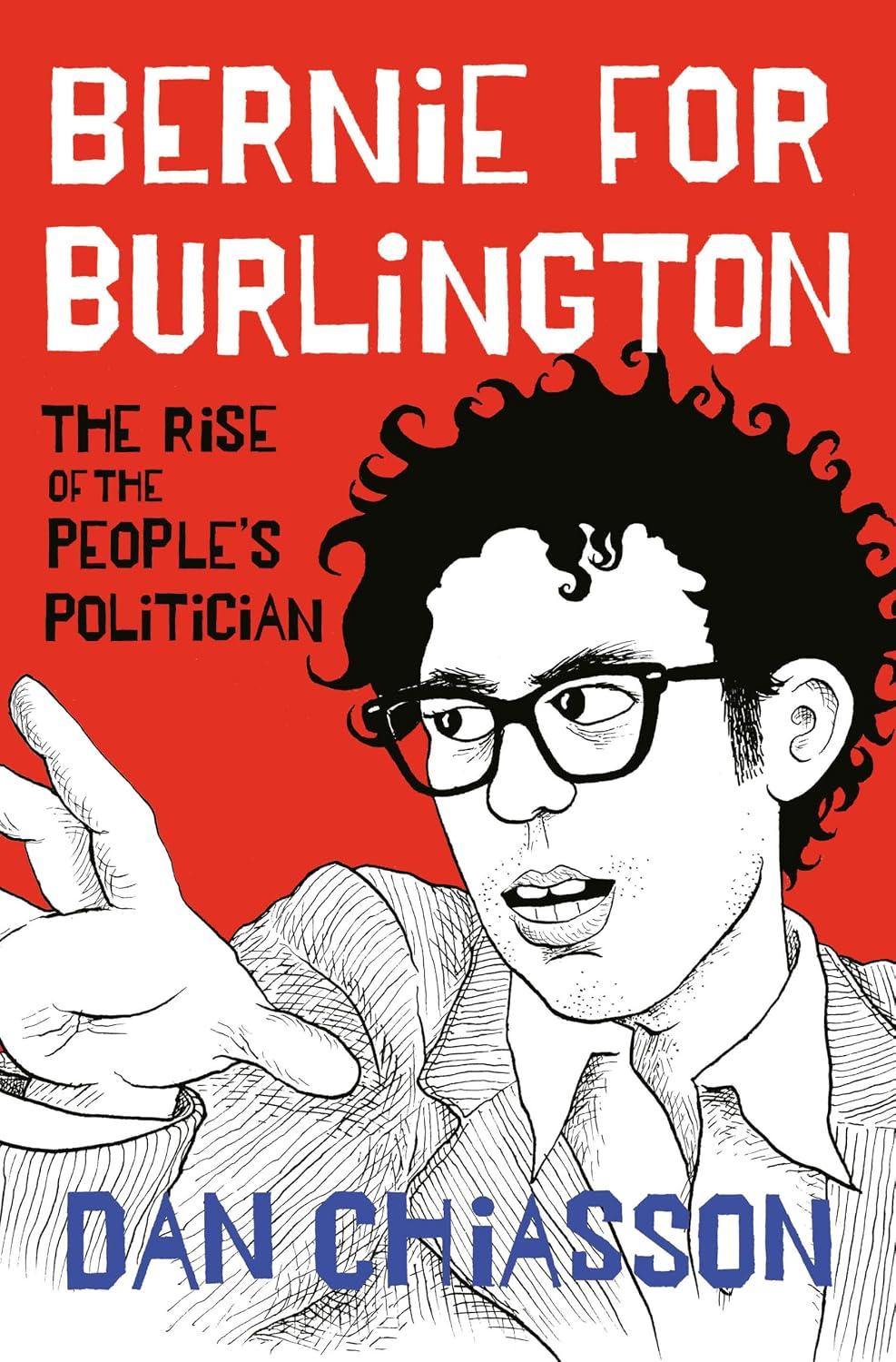
Bernie for Burlington: The Rise of the People's Politician
Author:
Dan Chiasson
The early days and inexorable rise of the young Bernie Sanders, the one-of-a-kind visionary who changed American politics forever, told by a son of the People’s Republic of Burlington, Vermont “The more I read of Dan Chiasson’s book, the more moved I was by how absolutely unwavering Bernie’s message has been across the many decades of his career.” —Alison Bechdel, author of Fun Home , on creating the cover art for Bernie for Burlington “A fascinating portrait.” —Ian Frazier, author of Paradise Bronx In this symphonic origin story of an era-defining politician, Dan Chiasson, a Burlington native who had a ringside seat to Bernie Sanders’s development, reconstructs the rise of an American icon. With in-depth reporting and remarkable remembered scenes, Chiasson tracks a faint political signal that traveled from the Vermont communes, hardluck neighborhoods, traditional businesses, and county fairs to the town meetings and ballot boxes of his home state, and finally to Washington, D.C., to transform our national political landscape.
The early days and inexorable rise of the young Bernie Sanders, the one-of-a-kind visionary who changed American politics forever, told by a son of the People’s Republic of Burlington, Vermont “The more I read of Dan Chiasson’s book, the more moved I was by how absolutely unwavering Bernie’s message has been across the many decades of his career.” —Alison Bechdel, author of Fun Home , on creating the cover art for Bernie for Burlington “A fascinating portrait.” —Ian Frazier, author of Paradise Bronx In this symphonic origin story of an era-defining politician, Dan Chiasson, a Burlington native who had a ringside seat to Bernie Sanders’s development, reconstructs the rise of an American icon. With in-depth reporting and remarkable remembered scenes, Chiasson tracks a faint political signal that traveled from the Vermont communes, hardluck neighborhoods, traditional businesses, and county fairs to the town meetings and ballot boxes of his home state, and finally to Washington, D.C., to transform our national political landscape. Sanders, insisting on a socialist platform that hasn’t changed to this day, defied a corrupt Democratic machine to find his coalition among Burlington’s often feuding communities: the conservative French-Canadian Catholics whose grandparents and great-grandparents—including Chiasson’s own—had worked in the mills; the puppeteers, hippies, and NYC transplants who’d moved to Vermont to find land and authenticity; the anti-nukers, activist nuns, baseball fans, developers, cops, and small businessmen like Ben and Jerry, who became Ben & Jerry’s right there in town. Bernie captivated them all, running on the slogan “Burlington Is Not for Sale” to become the modern era’s first socialist mayor, one who got the streets plowed but also boasted a foreign policy and a bullhorn to speak directly to Ronald Reagan. In the tradition of J. Anthony Lukas’s Common Ground , this people’s epic shows us an American city transformed one diner coffee and one neighborhood door-knock at a time, even as the analog era wanes and a new digital politics appears on the horizon. Full of Sanders himself, reflecting and raging, hitting his themes, Bernie for Burlington is a mesmerizing portrait of a politician, a place, and a movement that would change America.
Find this book on:
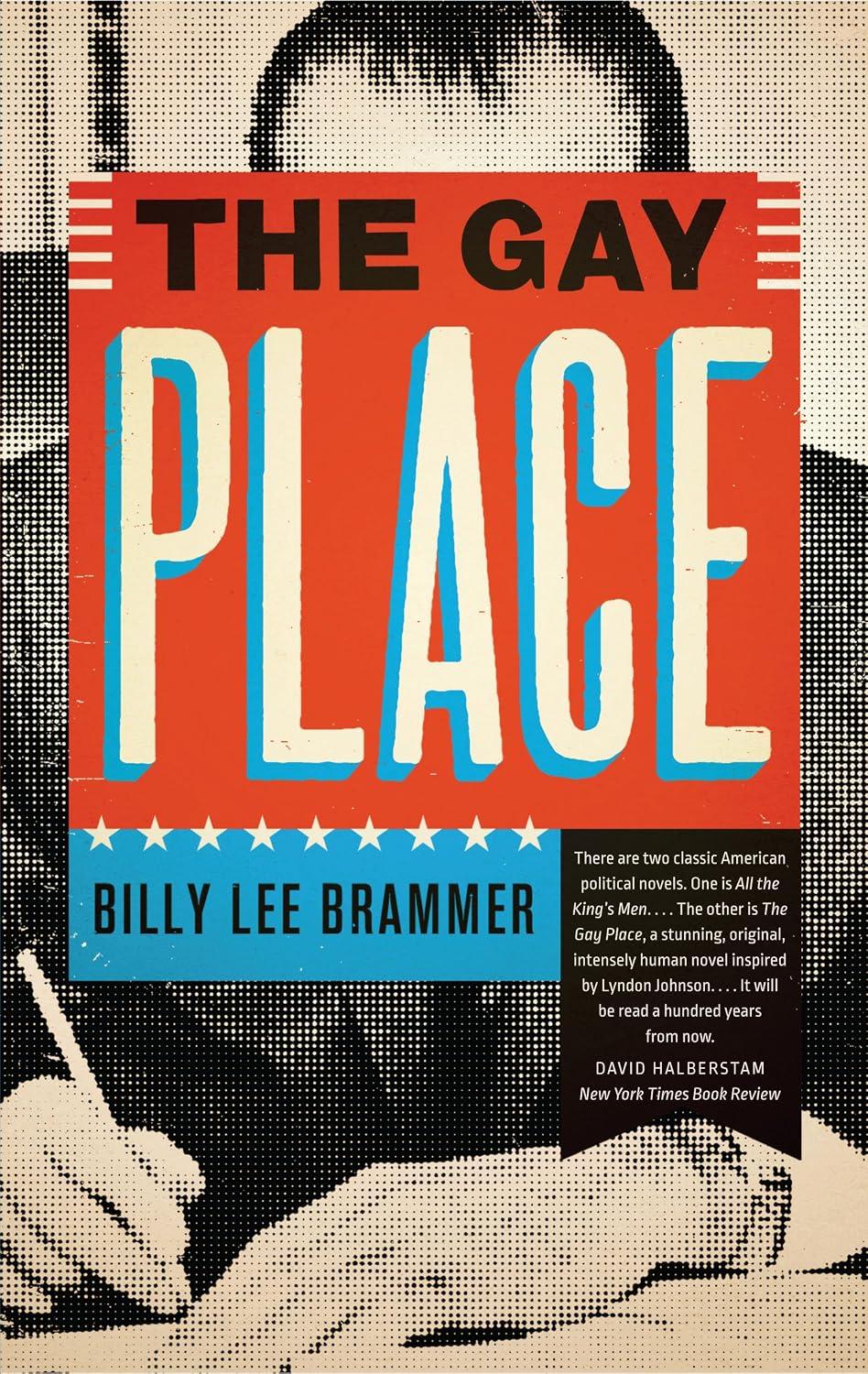
The Gay Place (Texas Classics)
Authors:
Billy Lee Brammer,
Don Graham
Set in Texas, The Gay Place consists of three interlocking novels, each with a different protagonist—a member of the state legislature, the state's junior senator, and the governor's press secretary. The governor himself, Arthur Fenstemaker, a master politician, infinitely canny and seductive, remains the dominant figure throughout.
Set in Texas, The Gay Place consists of three interlocking novels, each with a different protagonist—a member of the state legislature, the state's junior senator, and the governor's press secretary. The governor himself, Arthur Fenstemaker, a master politician, infinitely canny and seductive, remains the dominant figure throughout. Billy Lee Brammer—who served on Lyndon Johnson's staff—gives us here "the excitement of a political carnival: the sideshows, the freaks, and the ghoulish comedy atmosphere" (Saturday Review). Originally published in 1961, The Gay Place is at once a cult classic and a major American novel.
Find this book on:
Episode overview
Democrats are on track to have more power in the next Congress than they’ve had since 2009. How can they navigate the divides in a party that now stretches from Abdul El-Sayed in Michigan to Adam Hamilton in Kansas? How do they prevent all their new voters in this election from flipping back in the next one? Can they turn this victory into a springboard to an even bigger and more durable Democratic majority in 2028 and beyond?
We will have two episodes that try to answer these questions from different angles, one from the center of the party and one from the left. First, representing the more center view, we have Adam Jentleson, the founder and president of the Searchlight Institute, a Washington think tank. Jentleson is a veteran of the Senate; he served as deputy chief of staff to the former Senate majority leader Harry Reid and chief of staff to Senator John Fetterman. He’s also the author of two books, “Kill Switch: The Rise of the Modern Senate and the Crippling of American Democracy,” and “Supermajority: How Democrats Can Build Lasting Power,” which came out in September.