From this episode
Recommended books
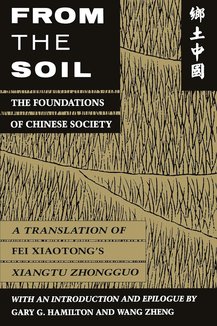
From the Soil: The Foundations of Chinese Society
Authors:
Xiaotong Fei,
Gary G. Hamilton,
Wang Zheng
This classic text by Fei Xiaotong, China's finest social scientist, was first published in 1947 and is Fei's chief theoretical statement about the distinctive characteristics of Chinese society. Written in Chinese from a Chinese point of view for a Chinese audience, From the Soil describes the contrasting organizational principles of Chinese and Western societies, thereby conveying the essential features of both.
This classic text by Fei Xiaotong, China's finest social scientist, was first published in 1947 and is Fei's chief theoretical statement about the distinctive characteristics of Chinese society. Written in Chinese from a Chinese point of view for a Chinese audience, From the Soil describes the contrasting organizational principles of Chinese and Western societies, thereby conveying the essential features of both. Fei shows how these unique features reflect and are reflected in the moral and ethical characters of people in these societies. This profound, challenging book is both succinct and accessible. In its first complete English-language edition, it is likely to have a wide impact on Western social theorists. Gary G. Hamilton and Wang Zheng's translation captures Fei's jargonless, straightforward style of writing. Their introduction describes Fei's education and career as a sociologist, the fate of his writings on and off the Mainland, and the sociological significance of his analysis. The translators' epilogue highlights the social reforms for China that Fei drew from his analysis and advocated in a companion text written in the same period.
Find this book on:


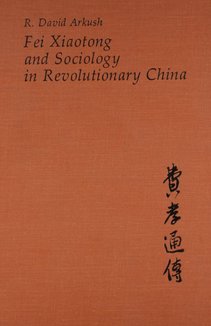
Fei Xiaotong and Sociology in Revolutionary China (Harvard East Asian Monographs)
Author:
R. David Arkush
This biographical study of one of China's leading social scientists follows his history from birth until the present moment, and includes a bibliography of his books and articles. Trained in London under Malinowski, Fei Xiaotong achieved eminence in the 1930s and 1940s for his pioneering studies of Chinese peasant life and for his popular articles, which stirred a wide audience in China to an awareness of social and political problems.
This biographical study of one of China's leading social scientists follows his history from birth until the present moment, and includes a bibliography of his books and articles. Trained in London under Malinowski, Fei Xiaotong achieved eminence in the 1930s and 1940s for his pioneering studies of Chinese peasant life and for his popular articles, which stirred a wide audience in China to an awareness of social and political problems. A non-Marxist who came to sympathize with the Communists, Fei was gradually constrained in his activities after the Revolution until, in the 1950s, a massive propaganda campaign vilified him as a bourgeois rightist intellectual. Almost twenty years of silence and disgrace followed. Only recently, following the death of Mao, has Fei suddenly reemerged as a leader in the effort to revitalize the social sciences in China. The story of Fei's life told here is, in a sense, the story of Westernized intellectuals in China at a time of peasant revolution. His writings enunciate the views of a sensitive observer of Chinese and Western society during that period of dramatic change.
Find this book on:
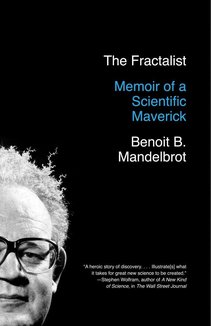
The Fractalist: Memoir of a Scientific Maverick
Author:
Benoit Mandelbrot
Here is the remarkable life story of Benoit Mandelbrot, the creator of fractal geometry, and his unparalleled contributions to science mathematics, the financial world, and the arts. Mandelbrot recounts his early years in Warsaw and in Paris, where he was mentored by an eminent mathematician uncle, through his days evading the Nazis in occupied France, to his education at Caltech, Princeton, and MIT, and his illustrious career at the IBM Thomas J.
Here is the remarkable life story of Benoit Mandelbrot, the creator of fractal geometry, and his unparalleled contributions to science mathematics, the financial world, and the arts. Mandelbrot recounts his early years in Warsaw and in Paris, where he was mentored by an eminent mathematician uncle, through his days evading the Nazis in occupied France, to his education at Caltech, Princeton, and MIT, and his illustrious career at the IBM Thomas J. Watson Research Center. An outside to mainstream scientific research, he managed to do what others had thought impossible: develop a new geometry that combines revelatory beauty with a radical way of unfolding formerly hidden scientific laws. In the process he was able to use geometry to solve fresh, real-world problems. With exuberance and an eloquent fluency, Benoit Mandelbrot recounts the high points of his fascinating life, offering us a glimpse into the evolution of his extraordinary mind. With full-color inserts and black-and-white photographs throughout.
Find this book on:
Episode overview
There are few stories that are more crucial to the world’s future than what’s happening in China. Take any of the most important issues of our time — climate change, geopolitics, the global economy, advanced technologies — and China is at the center of them. American politics itself has increasingly come to revolve around competition with China.
In other words, what happens in China doesn’t stay in China — it reverberates through the global economy, the American political system and the international order. And a lot is happening in China right now. In November, China experienced what many have called its most significant protests since Tiananmen Square in 1989. In response, Beijing loosened its “zero Covid” policy, demonstrating a level of public responsiveness that shocked many observers of the increasingly authoritarian regime. However, that policy shift also unleashed a huge wave of infections and hospitalizations that puts the country’s immediate future in question.
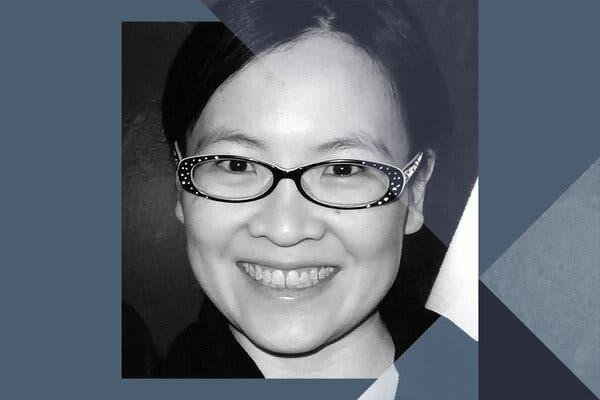
Yuen Yuen Ang is a professor of political economy, a China scholar at Johns Hopkins University and the author of “China’s Gilded Age: The Paradox of Economic Boom and Vast Corruption.” Her basic argument is this: In order to understand what’s happening in China today (and what all of it could mean for its future) you need to first understand China’s unique, often misunderstood political system — one that Ang calls “autocracy with democratic characteristics.” Because we in the West are so fixated on how China selects its leaders, she argues, we’ve overlooked a more subtle but far more consequential revolution in how China is governed. That transformation of the Chinese political system is the deeper story behind both the country’s economic success — as well as its current troubles. And it provides an illuminating lens through which to view American politics as well.