
From this episode
Recommended books
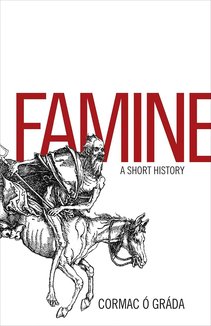
Famine: A Short History
Author:
Cormac Ó Gráda
Famine remains one of the worst calamities that can befall a society. Mass starvation--whether it is inflicted by drought or engineered by misguided or genocidal economic policies--devastates families, weakens the social fabric, and undermines political stability.
Famine remains one of the worst calamities that can befall a society. Mass starvation--whether it is inflicted by drought or engineered by misguided or genocidal economic policies--devastates families, weakens the social fabric, and undermines political stability. Cormac Ó Gráda, the acclaimed author who chronicled the tragic Irish famine in books like Black '47 and Beyond , here traces the complete history of famine from the earliest records to today. Combining powerful storytelling with the latest evidence from economics and history, Ó Gráda explores the causes and profound consequences of famine over the past five millennia, from ancient Egypt to the killing fields of 1970s Cambodia, from the Great Famine of fourteenth-century Europe to the famine in Niger in 2005. He enriches our understanding of the most crucial and far-reaching aspects of famine, including the roles that population pressure, public policy, and human agency play in causing famine; how food markets can mitigate famine or make it worse; famine's long-term demographic consequences; and the successes and failures of globalized disaster relief. Ó Gráda demonstrates the central role famine has played in the economic and political histories of places as different as Ukraine under Stalin, 1940s Bengal, and Mao's China. And he examines the prospects of a world free of famine. This is the most comprehensive history of famine available, and is required reading for anyone concerned with issues of economic development and world poverty.
Find this book on:


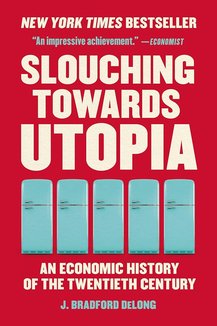
Slouching Towards Utopia: An Economic History of the Twentieth Century
Author:
J. Bradford DeLong
An instant New York Times and Wall Street Journal bestseller from one of the world’s leading economists: this "magisterial history" offers a grand narrative of the century that made us richer than ever, but left us unsatisfied (Paul Krugman) Before 1870, humanity lived in dire poverty, with a slow crawl of invention offset by a growing population. Then came a great shift: invention sprinted forward, doubling our technological capabilities each generation and utterly transforming the economy again and again.
An instant New York Times and Wall Street Journal bestseller from one of the world’s leading economists: this "magisterial history" offers a grand narrative of the century that made us richer than ever, but left us unsatisfied (Paul Krugman) Before 1870, humanity lived in dire poverty, with a slow crawl of invention offset by a growing population. Then came a great shift: invention sprinted forward, doubling our technological capabilities each generation and utterly transforming the economy again and again. Our ancestors would have presumed we would have used such powers to build utopia. But it was not so. When 1870–2010 ended, the world instead saw global warming; economic depression, uncertainty, and inequality; and broad rejection of the status quo. Economist Brad DeLong’s Slouching Towards Utopia tells the story of how this unprecedented explosion of material wealth occurred, how it transformed the globe, and why it failed to deliver us to utopia. Of remarkable breadth and ambition, it reveals the last century to have been less a march of progress than a slouch in the right direction. Named a Best Book of 2022 by Financial Times * Economist * Fast Company
Find this book on:
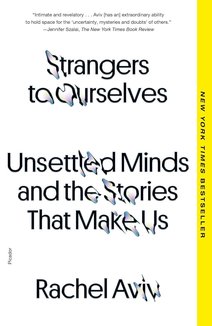
Strangers to Ourselves
Author:
Rachel Aviv
New York Times bestseller One of the top ten books of the year at The New York Times Book Review , The Wall Street Journal , Vulture/ New York magazine A best book of the year at Los Angeles Times , Time , NPR, The Washington Post , Bookforum , The New Yorker , Vogue , Kirkus The acclaimed, award-winning New Yorker writer Rachel Aviv offers a groundbreaking exploration of mental illness and the mind, and illuminates the startling connections between diagnosis and identity. Strangers to Ourselves poses fundamental questions about how we understand ourselves in periods of crisis and distress.
New York Times bestseller One of the top ten books of the year at The New York Times Book Review , The Wall Street Journal , Vulture/ New York magazine A best book of the year at Los Angeles Times , Time , NPR, The Washington Post , Bookforum , The New Yorker , Vogue , Kirkus The acclaimed, award-winning New Yorker writer Rachel Aviv offers a groundbreaking exploration of mental illness and the mind, and illuminates the startling connections between diagnosis and identity. Strangers to Ourselves poses fundamental questions about how we understand ourselves in periods of crisis and distress. Drawing on deep, original reporting as well as unpublished journals and memoirs, Rachel Aviv writes about people who have come up against the limits of psychiatric explanations for who they are. She follows an Indian woman celebrated as a saint who lives in healing temples in Kerala; an incarcerated mother vying for her children’s forgiveness after recovering from psychosis; a man who devotes his life to seeking revenge upon his psychoanalysts; and an affluent young woman who, after a decade of defining herself through her diagnosis, decides to go off her meds because she doesn’t know who she is without them. Animated by a profound sense of empathy, Aviv’s gripping exploration is refracted through her own account of living in a hospital ward at the age of six and meeting a fellow patient with whom her life runs parallel―until it no longer does. Aviv asks how the stories we tell about mental disorders shape their course in our lives―and our identities, too. Challenging the way we understand and talk about illness, her account is a testament to the porousness and resilience of the mind.
Find this book on:
Episode overview
According to the conventional rules of politics, Democrats should be on track for electoral disaster this November. Joe Biden’s approval rating is stuck around 42 percent, inflation is still sky-high and midterms usually swing against the incumbent president’s party — a recipe for the kind of political wipeouts we saw in 2018, 2010 and 1994.
But that’s not what the polls show. Currently, Democrats are on track to hold the Senate and lose narrowly in the House, which raises all kinds of questions: Why are Republicans failing to capitalize on such a favorable set of circumstances? How did Democrats get themselves into this situation — and can they get out of it? And should we even trust the polls giving us this information in the first place?
Matt Yglesias is a veteran journalist who writes the newsletter “Slow Boring” and co-hosts the podcast “Bad Takes.” And in recent years he’s become an outspoken critic of the Democratic Party’s political strategy: how Democrats communicate with the public, what they choose as their governing priorities and whom they ultimately listen to. In Yglesias’s view, Democrats have lost touch with the very voters they need to win close elections like this one, and should embrace a very different approach to politics if they want to defeat an increasingly anti-democratic G.O.P.
We discuss why Yglesias thinks the 2022 polls are likely biased toward Democrats, how Republicans’ bizarre nominee choices are giving Democrats a fighting chance of winning the Senate, why Biden’s popular legislative agenda hasn’t translated into greater public support, the Biden administration’s “grab bag” approach to policymaking, why Yglesias thinks there’s been a “regime change” in how Democrats think about elections, how social media has transformed both parties’ political incentives, what the Democratic agenda should look like if the party retains both houses of Congress and more.
Book recommendations:
Famine: A Short History by Cormac Ó Gráda
Slouching Towards Utopia by J. Bradford DeLong
Strangers to Ourselves by Rachel Aviv
Thoughts? Guest suggestions? Email us at [email protected].
You can find transcripts (posted midday) and more episodes of “The Ezra Klein Show” at nytimes.com/ezra-klein-podcast, and you can find Ezra on Twitter @ezraklein. Book recommendations from all our guests are listed at https://www.nytimes.com/article/ezra-klein-show-book-recs.
“The Ezra Klein Show” is produced by Emefa Agawu, Annie Galvin, Jeff Geld and Rogé Karma. Fact-checking by Michelle Harris, Mary Marge Locker and Kate Sinclair. Original music by Isaac Jones. Mixing by Jeff Geld, Sonia Herrero and Isaac Jones. Audience strategy by Shannon Busta. Special thanks to Kristin Lin and Kristina Samulewski.