
From this episode
Recommended books
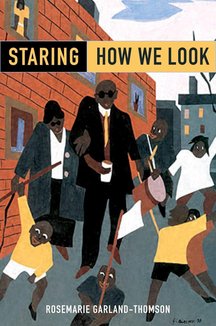
Staring: How We Look
Author:
Rosemarie Garland-Thomson
Drawing on examples from art, media, fashion, history and memoir, cultural critic Rosemarie Garland-Thomson tackles a basic human interaction which has remained curiously unexplored, the human stare. In the first book of its kind, Garland-Thomson defines staring, explores the factors that motivate it, and considers the targets and the effects of the stare.
Drawing on examples from art, media, fashion, history and memoir, cultural critic Rosemarie Garland-Thomson tackles a basic human interaction which has remained curiously unexplored, the human stare. In the first book of its kind, Garland-Thomson defines staring, explores the factors that motivate it, and considers the targets and the effects of the stare. While borrowing from psychology and biology to help explain why the impulse to stare is so powerful, she also enlarges and complicates these formulations with examples from the realm of imaginative culture. Featuring over forty illustrations, Staring captures the stimulating combination of symbolic, material and emotional factors that make staring so irresistible while endeavoring to shift the usual response to staring, shame, into an engaged self-consideration. Elegant and provocative, this unique study advances new ways of thinking about visuality and the body that will appeal to readers who are interested in the overlap between the humanities and human behaviors.
Find this book on:


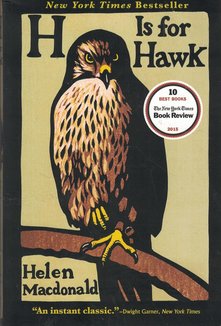
H Is for Hawk
Author:
Helen Macdonald
One of the New York Times Book Review's 10 Best Books of the Year ON MORE THAN 25 BEST BOOKS OF THE YEAR LISTS: including TIME (#1 Nonfiction Book), NPR, O, The Oprah Magazine (10 Favorite Books), Vogue (Top 10), Vanity Fair, Washington Post, Boston Globe, Chicago Tribune, Seattle Times, San Francisco Chronicle (Top 10), Miami Herald, St. Louis Post Dispatch, Minneapolis Star Tribune (Top 10), Library Journal (Top 10), Publishers Weekly, Kirkus Reviews, Slate, Shelf Awareness, Book Riot, Amazon (Top 20) The instant New York Times bestseller and award-winning sensation, Helen Macdonald's story of adopting and raising one of nature's most vicious predators has soared into the hearts of millions of readers worldwide.
One of the New York Times Book Review's 10 Best Books of the Year ON MORE THAN 25 BEST BOOKS OF THE YEAR LISTS: including TIME (#1 Nonfiction Book), NPR, O, The Oprah Magazine (10 Favorite Books), Vogue (Top 10), Vanity Fair, Washington Post, Boston Globe, Chicago Tribune, Seattle Times, San Francisco Chronicle (Top 10), Miami Herald, St. Louis Post Dispatch, Minneapolis Star Tribune (Top 10), Library Journal (Top 10), Publishers Weekly, Kirkus Reviews, Slate, Shelf Awareness, Book Riot, Amazon (Top 20) The instant New York Times bestseller and award-winning sensation, Helen Macdonald's story of adopting and raising one of nature's most vicious predators has soared into the hearts of millions of readers worldwide. Fierce and feral, her goshawk Mabel's temperament mirrors Helen's own state of grief after her father's death, and together raptor and human "discover the pain and beauty of being alive" (People). H Is for Hawk is a genre-defying debut from one of our most unique and transcendent voices.
Find this book on:
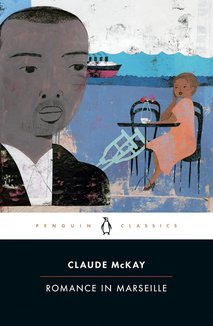
Romance in Marseille (Penguin Classics)
Authors:
Claude McKay,
Gary Edward Holcomb,
William J. Maxwell
The pioneering novel of physical disability, transatlantic travel, and black international politics. A vital document of black modernism and one of the earliest overtly queer fictions in the African American tradition.
The pioneering novel of physical disability, transatlantic travel, and black international politics. A vital document of black modernism and one of the earliest overtly queer fictions in the African American tradition. Published for the first time. A Penguin Classic Buried in the archive for almost ninety years, Claude McKay's Romance in Marseille traces the adventures of a rowdy troupe of dockworkers, prostitutes, and political organizers--collectively straight and queer, disabled and able-bodied, African, European, Caribbean, and American. Set largely in the culture-blending Vieux Port of Marseille at the height of the Jazz Age, the novel takes flight along with Lafala, an acutely disabled but abruptly wealthy West African sailor. While stowing away on a transatlantic freighter, Lafala is discovered and locked in a frigid closet. Badly frostbitten by the time the boat docks, the once-nimble dancer loses both of his lower legs, emerging from life-saving surgery as what he terms "an amputated man." Thanks to an improbably successful lawsuit against the shipping line, however, Lafala scores big in the litigious United States. Feeling flush after his legal payout, Lafala doubles back to Marseille and resumes his trans-African affair with Aslima, a Moroccan courtesan. With its scenes of black bodies fighting for pleasure and liberty even when stolen, shipped, and sold for parts, McKay's novel explores the heritage of slavery amid an unforgiving modern economy. This first-ever edition of Romance in Marseille includes an introduction by McKay scholars Gary Edward Holcomb and William J. Maxwell that places the novel within both the "stowaway era" of black cultural politics and McKay's challenging career as a star and skeptic of the Harlem Renaissance.
Find this book on:
Episode overview
When is the last time you paused — truly paused the flow of life — to appreciate something beautiful? For as long as we know, humans have sought out beauty, believing deeply that beautiful things and experiences can enhance our lives. But what does beauty really do to us? How can it fundamentally alter our experience of the world?
Beauty is always “teaching me something about my own mind,” says the writer and philosopher Chloé Cooper Jones. In her book, “Easy Beauty,” Jones takes readers on a journey across the globe and into her intimate family life to explore what beauty has done for her and what it can potentially do for all of us.
At the core of Jones’s book — and of this conversation — is a distinction between two radically different kinds of beauty. On the one hand, there’s “easy beauty”: a Renaissance painting, a sunset, a deliciously prepared meal. Easy beauty includes the kinds of things we are taught to consider beautiful. But Jones argues there’s also a deeper form of beauty — a “difficult beauty,” which can be found in places that may initially strike us as mundane, messy, even ugly. That is, if we clear the space within our own minds long enough to look for it.
This conversation also explores how Jones’s relationship to her disabled body has changed over time, what it means to appreciate the physical world more fully, how all of us are affected by our society’s crushing physical beauty standards, how Jones has created a “neutral room” in her mind to cope with those difficult standards, what attending a Beyoncé concert taught her about “radical presence,” what a celebrity party Peter Dinklage attended revealed about how far we need to go in respecting different bodies, why it is worth it to “make friends” with the idea that we may all become disabled or incapacitated at some point, how children reflect and reveal parts of ourselves we didn’t even know existed, what advice she has for those of us who spend very little time considering beauty but could benefit from it as Jones has, and more.