
From this episode
Recommended books
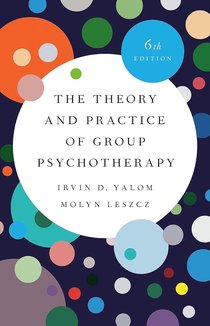
The Theory and Practice of Group Psychotherapy
Authors:
Irvin D. Yalom,
Molyn Leszcz
The classic work on group psychotherapy. The Theory and Practice of Group Psychotherapy has been the standard text in the field for decades.
The classic work on group psychotherapy. The Theory and Practice of Group Psychotherapy has been the standard text in the field for decades. In this completely updated sixth edition, Dr. Yalom and Dr. Leszcz draw on a decade of new research as well as their broad clinical wisdom and expertise. Each chapter is revised, reflecting the most recent developments in the field. There are new sections throughout, including online group therapy, modern analytic and relational approaches, interpersonal neurobiology, measurement-based care, culture and diversity, psychological trauma, and group therapy tailored for a range of clinical populations. At once scholarly and lively, this is the most up-to-date, incisive, and comprehensive text available on the practice of group psychotherapy.
Find this book on:


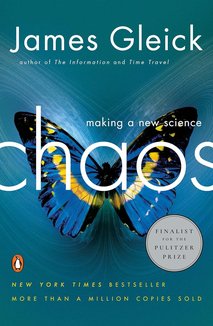
Chaos: Making a New Science
Author:
James Gleick
The million-copy New York Times bestseller and finalist for both the Pulitzer Prize and the National Book Award that reveals the science behind chaos theory A work of popular science in the tradition of Stephen Hawking and Carl Sagan, this 20th-anniversary edition of James Gleick’s groundbreaking bestseller Chaos introduces a whole new readership to chaos theory, one of the most significant waves of scientific knowledge in our time. From Edward Lorenz’s discovery of the Butterfly Effect, to Mitchell Feigenbaum’s calculation of a universal constant, to Benoit Mandelbrot’s concept of fractals, which created a new geometry of nature, Gleick’s engaging narrative focuses on the key figures whose genius converged to chart an innovative direction for science.
The million-copy New York Times bestseller and finalist for both the Pulitzer Prize and the National Book Award that reveals the science behind chaos theory A work of popular science in the tradition of Stephen Hawking and Carl Sagan, this 20th-anniversary edition of James Gleick’s groundbreaking bestseller Chaos introduces a whole new readership to chaos theory, one of the most significant waves of scientific knowledge in our time. From Edward Lorenz’s discovery of the Butterfly Effect, to Mitchell Feigenbaum’s calculation of a universal constant, to Benoit Mandelbrot’s concept of fractals, which created a new geometry of nature, Gleick’s engaging narrative focuses on the key figures whose genius converged to chart an innovative direction for science. In Chaos , Gleick makes the story of chaos theory not only fascinating but also accessible to beginners, and opens our eyes to a surprising new view of the universe.
Find this book on:
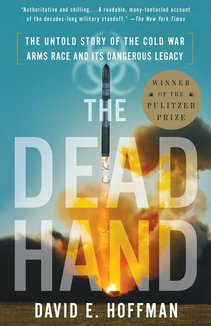
The Dead Hand: The Untold Story of the Cold War Arms Race and Its Dangerous Legacy
Author:
David Hoffman
WINNER OF THE PULITZER PRIZE The first full account of how the Cold War arms race finally came to a close, this riveting narrative history sheds new light on the people who struggled to end this era of massive overkill, and examines the legacy of the nuclear, chemical, and biological weapons that remain a threat today. Drawing on memoirs, interviews in both Russia and the US, and classified documents from deep inside the Kremlin, David E.
WINNER OF THE PULITZER PRIZE The first full account of how the Cold War arms race finally came to a close, this riveting narrative history sheds new light on the people who struggled to end this era of massive overkill, and examines the legacy of the nuclear, chemical, and biological weapons that remain a threat today. Drawing on memoirs, interviews in both Russia and the US, and classified documents from deep inside the Kremlin, David E. Hoffman examines the inner motives and secret decisions of each side and details the deadly stockpiles that remained unsecured as the Soviet Union collapsed. This is the fascinating story of how Reagan, Gorbachev, and a previously unheralded collection of scientists, soldiers, diplomats, and spies changed the course of history.
Find this book on:
Episode overview
I remember thinking, as Covid ravaged the country in December 2020, that at least the holidays the next year would be better. There would be more vaccines, more treatments, more immunity. Instead, we got Omicron and a confusing new phase of the pandemic. What do you do with a variant that is both monstrously more infectious and somewhat milder? What do you say about another year when we didn’t have enough tests, enough ventilation or the best guidance on masks? And how do you handle the fracturing politics of a changing pandemic in an exhausted country?
Zeynep Tufekci is a sociologist and New York Times Opinion columnist who does a better job than almost anyone at assessing the pandemic at a systems level. To solve a public-health crisis, it’s not enough to get the science right. There are also challenges with supply chains, infrastructure, research production, mass communication, political trust and institutional inertia. I’ve found Tufekci’s ability to balance the epidemiological data and the sociological realities uniquely helpful across the pandemic, and you can hear why in this conversation.
We discuss how the Covid crisis has changed, as well as Tufekci’s sobering conclusion: that the virus, at this point, is feeding on our dysfunction. We look at what Omicron is and isn’t, where the Biden administration has succeeded and failed, the debate over closing schools, why so many Asian countries have so powerfully outperformed the West, how the role of vaccines has changed, what a pandemic-prepared society would actually look like, and what should be true of our pandemic policy in a year that isn’t now.
Book recommendations:
The Theory and Practice of Group Psychotherapy by Irvin D. Yalom and Molyn Leszcz
Chaos by James Gleick
The Dead Hand by David Hoffman
Thoughts? Guest suggestions? Email us at [email protected].
You can find transcripts (posted midday) and more episodes of “The Ezra Klein Show” at nytimes.com/ezra-klein-podcast, and you can find Ezra on Twitter @ezraklein. Book recommendations from all our guests are listed at https://www.nytimes.com/article/ezra-klein-show-book-recs.
“The Ezra Klein Show” is produced by Annie Galvin, Jeff Geld and Rogé Karma; fact-checking by Michelle Harris, Mary Marge Locker and Kate Sinclair; original music by Isaac Jones; mixing by Jeff Geld; audience strategy by Shannon Busta. Our executive producer is Irene Noguchi. Special thanks to Kristin Lin.