
From this episode
Recommended books
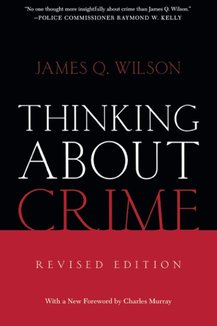
Thinking About Crime
Author:
James Q. Wilson
As crime rates inexorably rose during the tumultuous years of the 1970s, disputes over how to handle the violence sweeping the nation quickly escalated. James Q.
As crime rates inexorably rose during the tumultuous years of the 1970s, disputes over how to handle the violence sweeping the nation quickly escalated. James Q. Wilson redefined the public debate by offering a brilliant and provocative new argument—that criminal activity is largely rational and shaped by the rewards and penalties it offers—and forever changed the way Americans think about crime. Now with a new foreword by the prominent scholar and best-selling author Charles Murray, this revised edition of Thinking About Crime introduces a new generation of readers to the theories and ideas that have been so influential in shaping the American justice system.
Find this book on:


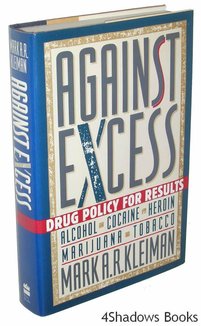
Against Excess: Drug Policy For Results
Author:
Mark A. Kleiman
Kleiman (public policy, Harvard) is a former drug policy analyst at the US Dept. of Justice, whose grasp of the complexities and whose idea of a middle course between prohibition and complete legal availability ("grudging toleration") make one wish his advising were more potent with officials and legislators.
Kleiman (public policy, Harvard) is a former drug policy analyst at the US Dept. of Justice, whose grasp of the complexities and whose idea of a middle course between prohibition and complete legal availability ("grudging toleration") make one wish his advising were more potent with officials and legislators. Annotation copyright Book News, Inc. Portland, Or.
Find this book on:
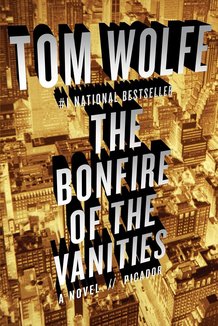
The Bonfire of the Vanities
Author:
Tom Wolfe
Vintage Tom Wolfe, The Bonfire of the Vanities, the #1 bestseller that will forever define late-twentieth-century New York style. "No one has portrayed New York Society this accurately and devastatingly since Edith Wharton" ( The National Review ) “A page-turner .
Vintage Tom Wolfe, The Bonfire of the Vanities, the #1 bestseller that will forever define late-twentieth-century New York style. "No one has portrayed New York Society this accurately and devastatingly since Edith Wharton" ( The National Review ) “A page-turner . . . Brilliant high comedy.” (The New Republic ) Sherman McCoy, the central figure of Tom Wolfe's first novel, is a young investment banker with a fourteen-room apartment in Manhattan. When he is involved in a freak accident in the Bronx, prosecutors, politicians, the press, the police, the clergy, and assorted hustlers high and low close in on him, licking their chops and giving us a gargantuan helping of the human comedy, of New York in the 1980s, a city boiling over with racial and ethnic hostilities and burning with the itch to Grab It Now. Wolfe's novel is a big, panoramic story of the metropolis that reinforces the author's reputation as the foremost chronicler of the way we live in America. Adapted to film in 1990 by director Brian De Palma, the movie stars Tom Hanks, Bruce Willis, Melanie Griffith, and Morgan Freeman.
Find this book on:
Episode overview
Crime data has been a flashpoint in this election. Kamala Harris has claimed that violent crime is at a “near 50-year low,” while Donald Trump has insisted that crime is going up. According to the numbers reported to the F.B.I., Harris is right: Crime, especially violent crime, has been falling. But if you look at survey data, Trump is tapping into something people feel. Last year, 77 percent of Americans told Gallup that they believe crime is on the rise.
So what’s going on here? Why, if crime is falling, do people feel less safe?
Charles Fain Lehman, a crime and drug policy researcher at the Manhattan Institute, wrote a piece on his Substack, The Causal Fallacy, on exactly this question. In this conversation, we discuss why he thinks Americans are feeling less safe, despite what the data says, as well as the ideological shifts taking place around drugs and crime, on both the left and the right.