From this episode
Recommended books
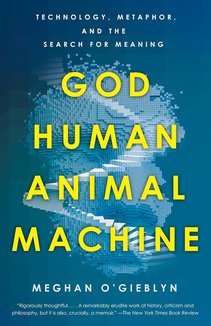
God, Human, Animal, Machine: Technology, Metaphor, and the Search for Meaning
Author:
Meghan O'Gieblyn
A strikingly original exploration of what it might mean to be authentically human in the age of artificial intelligence, from the author of the critically-acclaimed Interior States. • "At times personal, at times philosophical, with a bracing mixture of openness and skepticism, it speaks thoughtfully and articulately to the most crucial issues awaiting our future." —Phillip Lopate “[A] truly fantastic book.”—Ezra Klein For most of human history the world was a magical and enchanted place ruled by forces beyond our understanding.
A strikingly original exploration of what it might mean to be authentically human in the age of artificial intelligence, from the author of the critically-acclaimed Interior States. • "At times personal, at times philosophical, with a bracing mixture of openness and skepticism, it speaks thoughtfully and articulately to the most crucial issues awaiting our future." —Phillip Lopate “[A] truly fantastic book.”—Ezra Klein For most of human history the world was a magical and enchanted place ruled by forces beyond our understanding. The rise of science and Descartes's division of mind from world made materialism our ruling paradigm, in the process asking whether our own consciousness—i.e., souls—might be illusions. Now the inexorable rise of technology, with artificial intelligences that surpass our comprehension and control, and the spread of digital metaphors for self-understanding, the core questions of existence—identity, knowledge, the very nature and purpose of life itself—urgently require rethinking. Meghan O'Gieblyn tackles this challenge with philosophical rigor, intellectual reach, essayistic verve, refreshing originality, and an ironic sense of contradiction. She draws deeply and sometimes humorously from her own personal experience as a formerly religious believer still haunted by questions of faith, and she serves as the best possible guide to navigating the territory we are all entering.
Find this book on:


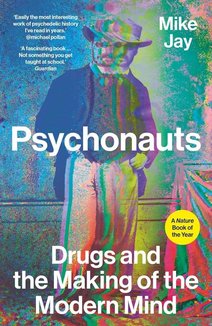
Psychonauts: Drugs and the Making of the Modern Mind
Author:
Mike Jay
“Fascinating.”—Thomas W. Hodgkinson, The Guardian “Richly detailed and frequently illuminating.”—Rhys Blakely, Times (UK) “Excellent.”—Clare Bucknell, New Yorker A New Yorker Best of the Week Pick A provocative and original history of the scientists and writers, artists and philosophers who took drugs to explore the hidden regions of the mind Until the twentieth century, scientists investigating the effects of drugs on the mind did so by experimenting on themselves.
“Fascinating.”—Thomas W. Hodgkinson, The Guardian “Richly detailed and frequently illuminating.”—Rhys Blakely, Times (UK) “Excellent.”—Clare Bucknell, New Yorker A New Yorker Best of the Week Pick A provocative and original history of the scientists and writers, artists and philosophers who took drugs to explore the hidden regions of the mind Until the twentieth century, scientists investigating the effects of drugs on the mind did so by experimenting on themselves. Vivid descriptions of drug experiences sparked insights across the mind sciences, pharmacology, medicine, and philosophy. Accounts in journals and literary fiction inspired a fascinated public to make their own experiments—in scientific demonstrations, on exotic travels, at literary salons, and in occult rituals. But after 1900 drugs were increasingly viewed as a social problem, and the long tradition of self-experimentation began to disappear. From Sigmund Freud’s experiments with cocaine to William James’s epiphany on nitrous oxide, Mike Jay brilliantly recovers a lost intellectual tradition of drug-taking that fed the birth of psychology, the discovery of the unconscious, and the emergence of modernism. Today, as we embrace novel cognitive enhancers and psychedelics, the experiments of the original psychonauts reveal the deep influence of mind-altering drugs on Western science, philosophy, and culture.
Find this book on:
Episode overview
In recent months, we’ve witnessed the rise of chatbots that can pass law and business school exams, artificial companions who’ve become best friends and lovers and music generators that produce remarkably humanlike songs. It’s hard to know how to process it all. But if there’s one thing that’s certain, it’s this: The future — shaped by technologies like artificial intelligence — is going to be profoundly weird. It’s going to look, feel and function differently from the world we have grown to recognize.
How do we learn to navigate — even embrace — the weirdness of the world we’re entering into?
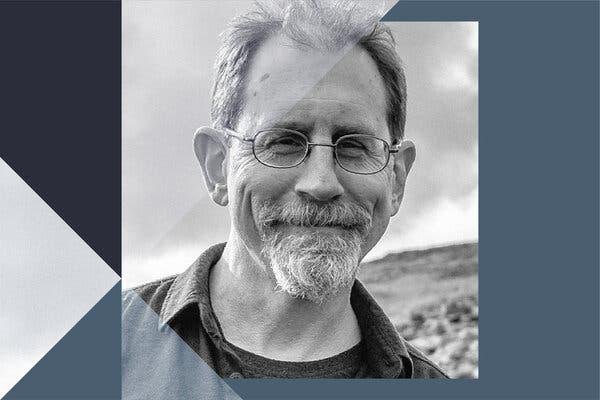
Erik Davis is the author of the books “High Weirdness: Drugs, Esoterica and Visionary Experience in the Seventies” and “TechGnosis: Myth, Magic and Mysticism in the Age of Information” and writes the newsletter “Burning Shore.” For Davis, “weirdness” isn’t just a quality of things that don’t make sense to us, it’s an interpretive framework that helps us better understand the cultures and technologies that will shape our wondrous, wild future.
We discuss how Silicon Valley’s particularly weird culture has altered the trajectory of A.I. development, why programs like ChatGPT can profoundly unsettle our sense of reality and our own humanity, how the behaviors of A.I. systems reveal far more about humanity than we like to admit, why we might be in a “sorcerer’s apprentice moment” for artificial intelligence, why we often turn to myth and science fiction to explain technologies whose implications we don’t yet grasp, why A.I. developers are willing to keep designing technologies that they think may destroy humanity and more.
This episode contains strong language.