From this episode
Recommended books
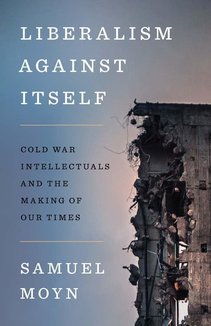
Liberalism against Itself: Cold War Intellectuals and the Making of Our Times
Author:
Samuel Moyn
The Cold War roots of liberalism’s present crisis “[A] daring new book.”—Becca Rothfeld, Washington Post “A fascinating and combative intellectual history.”—Gideon Rachman, Financial Times By the middle of the twentieth century, many liberals looked glumly at the world modernity had brought about, with its devastating wars, rising totalitarianism, and permanent nuclear terror. They concluded that, far from offering a solution to these problems, the ideals of the Enlightenment, including emancipation and equality, had instead created them.
The Cold War roots of liberalism’s present crisis “[A] daring new book.”—Becca Rothfeld, Washington Post “A fascinating and combative intellectual history.”—Gideon Rachman, Financial Times By the middle of the twentieth century, many liberals looked glumly at the world modernity had brought about, with its devastating wars, rising totalitarianism, and permanent nuclear terror. They concluded that, far from offering a solution to these problems, the ideals of the Enlightenment, including emancipation and equality, had instead created them. The historian of political thought Samuel Moyn argues that the liberal intellectuals of the Cold War era—among them Isaiah Berlin, Gertrude Himmelfarb, Karl Popper, Judith Shklar, and Lionel Trilling—transformed liberalism but left a disastrous legacy for our time. In his iconoclastic style, Moyn outlines how Cold War liberals redefined the ideals of their movement and renounced the moral core of the Enlightenment for a more dangerous philosophy: preserving individual liberty at all costs. In denouncing this stance, as well as the recent nostalgia for Cold War liberalism as a means to counter illiberal values, Moyn presents a timely call for a new emancipatory and egalitarian liberal philosophy—a path to undoing the damage of the Cold War and to ensuring the survival of liberalism.
Find this book on:


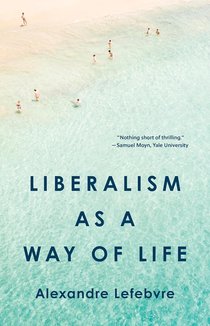
Liberalism as a Way of Life
Author:
Alexandre Lefebvre
Why liberalism is all you need to lead a good, fun, worthy, and rewarding life—and how you can become a better and happier person by taking your liberal beliefs more seriously Where do you get your values and sensibilities from? If you grew up in a Western democracy, the answer is probably liberalism.
Why liberalism is all you need to lead a good, fun, worthy, and rewarding life—and how you can become a better and happier person by taking your liberal beliefs more seriously Where do you get your values and sensibilities from? If you grew up in a Western democracy, the answer is probably liberalism. Conservatives are right about one thing: liberalism is the ideology of our times, as omnipresent as religion once was. Yet, as Alexandre Lefebvre argues in Liberalism as a Way of Life , many of us are liberal without fully realizing it—or grasping what it means. Misled into thinking that liberalism is confined to politics, we fail to recognize that it’s the water we swim in, saturating every area of public and private life, shaping our psychological and spiritual outlooks, and influencing our moral and aesthetic values—our sense of what is right, wrong, good, bad, funny, worthwhile, and more. This eye-opening book shows how so many of us are liberal to the core, why liberalism provides the basis for a good life, and how we can make our lives better and happier by becoming more aware of, and more committed to, the beliefs we already hold. A lively, engaging, and uplifting guide to living well, the liberal way, Liberalism as a Way of Life is filled with examples from television, movies, stand-up comedy, and social media—from Parks and Recreation and The Good Place to the Borat movies and Hannah Gadsby. Along the way, you’ll also learn about seventeen benefits of being a liberal—including generosity, humor, cheer, gratitude, tolerance, and peace of mind—and practical exercises to increase these rewards. You’re probably already waist-deep in the waters of liberalism. Liberalism as a Way of Life invites you to dive in.
Find this book on:
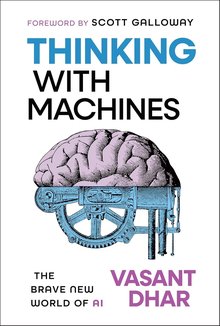
Thinking With Machines: The Brave New World of AI
Authors:
Vasant Dhar,
Scott Galloway
We are entering a brave new world, thanks to AI. We must shape this future to the advantage of everyone, and not just a select few.
We are entering a brave new world, thanks to AI. We must shape this future to the advantage of everyone, and not just a select few. Thinking with Machines: The Brave New World of AI tells the story of AI from its very beginnings through the eyes of Vasant Dhar, currently Robert A Miller Professor at the Stern School of Business, and Professor of Data Science at New York University. Professor Dhar lived through the invention of AI algorithms and their various permutations until today. He brought AI to Wall Street in the 90s and was the first to teach AI at NYU Stern. Through his story and the lessons that it reveals, we learn about AI’s progress and reversals, its promises and dangers, and what we need to address before the machine gets away from us. Thinking with Machines is essential reading for AI enthusiasts and learners at all levels seeking knowledge on the greatest technological advancement of our time.
Find this book on:
Episode overview
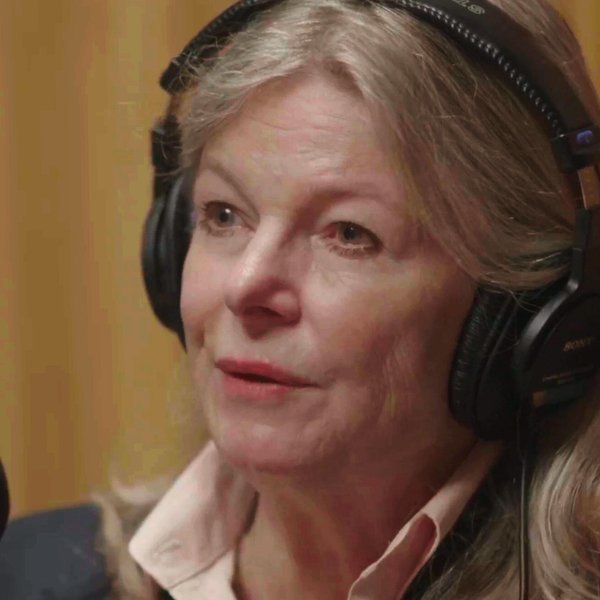
In the U.S., illiberalism is in power. I don’t think anybody really argues against that. But I’ve been surprised by how weak liberalism has felt in response.
Donald Trump isn’t a popular president; he isn’t making people want more of what he is. But if the forces of illiberalism are really going to be turned back in this country, I think more people need to be excited and inspired by liberalism itself. We need a liberalism that stands for more than “not Trump.”
So I’ve been on my own esoteric journey, reading a lot of books on the history of liberalism, trying to understand what excited and inspired people in the past, and how liberals overcame crises like the one we’re in. And reading one of those books, “The Lost History of Liberalism” by Helena Rosenblatt, it felt like an epiphany — that this was a piece of the puzzle.
So I wanted to have Rosenblatt on the show to talk about it. Rosenblatt is a professor of history, political science and French at the Graduate Center of the City University of New York, and in this conversation, she walks me through the history of liberalism that she uncovered, and the values that once lived at its heart.