From this episode
Recommended books
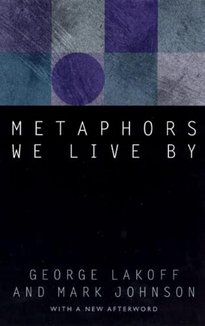
Metaphors We Live By
Authors:
George Lakoff,
Mark Johnson
The now-classic Metaphors We Live By changed our understanding of metaphor and its role in language and the mind. Metaphor, the authors explain, is a fundamental mechanism of mind, one that allows us to use what we know about our physical and social experience to provide understanding of countless other subjects.
The now-classic Metaphors We Live By changed our understanding of metaphor and its role in language and the mind. Metaphor, the authors explain, is a fundamental mechanism of mind, one that allows us to use what we know about our physical and social experience to provide understanding of countless other subjects. Because such metaphors structure our most basic understandings of our experience, they are "metaphors we live by"—metaphors that can shape our perceptions and actions without our ever noticing them. In this updated edition of Lakoff and Johnson's influential book, the authors supply an afterword surveying how their theory of metaphor has developed within the cognitive sciences to become central to the contemporary understanding of how we think and how we express our thoughts in language.
Find this book on:


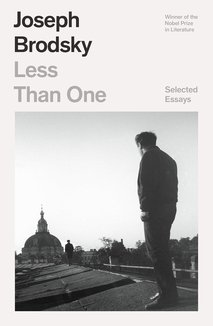
Less Than One: Selected Essays (FSG Classics)
Author:
Joseph Brodsky
The collection of critical and autobiographical essays from Nobel Prize-winner Joseph Brodsky that catapulted the author--heretofore known more for his poetry and translations--into the forefront of the "Third Wave" of Russian émigré writers. His insights into the works of Dostoyevsky, Mandelstam, Platonov, as well as non-Russian poets Auden, Cavafy and Montale are brilliant.
The collection of critical and autobiographical essays from Nobel Prize-winner Joseph Brodsky that catapulted the author--heretofore known more for his poetry and translations--into the forefront of the "Third Wave" of Russian émigré writers. His insights into the works of Dostoyevsky, Mandelstam, Platonov, as well as non-Russian poets Auden, Cavafy and Montale are brilliant. While the Western popularity of many other Third Wavers has been stunted by their inability to write in English, Brodsky consumed the language to attain a "closer proximity" to poets such as Auden. Less Than One , which won a National Book Critics Circle Award, opens and closes with revealing autobiographical essay.
Find this book on:
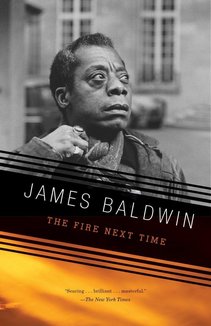
The Fire Next Time
Author:
James Baldwin
NATIONAL BESTSELLER • The book that galvanized the nation, gave voice to the emerging civil rights movementin the 1960s—and still lights the way to understanding race in America today. • "The finest essay I’ve ever read.” —Ta-Nehisi Coates At once a powerful evocation of James Baldwin's early life in Harlem and a disturbing examination of the consequences of racial injustice, the book is an intensely personal and provocative document from the iconic author of If Beale Street Could Talk and Go Tell It on the Mountain.
NATIONAL BESTSELLER • The book that galvanized the nation, gave voice to the emerging civil rights movementin the 1960s—and still lights the way to understanding race in America today. • "The finest essay I’ve ever read.” —Ta-Nehisi Coates At once a powerful evocation of James Baldwin's early life in Harlem and a disturbing examination of the consequences of racial injustice, the book is an intensely personal and provocative document from the iconic author of If Beale Street Could Talk and Go Tell It on the Mountain. It consists of two "letters," written on the occasion of the centennial of the Emancipation Proclamation, that exhort Americans, both black and white, to attack the terrible legacy of racism. Described by The New York Times Book Review as "sermon, ultimatum, confession, deposition, testament, and chronicle … all presented in searing, brilliant prose," The Fire Next Time stands as a classic of literature.
Find this book on:
Episode overview
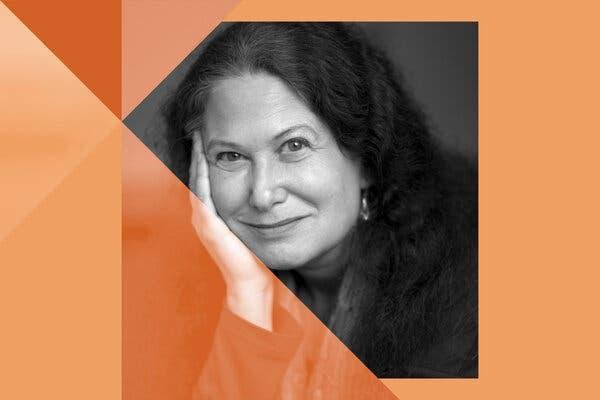
“Poetry is the attempt to understand fully what is real, what is present, what is imaginable, what is feelable, and how can I loosen the grip of what I already know to find some new, changed relationship,” the poet Jane Hirshfield tells me. Through poetry, she says, “I know something new and I have been changed.”
Hirshfield is the award-winning author of many books of poetry and two illuminating essay collections about what poetry does to us and in the world: “Nine Gates: Entering the Mind of Poetry” and “Ten Windows: How Great Poems Transform the World.” Her book “Ledger” is one I gift to people most often. Hirshfield’s true talent as a poet is her singular ability to imbue the ordinary, the invisible, the forgotten with a sense of majesty and wonder. Her work is littered with lines that force you to stop, to slow down, to notice what you might have missed or overlooked.
Hirshfield’s work also raises some profound questions: What does it mean to grapple with our complicity in the climate crisis? Where does the self end and the rest of the world begin? How do we learn to desire what we previously dreaded or despised?
This is one of those conversations that is hard to describe in words. But it was truly a delight for me to be a part of. And I think you’ll enjoy it too.