From this episode
Recommended books
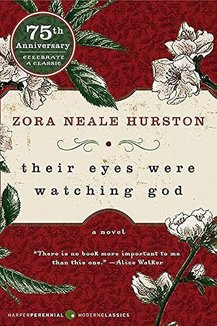
Their Eyes Were Watching God: A Novel
Author:
Zora Neale Hurston
A PBS Great American Read Top 100 Pick “A deeply soulful novel that comprehends love and cruelty, and separates the big people from the small of heart, without ever losing sympathy for those unfortunates who don’t know how to live properly.” —Zadie Smith One of the most important and enduring books of the twentieth century, Their Eyes Were Watching God brings to life a Southern love story with the wit and pathos found only in the writing of Zora Neale Hurston. Out of print for almost thirty years—due largely to initial audiences’ rejection of its strong black female protagonist—Hurston’s classic has since its 1978 reissue become perhaps the most widely read and highly acclaimed novel in the canon of African-American literature.
A PBS Great American Read Top 100 Pick “A deeply soulful novel that comprehends love and cruelty, and separates the big people from the small of heart, without ever losing sympathy for those unfortunates who don’t know how to live properly.” —Zadie Smith One of the most important and enduring books of the twentieth century, Their Eyes Were Watching God brings to life a Southern love story with the wit and pathos found only in the writing of Zora Neale Hurston. Out of print for almost thirty years—due largely to initial audiences’ rejection of its strong black female protagonist—Hurston’s classic has since its 1978 reissue become perhaps the most widely read and highly acclaimed novel in the canon of African-American literature.
Find this book on:

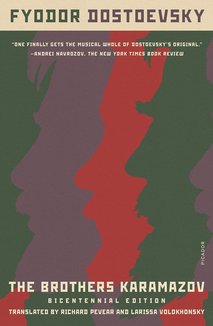
The Brothers Karamazov: Bicentennial Edition
Authors:
Richard Pevear,
Larissa Volokhonsky,
Fyodor Dostoevsky
Winner of the Pen/Book-of-the-Month Club Translation Prize The award-winning translation of Fyodor Dostoevsky's classic novel of psychological realism. The Brothers Karamazov is a murder mystery, a courtroom drama, and an exploration of erotic rivalry in a series of triangular love affairs involving the “wicked and sentimental” Fyodor Pavlovich Karamazov and his three sons―the impulsive and sensual Dmitri; the coldly rational Ivan; and the healthy, red-cheeked young novice Alyosha.
Winner of the Pen/Book-of-the-Month Club Translation Prize The award-winning translation of Fyodor Dostoevsky's classic novel of psychological realism. The Brothers Karamazov is a murder mystery, a courtroom drama, and an exploration of erotic rivalry in a series of triangular love affairs involving the “wicked and sentimental” Fyodor Pavlovich Karamazov and his three sons―the impulsive and sensual Dmitri; the coldly rational Ivan; and the healthy, red-cheeked young novice Alyosha. Through the gripping events of their story, Dostoevsky portrays the whole of Russian life, its social and spiritual striving, in what was both the golden age and a tragic turning point in Russian culture. This award-winning translation by Richard Pevear and Larissa Volokhonsky remains true to the verbal inventiveness of Dostoevsky’s prose, preserving the multiple voices, the humor, and the surprising modernity of the original. It is an achievement worthy of Dostoevsky’s last and greatest novel.
Find this book on:
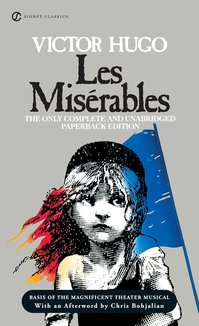
Les Miserables (Signet Classics)
Authors:
Victor Hugo,
Lee Fahnestock,
Norman MacAfee,
Chris Bohjalian
NOW A SIX-PART MINISERIES ON MASTERPIECE ON PBS The only completely unabridged paperback edition of Victor Hugo’s masterpiece—a sweeping tale of love, loss, valor, and passion. Introducing one of the most famous characters in literature, Jean Valjean—the noble peasant imprisoned for stealing a loaf of bread— Les Misérables ranks among the greatest novels of all time.
NOW A SIX-PART MINISERIES ON MASTERPIECE ON PBS The only completely unabridged paperback edition of Victor Hugo’s masterpiece—a sweeping tale of love, loss, valor, and passion. Introducing one of the most famous characters in literature, Jean Valjean—the noble peasant imprisoned for stealing a loaf of bread— Les Misérables ranks among the greatest novels of all time. In it, Victor Hugo takes readers deep into the Parisian underworld, immerses them in a battle between good and evil, and carries them to the barricades during the uprising of 1832 with a breathtaking realism that is unsurpassed in modern prose. Within his dramatic story are themes that capture the intellect and the emotions: crime and punishment, the relentless persecution of Valjean by Inspector Javert, the desperation of the prostitute Fantine, the amorality of the rogue Thénardier, and the universal desire to escape the prisons of our own minds. Les Misérables gave Victor Hugo a canvas upon which he portrayed his criticism of the French political and judicial systems, but the portrait that resulted is larger than life, epic in scope—an extravagant spectacle that dazzles the senses even as it touches the heart. Translated by Lee Fahnestock and Norman Macafee, based on the classic nineteenth-century Charles E. Wilbour translation Inlcudes an Introduction by Lee Fahnestock and an Afterword by Chris Bohjalian
Find this book on:
Episode overview
What does it mean to celebrate America on its 250th anniversary?
The Trump administration’s festivities — from the U.F.C. fight on the White House lawn to the Great American State Fair — have centered American glory and greatness. What has been missing are the Americans who fought to move America closer to its promises. They had to love a country — or at least believe in a country — that often failed them. How did they do it?
Beneath that is a deep question for anyone who loves a country, or even loves another person: How do you love something in its wholeness, amid its imperfections and failures?
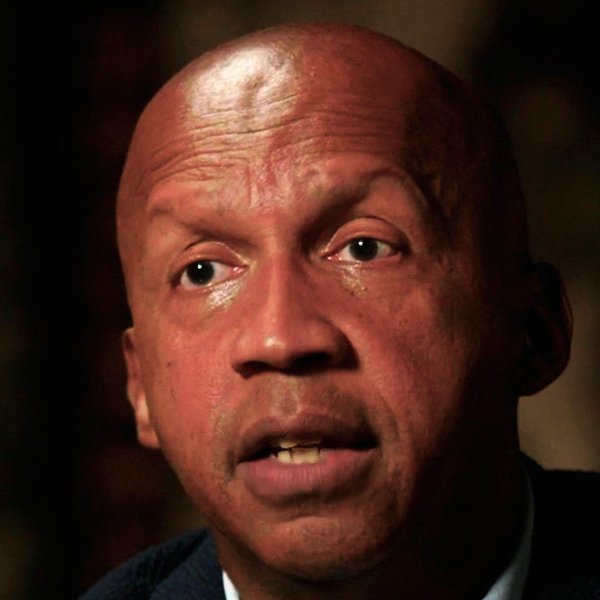
One person who is thinking deeply about how to do this is Bryan Stevenson. He’s a civil rights lawyer and the founder of the Equal Justice Initiative, which is based in Montgomery, Ala. E.J.I. has created a series of museums and sites in Montgomery that aim to examine America’s history of enslavement, racial violence and segregation, while also uplifting and honoring the people who endured these systems and fought to upend them.
The sites are remarkable to witness, as I found out when I visited Montgomery, and they hold America’s manifold truths in tension with one another — all its horror and beauty, tragedy and triumph, inhumanity and humanity.
I asked Stevenson how he’s thinking about America’s 250th birthday — and what work the country has left to fulfill its vision of liberty and equality for all.