
From this episode
Recommended books
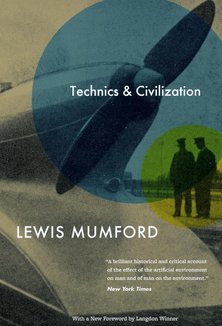
Technics and Civilization
Authors:
Lewis Mumford,
Langdon Winner
Technics and Civilization first presented its compelling history of the machine and critical study of its effects on civilization in 1934—before television, the personal computer, and the Internet even appeared on our periphery. Drawing upon art, science, philosophy, and the history of culture, Lewis Mumford explained the origin of the machine age and traced its social results, asserting that the development of modern technology had its roots in the Middle Ages rather than the Industrial Revolution.
Technics and Civilization first presented its compelling history of the machine and critical study of its effects on civilization in 1934—before television, the personal computer, and the Internet even appeared on our periphery. Drawing upon art, science, philosophy, and the history of culture, Lewis Mumford explained the origin of the machine age and traced its social results, asserting that the development of modern technology had its roots in the Middle Ages rather than the Industrial Revolution. Mumford sagely argued that it was the moral, economic, and political choices we made, not the machines that we used, that determined our then industrially driven economy. Equal parts powerful history and polemic criticism, Technics and Civilization was the first comprehensive attempt in English to portray the development of the machine age over the last thousand years—and to predict the pull the technological still holds over us today. “ The questions posed in the first paragraph of Technics and Civilization still deserve our attention, nearly three quarters of a century after they were written.”— Journal of Technology and Culture
Find this book on:



Andrew Henry's Meadow
Author:
Doris Burn
A classic reissued for a new generation Andrew Henry has two younger brothers, who are always together, and two older sisters, who are always together. But Andrew Henry is in the middle--and he's always with himself.
A classic reissued for a new generation Andrew Henry has two younger brothers, who are always together, and two older sisters, who are always together. But Andrew Henry is in the middle--and he's always with himself. He doesn't mind this very much, because he's an inventor. But when Andrew Henry's family doesn't appreciate him or his inventions, he decides it's time to run away. Many children in the neighborhood feel the same way and follow him to his meadow, where he builds each of his friends a unique house of their very own. But in town the families miss their children and do everything they can to find them. And the kids realize that it feels a little lonely out in the meadow without their parents. Just as relevant today as it was in 1967, this is a heart-warming story about children who want to feel special and appreciated for who they are. With a new jacket and expanded trim size, Andrew Henry is ready to enchant the next generation of kids.
Find this book on:
Episode overview
We were promised, with the internet, a productivity revolution. We were told that we’d get more done, in less time, with less stress. Instead, we got always-on communication, the dissolution of the boundaries between work and home, the feeling of constantly being behind, lackluster productivity numbers, and, to be fair, reaction GIFs. What went wrong?
Cal Newport is a computer scientist at Georgetown and the author of books trying to figure that out. At the center of his work is the idea that the technologies billed as offering us more productive, happier, socially rich lives have left us more exhausted, empty and stressed out than ever. He’s doing something not enough people do: questioning whether this was all worth it.
My critique of Newport’s work has always been that it focuses too much on the individual: Telling someone whose workplace communicates exclusively via Slack and email to be a “digital minimalist” is like telling someone who lives in a candy store to diet. But his new book, “A World Without Email,” is all about systems — specifically, the systems that govern how we work. In it, Newport makes a radical argument: We are living through a massive, rolling failure of markets and firms to rethink work for the digital age. But that can change. We can change it.