
From this episode
Recommended books
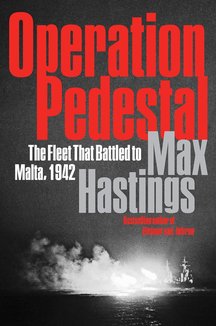
Operation Pedestal: The Fleet That Battled to Malta, 1942
Author:
Max Hastings
Renowned historian Max Hastings recreates one of the most thrilling events of World War II: Operation Pedestal, the British action to save its troops from starvation on Malta—an action-packed tale of courage, fortitude, loss, and triumph against all odds. In 1940, Hitler had two choices when it came to the Mediterranean region: stay out, or commit sufficient forces to expel the British from the Middle East.
Renowned historian Max Hastings recreates one of the most thrilling events of World War II: Operation Pedestal, the British action to save its troops from starvation on Malta—an action-packed tale of courage, fortitude, loss, and triumph against all odds. In 1940, Hitler had two choices when it came to the Mediterranean region: stay out, or commit sufficient forces to expel the British from the Middle East. Against his generals’ advice, the Fuhrer committed a major strategic blunder. He ordered the Wehrmacht to seize Crete, allowing the longtime British bastion of Malta to remain in Allied hands. Over the fall of 1941, the Royal Navy and RAF, aided by British intelligence, used the island to launch a punishing campaign against the Germans, sinking more than 75 percent of their supply ships destined for North Africa. But by spring 1942, the British lost their advantage. In April and May, the Luftwaffe dropped more bombs on Malta than London received in the blitz. A succession of British attempts to supply and reinforce the island by convoy during the spring and summer of 1942 failed. British submarines and surface warships were withdrawn, and the remaining forces were on the brink of starvation. Operation Pedestal chronicles the ensuing British mission to save those troops. Over twelve days in August, German and Italian forces faced off against British air and naval fleets in one of the fiercest battles of the war, while ships packed with supplies were painstakingly divided and dispersed. In the end only a handful of the Allied ships made it, most important among them the SS Ohio, carrying the much-needed fuel to the men on Malta. As Hastings makes clear, while the Germans claimed victory, it was the British who ultimately prevailed, for Malta remained a crucial asset that helped lead to the Nazis’ eventual defeat. While the Royal Navy never again attempted an operation on such scale, Hasting argues that without that August convoy the British on Malta would not have survived. In the cruel accountancy of war, the price was worth paying.
Find this book on:


Into the Heart of Romans: A Deep Dive into Paul's Greatest Letter
Author:
N. T. Wright
An in-depth study of Romans from today's foremost interpreter of Paul. Romans is often and for good reason considered a crux of Christian thought and theology, the greatest of Paul's letters.
An in-depth study of Romans from today's foremost interpreter of Paul. Romans is often and for good reason considered a crux of Christian thought and theology, the greatest of Paul's letters. And within Romans, chapter 8 is one of the most spectacular pieces of early Christian writing. But to many readers, Romans can be a deceptively difficult book. Its scope and basic meaning may be clear, but it can be hard to see how it all fits together into a cohesive, if complex, doctrinal argument. N. T. Wright—widely regarded as the most influential commentator and interpreter of Paul—deftly unpacks this dense and sometimes elusive letter, detailing Paul's arguments and showing how it illuminates the Gospel from the promises to Abraham through the visions of Revelation. Wright takes a deep dive into Romans 8, showing how it illuminates so much else that God reveals in Scripture: God the Father, Christology, and the Spirit; Jesus' Messiahship, cross, resurrection, and ascension; salvation, redemption, and adoption; suffering and glory; holiness and hope. Into the Heart of Romans will help you become familiar with the book of Romans in a deeper way that will also deepen your understanding and appreciation of the Gospel itself.
Find this book on:
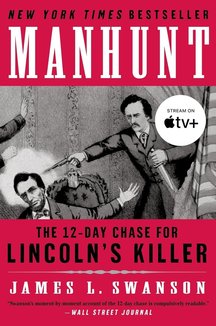
Manhunt: The 12-Day Chase for Lincoln's Killer (P.S.)
Author:
James L. Swanson
Now an Apple TV+ Series “A terrific narrative of the hunt for Lincoln’s killers that will mesmerize the reader from start to finish.”—Doris Kearns Goodwin The murder of Abraham Lincoln set off the greatest manhunt in American history--the pursuit and capture of John Wilkes Booth. From April 14 to April 26, 1865, the assassin led Union cavalry troops on a wild, 12-day chase from the streets of Washington, D.C., across the swamps of Maryland, and into the forests of Virginia, while the nation, still reeling from the just-ended Civil War, watched in horror and sadness.
Now an Apple TV+ Series “A terrific narrative of the hunt for Lincoln’s killers that will mesmerize the reader from start to finish.”—Doris Kearns Goodwin The murder of Abraham Lincoln set off the greatest manhunt in American history--the pursuit and capture of John Wilkes Booth. From April 14 to April 26, 1865, the assassin led Union cavalry troops on a wild, 12-day chase from the streets of Washington, D.C., across the swamps of Maryland, and into the forests of Virginia, while the nation, still reeling from the just-ended Civil War, watched in horror and sadness. Based on rare archival materials, obscure trial transcripts, and Lincoln’s own blood relics Manhunt is a fully documented, fascinating tale of murder, intrigue, and betrayal. A gripping hour-by-hour account told through the eyes of the hunted and the hunters, it is history as it’s never been read before.
Find this book on:
Episode overview
There’s this incredible dissonance at the center of our politics right now. On the one hand, all the polling suggests that Donald Trump is about to win Iowa Republican caucuses and the New Hampshire primary. He seems overwhelmingly likely to be his party’s nominee, and so possibly our next president. On the other hand, he could be constitutionally disqualified from taking office.
Colorado and Maine concluded as much, and tossed him off their ballots. And now the Supreme Court is poised to take on this unprecedented question of whether a little-known provision of the Constitution, written in the aftermath of the Civil War, can bar Trump from running and scramble the election in 2024.
The Times Opinion columnist David French has been on the show before, as both a guest and a guest host, to break down the criminal cases against Trump. This time, I’ve asked David back to make his case for why Trump is constitutionally disqualified. We discuss some of the biggest objections, what the Supreme Court is likely to do, and how the possible options risk destabilizing the country in different ways.